
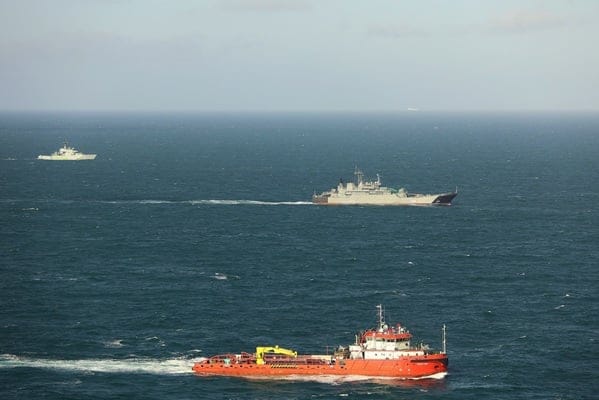
The Royal Navy has stepped up its surveillance of Russian military activity around Britain, deploying warships and helicopters to track three Russian vessels in a coordinated operation that underscores the growing pressure on the UK’s maritime defences.
Between September 29 and October 14, HMS Dauntless, a Type 45 destroyer, and the patrol vessel HMS Tyne monitored Russian naval movements through the English Channel, including warships escorting cargo vessels.
Meanwhile, Merlin helicopters tracked the Russian intelligence-gathering ship Viktor Leonov off Scotland.
The deployments offered a rare glimpse into the largely unseen contest unfolding in British waters, where monitoring the movements of Russian vessels has become an increasingly important task for the UK and its NATO allies.
Moscow’s use of naval escorts to accompany commercial shipping has heightened concerns about vessels suspected of helping Russia circumvent Western sanctions.
Read more related news:
‘Not a single’ Astute submarine operational as Britain’s nuclear deterrent faces fresh threat
Ex Army chief warns Burnham ‘the lack of strategic urgency is shocking’ as Putin says he’s ‘ready for war’
Labour savaged over ‘woefully inadequate’ Budget warning ‘we need urgency’ before its too late
Britain’s challenge is to maintain a persistent watch over these movements while ensuring that its forces can respond rapidly to emerging threats across multiple maritime approaches.
Viktor Leonov’s presence in the Outer Hebrides carried particular significance because it coincided with Exercise Strike Warrior, a multinational NATO exercise involving more than 2,000 military personnel from six countries. The vessel’s activity offered Moscow an opportunity to observe allied training and assess military movements.
The Royal Navy’s response also tested its ability to deploy specialist assets at short notice. Merlin helicopters were sent to Prestwick in Scotland, operating away from their usual base at Royal Naval Air Station Culdrose in Cornwall. Their mission demonstrated how aviation units can be repositioned to support surveillance requirements beyond their normal operating areas.
The movements of the Russian vessels Neustrashimy and Aleksandr Shabalin through the English Channel presented a separate challenge, requiring British forces to monitor naval activity alongside busy commercial shipping routes.
Captain James Hall, commanding officer of RNAS Culdrose, said the operation demonstrated the Navy’s readiness to respond to immediate operational demands.
“I am immensely proud of the efforts of our people, who have once again demonstrated that the UK is prepared to respond to immediate operational requirements,” he said.
The deployment formed part of Operation Iceblast, a wider series of operations designed to test the Merlin Helicopter Force’s ability to deploy away from its home base at scale and at short notice.
“This operation has been a critical means for demonstrating to ourselves, our adversaries and the nation that we are willing and capable of securing the homeland 24/7,” Hall said. “The Merlin Helicopter Force stands ready to answer the call at a moment’s notice.”
The surveillance missions come as Britain intensifies efforts to constrain Russia’s so-called shadow fleet: a network of ships used to transport oil and other commodities while evading Western restrictions. The government has imposed sanctions on more than 500 vessels as part of a broader campaign to restrict the revenues financing Vladimir Putin’s war against Ukraine.
The seizure of the tanker Smyrtos in June provided another indication of Britain’s willingness to act against vessels suspected of helping Moscow bypass sanctions.
Further measures have targeted Kremlin funding, disinformation networks and individuals accused of involvement in the torture of Ukrainian civilians and the deportation of children.
Britain insists it does not seek direct confrontation with Moscow, but says it will continue supporting Kyiv for as long as Russia’s invasion persists. Military assistance to Ukraine is set to reach £4.5bn this year, the largest annual commitment Britain has made to the country.
The latest naval deployments illustrate the practical demands behind that policy. Tracking Russian ships requires more than occasional patrols: it depends on intelligence, specialist aircraft, warships and the ability to coordinate them across a wide area.
As tensions persist, maintaining that surveillance will remain central to protecting British maritime interests, supporting NATO allies and ensuring Russian movements do not go unnoticed.


Leave a Comment