
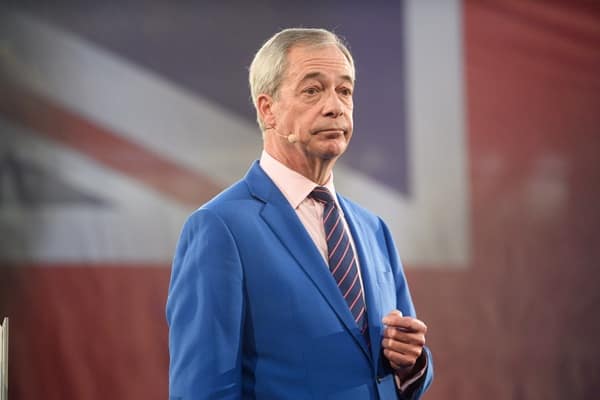
Nigel Farage has accused the Conservatives of squandering the economic opportunities of Brexit, declaring that the next general election could become a defining battle over Europe, immigration and Britain’s relationship with the single market.
Speaking at a press conference in central London, the Reform UK leader attacked the former Conservative government for failing to deliver the economic benefits promised by leaving the European Union, while warning that any move towards closer European integration would require a fresh electoral mandate.
“The Tory Government failed to deliver on many of the economic promises of Brexit because they never actually believed in it in the first place,” Farage said.
He also challenged proposals associated with Prime Minister Andy Burnham’s suggestion that rejoining the single market could boost economic growth, arguing that any agreement reached at a European summit without explicit public consent would represent a betrayal of voters.
“He has no mandate whatsoever to agree to anything at that summit,” Farage said. “It would not only be a betrayal of the greatest democratic exercise in the history of this country but also a betrayal of what he promised the voters of Makerfield just a few short months ago.”
Farage argued that such a fundamental change could not legitimately proceed without a general election, predicting that a national vote could take place in spring 2027.
“If there’s going to a general election about Europe, open borders and migration, then it absolutely needs to be a straight contest between this Prime Minister and this party,” he said.
The Reform leader also sought to reclaim the political argument over immigration, accusing the Conservatives of failing to use Brexit to deliver tighter control over migration. He argued that the party had replaced freedom of movement within the EU with an immigration system that opened Britain to migration from across the world.
The intervention came as Reform unveiled its economic rescue plan, with Robert Jenrick delivering a stark assessment of the country’s public finances.
Jenrick claimed Britain was “broke”, pointing to the £110bn a year he said the government spends servicing its debt. He warned that rising borrowing costs were placing increasing pressure on taxpayers and limiting the resources available for public services.
“The state is broke and so are many of the people who pay for it,” Jenrick said.
He argued that the government’s interest payments represented money that could otherwise have been invested in hospitals, schools, roads and GP surgeries.
“Those lenders are getting restless,” he said, pointing to borrowing rates that he claimed had exceeded 6 per cent for the first time since 1998.
“Now we pay more to borrow than any other G7 country. More than Greece, more than Italy – once joke economies that Germany had to bail out.
“Well, we’re the joke now.”
The speech sought to connect Reform’s central political themes — immigration, Brexit and dissatisfaction with Westminster — to concerns about the cost of government borrowing and the strain on public finances.
But the scale of Britain’s debt interest bill does not, by itself, establish that the state is insolvent. Higher borrowing costs can nevertheless increase the burden on taxpayers and leave governments with less room to respond to economic shocks or fund competing spending priorities.
For Farage, the twin message was clear: the Conservatives had failed to realise Brexit’s promise, while the government now faced a financial squeeze that Reform believes strengthens its challenge to the established parties.
By framing the next election as a contest over sovereignty, migration and economic management, Reform is seeking to turn public frustration into a broader argument that Britain needs a fundamental change of political direction.


Leave a Comment