
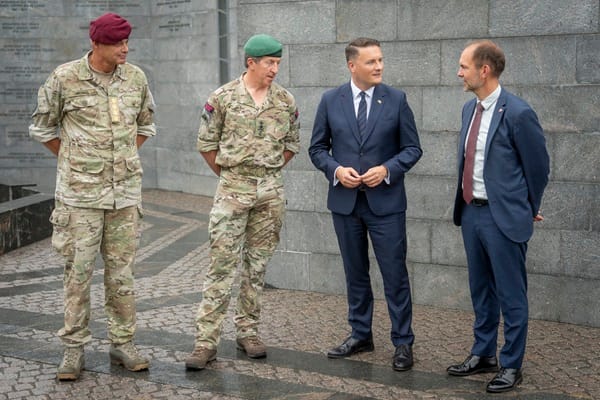
Britain’s political leaders must prepare the public for an uncomfortable conversation about the growing risks of war, the head of the British Army has warned, putting national sacrifice at the centre of an increasingly urgent defence debate.
General Sir Roly Walker’s call for a “frank conversation” reflects a starkening assessment of the security environment confronting the UK, where military preparedness is becoming a national priority after years in which the prospect of a major European conflict appeared remote to much of the public.
The challenge, however, extends beyond recruiting soldiers or replenishing weapons stockpiles.
It concerns whether politicians can persuade voters to accept the financial, social and potentially personal costs of preparing for a more dangerous world.
“You didn’t know this, but our nation is going to need you,” Walker told soldiers. “There was a time when our nation didn’t want to think of a time when it would need its soldiers to fight in a war.”
He suggested that period of strategic complacency may be drawing to a close.
“Indeed, very soon, the political leaders of this country will start to have a frank conversation with the citizens of this country about just what is going on and where the risk lies,” he said.
“They are going to try to explain to our citizens that they have to consent to sacrifices to prioritise defence and security.”
Read more related news:
Army chief warns ‘war is no longer unthinkable’ and MPs will have to tell Brits ‘where the risk lies’
Britain prepares troops for Ukraine deployment as Trump deepens rift with NATO allies
Britain ‘wants an army, but won’t fight for it’: Poll exposes the political nightmare facing Labour
Britain prepares for a new Home Guard as army chief warns public must be ready for war
Walker’s remarks underscore a political dilemma confronting Western governments as military readiness requires not only credible armed forces, but also sustained public support for the spending and difficult choices needed to maintain them.
Defence budgets compete with pressures on public services, household finances and economic growth. Any attempt to accelerate military investment will therefore require ministers to explain why security demands a greater share of national resources — and what citizens may be expected to contribute.
Walker argued that the public must recognise its own stake in national defence, even when international threats appear distant from everyday concerns.
“And then they are going to ask those citizens, for whom we are not necessarily at the front of their mind, that they too need to play a part in the defence and security of this country,” he said.
“They need to understand what we do for them. They need to consent to allow us to do that. Which means sacrifices by them.”
He added that the armed forces would ultimately need public backing to undertake their central task: “to take the fight to the enemy”.
The warning comes amid heightened tensions surrounding Russia’s war against Ukraine, broader instability involving Iran and uncertainty over the future direction of US foreign policy. These developments have intensified questions about Europe’s ability to defend itself if American support becomes less dependable.
Britain’s experience before the Second World War offers a historical precedent for governments preparing society for a conflict that has not yet begun.
The historical precedent is stark. In 1939, as the threat of war with Nazi Germany intensified, Neville Chamberlain’s government introduced limited conscription months before hostilities erupted. According to the UK Parliament, the Military Training Act, approved in May that year, required single men aged between 20 and 22 to undertake six months of military training, with about 240,000 registering for service.
When Britain declared war on Germany on September 3, Parliament swiftly expanded the measures, imposing conscription on men aged between 18 and 41. Those deemed medically unfit, alongside workers in essential occupations including farming, medicine, engineering and baking, were exempted. The precedent underscores how rapidly deteriorating security conditions can transform extraordinary military contingency plans into demands on ordinary citizens.
The modern threat is also more complicated than a conventional military confrontation.
Sir Grant Shapps, the former defence secretary, warned this week that an attack on Britain could initially resemble an ordinary disruption rather than the unmistakable opening of a war.
“The next attack on Britain may not look like the start of a war,” he said. “It may look like an ordinary Monday morning when everything suddenly stops working.”
Shapps, who warned in 2024 that Britain had entered a “pre-war world”, argued that discussions about military strength risk overlooking the infrastructure on which the country depends.
“We spend a great deal of time debating whether Britain has enough missiles, aircraft, warships and troops to defend itself,” he said. “And rightly so, because there are serious concerns about our military readiness.”
His intervention highlights the breadth of the challenge. Cyber-attacks, disruption to essential services and threats to critical infrastructure could test national resilience without an immediate conventional assault.
For ministers, the implications are considerable. Preparing for a more dangerous international environment means confronting questions about military spending, civil preparedness and the resilience of the systems that sustain daily life.
Walker’s appeal is therefore as political as it is military. The armed forces can train, equip, and plan for conflict, but the government must explain why those preparations matter—and persuade the public that the costs are justified.
The difficult conversation he anticipates will turn on whether Britain is willing to pay now for risks that may never materialise, rather than face potentially far greater costs if deterrence fails.
In an era of renewed geopolitical instability, political leaders find it harder to avoid that calculation.


Leave a Comment