
Homelessness remains one of the key problems confronting British society. The statistics show that there were as many as 4,793 homeless people registered in England in autumn 2025, which became the highest record in England’s history. Moreover, more than 135,000 families lived in temporary accommodations in the first part of 2026. Temporary and supported accommodation are the major forms of provision offered by local authorities, housing societies, and other programs funded by the government. The form of accommodation where individual homes are provided by private means is less frequent.
A private initiative from Walsall
In the context of all the above, it is high time that an example of what an ordinary person can do should be stated.
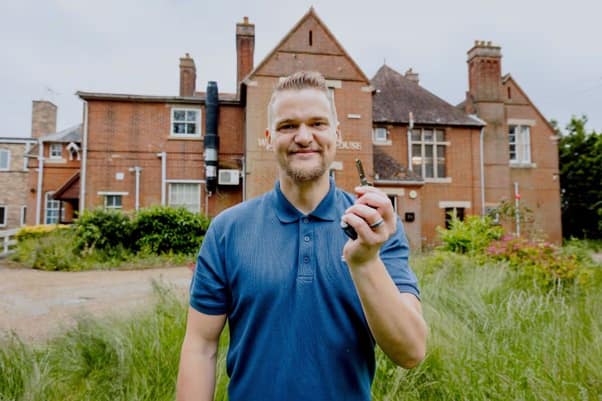
Samuel Leeds is an entrepreneur and investor in real estate who was born and brought up in a council estate in Walsall. Using his own funds, Samuel Leeds bought a house in the area of Bloxwich in Walsall for £107,000, completely refurbished it, and made it a place of shelter and recovery for homeless people. No income is earned by Samuel Leeds from this house, nor is there any grant or funding from the government. Everything comes out of his property ventures.
Leeds has also employed a full-time staff that will go to the community, locate those sleeping on the streets or without permanent homes, and take them to the house. They provide them with free lodging, free food, and, most importantly, education and mentoring. The program takes up to 28 days and is aimed at restoring their self-respect, skill sets, and ways to earn and get permanent homes.
Leeds has reported that two gentlemen who had previously lived on the streets have succeeded in completing a mentoring program while staying in the house and have finally found accommodation and secured jobs. Leeds is of the opinion that successful entrepreneurs should leverage the resources earned from their business operations to help solve real problems facing their communities with their own money.
Building impact beyond business
Leeds’ approach is part of his broader dedication to achieving social benefit through business success. By means of the Samuel Leeds Foundation, he directs his resources towards preventing and alleviating poverty in the UK and in Africa. The foundation concentrates on practical measures: it provides support for education, health facilities, water projects, and community development so that people may lead better lives. In Uganda, it has involved the building of schools and a 64-bed hospital ward; in Britain, it consists of giving direct assistance to people who are experiencing homelessness and hardship.
A model of entrepreneurial responsibility
Leeds frequently connects his commercial activities with this sense of responsibility and urges those who have built successful businesses to regard their success as a basis on which to have a positive impact on the community. The Walsall house is a clear example of this principle since it is a privately funded and completely self-resourced project that provides not only a roof and food but also education and a structured path ahead.
In a situation where the majority of formal responses to homelessness depend on public systems, the fact that individual entrepreneurs use their own money and concentrate on education and independence provides a useful complementary method. Samuel Leeds is showing that private initiative can create practical routes out of homelessness by financing the house, the team, the food, and the mentoring himself—one home and one person at a time.



Leave a Comment