
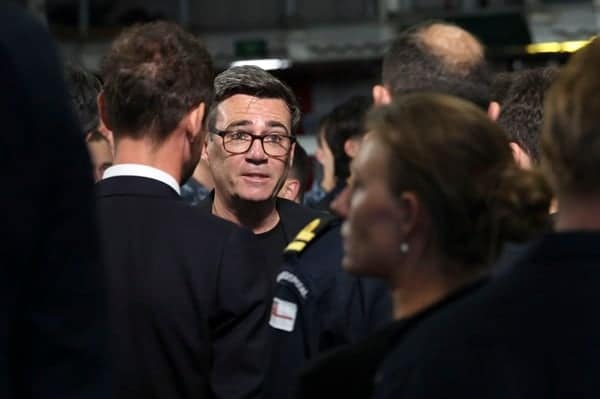
Andy Burnham has been challenged by his own government’s foreign minister after claiming Russia “clearly” interfered in the 2016 Brexit referendum, exposing fresh divisions over the evidence surrounding the historic vote as the Prime Minister prepares to push for closer ties with Brussels.
Stephen Doughty, a Foreign Office minister, rejected the suggestion that Russian efforts had successfully undermined Britain’s elections, while warning that Moscow continued to pose a threat to democratic processes.
Speaking to LBC, Mr Doughty said: “We know what the result was. I don’t think they’ve succeeded in their efforts.
“I don’t think they’ve succeeded in their efforts to undermine our elections.”
He added that the security minister had previously made clear that Russia had attempted to interfere but had not succeeded.
“But the fact is that they are attempting to interfere, and we all need to be alert to that and respond accordingly,” he said.
The intervention raises questions over the evidence behind Mr Burnham’s assertion, made on The Rest Is Politics podcast, that Russia had interfered in the referendum which resulted in Britain voting to leave the European Union.
The Prime Minister said that, after entering Downing Street in the summer, he had asked whether Moscow had interfered in the 2016 vote and received “the clear answer that yes there was”.
His comments have reignited a politically charged debate over the referendum’s integrity at a time when his government is considering how far Britain should move towards the EU.
Mr Burnham is expected to reiterate his argument in a Commons address that Brexit has done “more harm than good”, urging political parties to support a closer relationship with Brussels. He is expected to argue that stronger ties could help control immigration and boost economic growth.
Downing Street has defended the need for a fresh debate over Britain’s long-term relationship with Europe.
“Andy understands why some politicians don’t want to face up to the reality that Brexit has not delivered what they once promised,” a No10. source said.
“But it is time for a different conversation about what our long-term relationship should be. Sticking with the status quo and not working relentlessly to secure a good deal that boosts growth would be a major dereliction of duty.”
At Labour’s conference in Liverpool last month, Mr Burnham said he would set out the “options” for Britain’s future relationship with Europe around the time of a UK-EU summit planned for the end of the year. Those options could include rejoining the bloc.
The prospect has drawn fierce criticism from Reform UK, whose home affairs spokesman Zia Yusuf accused the Prime Minister of abandoning a key electoral pledge not to reopen the Brexit debate.
“More people voted for Brexit in this country than have voted for anything for the history of this country in a single election,” Mr Yusuf told GB News.
“For him to be doing this now I think is really awful, but it’s why people have such a dim view of career politicians. They will say anything they can to get elected.”
Andrew Bowie, the Conservatives’ shadow energy secretary, also urged Mr Burnham to abandon the argument and focus on opportunities outside the EU.
“I think it’s very dangerous of the Prime Minister to seek to reopen the Brexit division that this country has moved on from,” he told the People’s Channel.
“We need to respect that vote,” he said, adding: “Come on, Andy, move on. It’s not 2016. It’s 2026. Let’s deal with the issues we’re facing today.”
The dispute leaves the government facing two politically sensitive questions: how closely Britain should align itself with Brussels, and precisely what the available evidence establishes about Russian interference in the referendum.
While ministers agree that Moscow seeks to interfere in democratic processes, the distinction between attempted interference and proven success remains central to the growing row.


Leave a Comment