
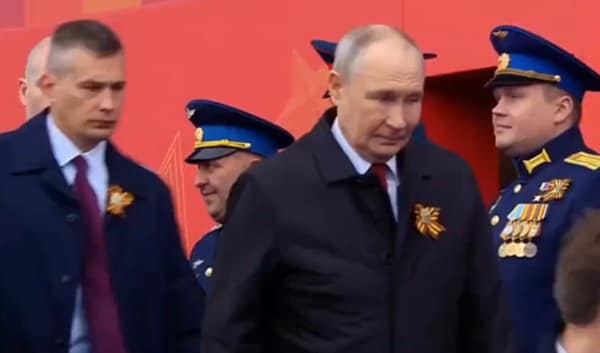
The Kremlin has accused British Prime Minister Andy Burnham of stoking anti-Russian sentiment after he accused Moscow of spreading lies and disinformation and announced a new national centre to counter hostile information operations.
Burnham used his first address to the United Nations General Assembly in New York to single out Russia over what he described as an escalating campaign of information warfare against Britain and its allies.
He announced that the government would establish a National Centre for Information Defence, designed to strengthen Britain’s ability to detect, attribute and disrupt hostile state information attacks. The initiative is expected to bring together security agencies, law enforcement and other organisations to counter foreign disinformation and deepfakes.
Burnham said Russia had used a range of techniques to manipulate public opinion, including bots, fake websites and fabricated newspaper articles.
Read more related news:
Burnham’s new ‘defence’ centre will hunt down ‘hostile’ online attacks
Zelensky warns ‘Russia is preparing a new massive attack against Ukraine’ after meeting Burnham
Lithuania draws up evacuation plans as Europe prepares for war within months
Brits on holiday in NATO hotspot warned of Russian explosive drones
“They’ve amplified far right narratives, and we have evidence that they tried to interfere with the 2019 General Election.”
The Kremlin swiftly rejected Burnham’s approach.
Dmitry Peskov, Russian President Vladimir Putin’s spokesman, accused Britain and other European governments of deliberately creating an atmosphere of hostility towards Russia.
“Well, the British Prime Minister said nothing new.
“That is the first point. The second is that stoking anti-Russian sentiment and fostering an atmosphere of total Russophobia is what Britain is doing.
“And now, presumably in unison with Britain, the Germans, the French and a number of other European states are doing the same thing.”
Peskov said Moscow regarded the policy as counterproductive and argued that it would make diplomatic efforts to reduce tensions more difficult.
“From our point of view, this is an utterly short-sighted policy.
“It in no way brings us any closer to any steps that might, in the long term, lead to a reduction in tensions and de-escalation on the European continent.”
The Kremlin’s response came as Burnham continued his first major international engagement as prime minister at the UN General Assembly, where he has sought to emphasise Britain’s role in European security while strengthening relations with the United States and European allies.
Burnham’s government has increasingly focused on Russia’s use of hybrid tactics, including alleged interference, sabotage and disinformation. The UK has also backed closer European cooperation against threats linked to Russia’s war in Ukraine.
The new information centre is intended to provide Britain with greater capacity to identify foreign information operations before they can cause damage, while the government has said it will not be aimed at suppressing legitimate domestic political dissent.
The confrontation underlines the widening gap between London and Moscow over the nature of Russia’s activities in Britain and Europe.
For Burnham, the creation of the centre represents an attempt to treat information warfare as a national-security issue alongside more traditional military threats. For the Kremlin, Peskov’s response reflects Moscow’s long-standing objection to what it describes as Western hostility towards Russia.
The dispute comes as European governments continue to strengthen their defences against alleged Russian hybrid activity while diplomatic efforts over the war in Ukraine remain unresolved.
Britain and its European partners are therefore facing a dual challenge: countering what they describe as hostile interference while maintaining channels through which wider security tensions could eventually be reduced.


Leave a Comment