
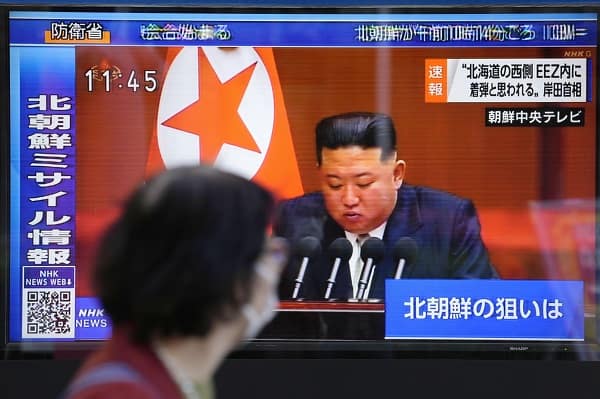
Donald Trump has ordered the US military to “substantially reduce” joint exercises with South Korea, reviving questions over the durability of one of Washington’s most important military alliances in Asia as North Korea expands its battlefield capabilities.
Hours before the annual Ulchi Freedom Shield exercise was due to begin, Trump said he was “not happy” with the large-scale drills, arguing that they were expensive and sent an unnecessarily hostile signal to Pyongyang.
The exercises, scheduled from August 17 to 27, involve about 18,000 South Korean troops and are designed to prepare allied forces for a potential North Korean attack.
Trump said the drills were “too late to cancel” but had instructed Pete Hegseth, his secretary of war, to reduce them substantially.
His justification was strikingly personal.
Trump pointed to his “very good relationship” with North Korean leader Kim Jong Un, describing Pyongyang as “unthreatening and respectful” during his presidency.
The language marks another turn in Trump’s long-running effort to reshape the US military presence on the Korean Peninsula. During his first term, he repeatedly criticised joint exercises as costly “war games” and temporarily suspended or scaled back some major drills during diplomacy with Kim.
The president’s latest intervention comes as North Korea’s military relationship with Russia has become increasingly consequential. North Korean troops have fought alongside Russian forces in Ukraine, while Pyongyang has supplied Moscow with weapons and missiles.
US officials said this year’s exercises were specifically designed to reflect the changing character of warfare, including threats from drones, GPS disruption and cyberattacks.
Colonel Ryan Donald, a US commander in South Korea, said North Korean soldiers had taken battlefield lessons from Ukraine back to their own military.
That makes the timing of the proposed reduction particularly awkward for Washington.
The drills are not simply Cold War-era exercises. They are intended to test how allied forces would respond to the increasingly sophisticated methods now being used on modern battlefields.
South Korea and the US have conducted joint exercises for more than seven decades, making them a central pillar of deterrence against Pyongyang.
Trump, however, has consistently viewed the relationship through the lens of cost and negotiation.
In 2019, he argued that reducing exercises could save the US “hundreds of millions of dollars”, while complaining that Washington was not adequately reimbursed.
His relationship with Kim has nevertheless evolved dramatically from the threats of his first term, when Trump labelled him “little rocket man” and warned of “fire and fury”. A year later, Trump told supporters that the two leaders had exchanged “beautiful letters” and “fell in love”.
The latest policy shift leaves South Korea facing an uncomfortable calculation: how much military readiness can be surrendered in pursuit of diplomatic engagement with Pyongyang?
For Washington, the risk is equally stark. The exercises may be expensive, but the cost of discovering that deterrence has been weakened could be considerably higher.


Leave a Comment