
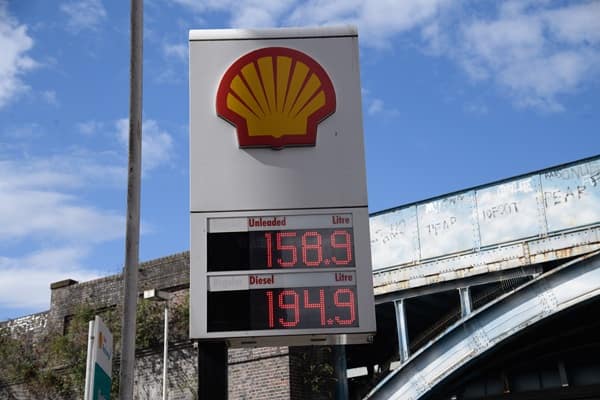
British motorists have been hit with a stealth financial squeeze worth billions of pounds after oil markets were sent into turmoil by the Iran conflict, pushing fuel prices to levels that are now adding hundreds of pounds a year to household running costs.
More than 100 days after the outbreak of the war in the Middle East, petrol and diesel prices remain sharply elevated, with drivers absorbing what analysts describe as one of the most sustained fuel shocks in recent years.
Petrol prices are now around 27p per litre higher than before the conflict began, while diesel has surged by approximately 43p per litre—an increase that has compounded over time into a significant drag on household finances and business costs.
Fresh analysis suggests the total hit to UK motorists is already substantial. Drivers of petrol and diesel vehicles have collectively paid an estimated £1.7 billion more at the pump in just over three months as a result of the disruption to global oil supply chains, particularly through the strategically vital Strait of Hormuz.
Over a longer period, the burden becomes even more stark. Petrol car owners are now paying an average of £175 more than equivalent electric vehicle users, while diesel drivers are facing an additional £255 in running costs compared with EV motorists over the same timeframe.
In total, the additional cost of running petrol and diesel vehicles compared with electric alternatives has exceeded £6.3 billion over the past 101 days alone, according to industry-backed modelling.
The price surge has been driven by volatility in global oil markets following repeated disruptions linked to the conflict, with traders pricing in heightened risk around shipping routes and potential escalation in the region.
Governments across Europe and beyond have been forced to consider emergency measures to cushion the impact, as inflationary pressure from fuel costs threatens to feed through into broader consumer prices.
The shock has also accelerated a structural shift in the UK car market. Electric vehicle adoption has continued to rise sharply, with nearly 44,000 new EV registrations last month alone, giving battery-powered cars a market share of 27.3 per cent.
By contrast, petrol’s share has slipped to 41.2 per cent, while diesel continues to decline, reflecting both long-term policy pressure and the immediate impact of elevated running costs.
So far this year, more than 220,000 electric vehicles have been registered in the UK—an increase of 24.3 per cent compared with the same period last year—while petrol and diesel registrations have fallen.
Industry analysts say part of the shift is being reinforced by policy support, including the Government’s Electric Car Grant, which offers subsidies of up to £3,750 for eligible zero-emission vehicles. More than 110,000 drivers have already benefited from the scheme.
Colin Walker, head of transport at the Energy and Climate Intelligence Unit, said the fuel shock had widened the economic gap between petrol and electric vehicles at precisely the moment households are most sensitive to rising costs.
He warned that weakening electric vehicle policies would risk locking consumers into higher long-term fuel bills at a time when global energy markets remain unstable.
“The savings from EVs were already significant before the war started,” he said. “The disruption to global oil supply has only made that gap wider.”
Critics of plug-in hybrids have also argued that they offer limited protection against fuel volatility, with real-world costs often significantly higher than advertised once both fuel and electricity use are taken into account.
While ministers point to rising EV uptake as evidence of a successful transition, the immediate political challenge is the impact on millions of households still dependent on petrol and diesel transport.
With oil markets still unsettled and geopolitical tensions unresolved, analysts warn that motorists are likely to remain exposed to further price spikes.
For now, the result is a simple but politically sensitive reality: the cost of filling up the tank has become one of the most visible ways in which a distant war is being felt on Britain’s high streets.


Leave a Comment