
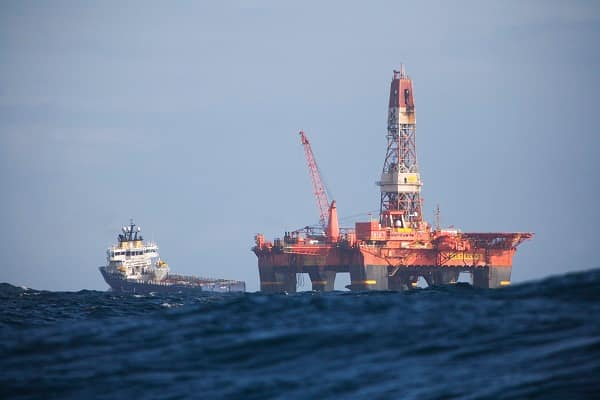
Labour has been plunged into a fresh internal confrontation over the future of North Sea oil, with Andy Burnham and his Chancellor, John Healey, reportedly seeking to push through the controversial Rosebank development ahead of the Budget.
The dispute places the Government’s competing priorities — raising revenue, protecting energy-sector jobs and meeting climate obligations — on a collision course, with the Energy Secretary resisting pressure to approve a project whose economic benefits remain contested.
Ms Fahnbulleh is understood to be leaning towards rejecting Rosebank on environmental grounds, despite having recently approved the smaller Jackdaw gasfield. Downing Street declined to comment on Sunday, October 25, following reports that the Prime Minister and Chancellor had agreed to press for the oilfield’s approval. Officials maintained that the decision rests with the Energy Secretary.
Mr Healey signalled his support last week, telling ITV that oil and gas revenues would contribute to a new energy wealth fund. His comments also suggested that Treasury projections had factored in potential income from Rosebank, raising the stakes of a decision that could have consequences for the Government’s fiscal plans.
The Chancellor’s position has sharpened tensions with ministers and Labour backbenchers concerned that approving the field would conflict with the party’s climate commitments. Some MPs are discussing ways to force a Commons vote if the project receives the green light, potentially turning an energy-policy decision into a test of party discipline.
Ms Fahnbulleh has argued that Jackdaw and Rosebank cannot be treated as equivalent cases.
“One is a gasfield that caters for the domestic market, while the other is an oilfield that is mainly for export,” she said.
“It is right that we judge each application in its own right, and it is absolutely critical that the decision is consistent with our climate obligations, our carbon budgets and the end destination we need to get to with the energy transition.”
Rosebank is estimated to produce roughly seven times the emissions of Jackdaw, while officials have questioned how much it would contribute to British energy security if most of its output were exported.
The contrast exposes a central dilemma for ministers: domestic production may support jobs and generate revenue, but an export-oriented oilfield offers a less direct answer to arguments about securing Britain’s energy supply.
Industry figures warn that rejecting Rosebank would deal a significant blow to the North Sea sector. Environmental groups, by contrast, would regard a refusal as an important victory.
A spokesperson for the Department for Energy Security and Net Zero said the Government would not comment on speculation, adding that the North Sea remained a “vital national asset” and that oil and gas would continue to play a role in the energy system alongside the transition to clean power.
“Any decision will take into account all relevant evidence, including environmental assessments and public representations received during the consultation process,” the spokesperson said.
The standoff follows the approval of Shell-operated Jackdaw, around 150 miles east of Aberdeen. The field is expected to supply about 6 per cent of the UK’s domestic gas, enough to heat 1.4 million homes — a case ministers defended on the grounds that domestic production could provide an alternative to imported fuel.
A final decision on Rosebank is expected before the end of the year. Until then, the project remains a test of whether the Government can reconcile its fiscal ambitions with its environmental commitments without provoking a damaging revolt from its own MPs.


Leave a Comment