
Ukraine’s recovery is being planned while the war is still going on. Not sketched for later, but planned now, in municipal offices and ministries, by people deciding which clinic gets repaired first and how a rebuilt school should be designed.
Those decisions tend to be made once. A clinic repaired this year will serve its community for decades, and the choices behind it, about what to fix first, how to rebuild and who the building needs to serve, are usually made under pressure by a local administration with a long list and a short window. How well those choices hold up depends on whether the people making them have the skills, information and support to make them well.
One aspect of the work of the Partnership Fund for a Resilient Ukraine (PFRU) is helping communities make these recovery decisions. It is a multi-donor program managed by the UK’s Foreign, Commonwealth and Development Office and implemented by Chemonics UK, backed by the United Kingdom, Estonia, Canada, Norway, Switzerland, Sweden and Finland. Its second phase runs to October 2027.
Alongside emergency support, service restoration, social cohesion initiatives and policy reform efforts, PFRU also helps communities plan for long-term recovery. Much of that work is locally led, carried out with hromadas, the territorial communities that form Ukraine’s basic unit of local self-government.
The work behind a recovery plan
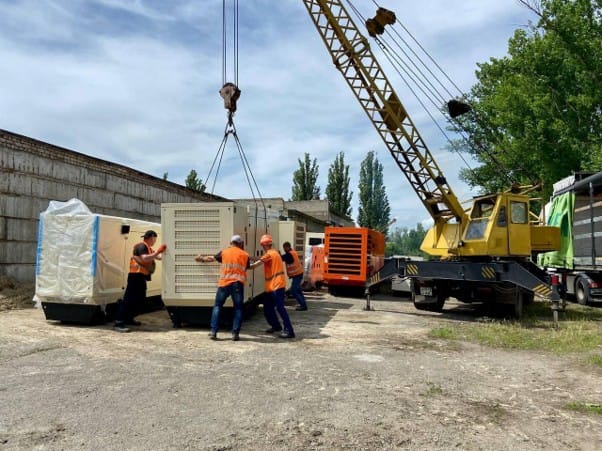
The program’s stated purpose is to strengthen the capacity of state and non-state actors to undertake emergency and recovery planning, rebuild, deliver services and build resilience in frontline and liberated communities. Its recorded activities cover several kinds of work. Immediate needs include clearing rubble, repairing damaged clinics, schools and community centers, and supplying emergency generators. Social support includes psychosocial services, the reintegration of children and transitional justice mechanisms. Alongside both, PFRU supports local administrations as they plan for and implement their own recovery.
The institutional work is about helping a local administration decide, sequence and deliver. A generator is a straightforward purchase. Knowing which facility needs one first, and whether the building it powers is worth repairing as it was or rebuilding differently, is a planning question that people with local knowledge are best placed to answer.
Building recovery capacity in hromadas
At a PFRU workshop on managing public resources on Aug. 20, 26 hromada representatives took part in person and 15 more joined online. The emphasis was on methods officials could take straight back to their offices. Later stages of the program cover preparing projects, building out each hromada’s project portfolio and medium-term plans, and using DREAM, Ukraine’s digital system for managing reconstruction projects. Hromadas are offered expert support to develop specific projects and find sources of financing.
In August, PFRU ran a three-day training on EPANET, a free software tool for modeling water supply networks, for more than 20 specialists and local government representatives from six frontline and border communities in the Dnipropetrovsk, Zaporizhzhia, Kharkiv, Kyiv, Sumy and Chernihiv oblasts. Participants were then paired with a water supply expert for two months of mentoring to build hydraulic models of their own systems. According to PFRU, the models will help communities “make more informed infrastructure decisions” and “prepare technically sound reconstruction projects.”
According to Ukraine’s Ministry of Social Policy, Family and Unity, the number of people with disabilities in the country has risen by about 600,000 since the full-scale invasion began, to around 3.4 million. Through its Barrier-Free Hromadas work, nine hromadas, from Sumy to Odesa oblasts, have been provided with specially equipped vehicles for social taxi services, and nine more are planned. “The transfer of these vehicles is part of broader PFRU initiatives aimed at removing barriers and improving access to socio-economic opportunities, essential services, and civic participation,” said Nathan Smith, director of PFRU’s Social Cohesion Outcome.
PFRU’s work in culture follows the same locally led approach. The fund contributed to the methodology behind the Culture for Recovery (CuRe) platform, which has helped 12 frontline communities prepare their own recovery projects, with the communities doing the preparation themselves. Through the School for Hromadas “Culture in Recovery,” run with Ukraine’s Ministry of Culture and Ministry for Recovery, Infrastructure and Transport, that first cycle produced 11 projects for DREAM, and four are now moving into implementation with PFRU support. A second cohort, representing 11 hromadas from six oblasts, held its first module in Kyiv in September. Chemonics has described the same principle from the community side in its account of inclusive recovery in Chuhuiv, in the Kharkiv region.
“We are restoring cities and villages where people want to live. Places they recognise as their own,” said Anastasiia Bondar, a deputy minister at Ukraine’s Ministry of Culture. Serhii Derkach, first deputy minister at Ukraine’s Ministry for Recovery, Infrastructure and Transport, said recovery projects should be judged on more than the building itself. “How will it affect the economy, tourism, accessibility, culture and identity?” he said.
The same fund raised its budget for Ukrainian culture and identity projects from £1 million to £10 million for 2025 to 2027, and its “Heritage. Space for Work” initiative, which supports cultural organisations including displaced ones, is set to reach more than 100 organisations. Culture sits inside a resilience program for a practical reason: a community that has lost its gathering places has lost part of what makes returning worthwhile. Chemonics has explored that idea further in Why Culture Matters in Recovery, which looks at PFRU-supported projects in Sumy and Mykolaiv.
Investing in the people who will make those decisions
While PFRU is not primarily a climate program, the recovery choices it supports will inevitably influence Ukraine’s long-term sustainability and energy future.
Chemonics has partnered with UNLEASH since 2019 as a Lead Scale Partner. UNLEASH is an innovation program that convenes young professionals to develop locally informed solutions to shared problems. For UNLEASH Europe 2026 in Copenhagen, Chemonics sponsored two professionals who work on PFRU to join 200 changemakers from across Europe for tracks on the future of cities and the just green transition.
They worked on other people’s problems, which is the useful part. One joined a team designing how artificial intelligence could support more inclusive infrastructure planning by integrating Sámi knowledge into the process. The other worked on a concept for turning Dublin buses into mobile, climate-resilient shelters for people experiencing homelessness during extreme weather.
The concepts were built for other places, and the method behind them is portable: how to run a participatory design process, how to test an idea against the people it is meant to serve, how to make the case for an unconventional option. Those are the habits a recovery planner uses on a Tuesday morning, and they are difficult to teach from a manual. Both participants are now bringing that thinking, including what they learned about the just green transition, back to their work on PFRU.
It is a modest investment against a very large problem. Two professionals at one event will not shape a national recovery on their own. The skills they bring back stay with the program, and with the communities they work alongside, long after the event.
The parts that are hard to program for
One of the participants, reflecting on Copenhagen, made a point that infrastructure figures do not capture: recovery means rebuilding trust, social cohesion and a shared sense of belonging, alongside the restoration of physical infrastructure.
Trust is harder to program for than repairs, and it explains some of the choices above. A methodology that has communities prepare their own recovery projects produces projects with local ownership, and communities that had a say. A hromada that can model its own water network or manage its own project portfolio is better placed to shape what gets rebuilt. A cultural organisation kept working in a displaced town preserves something a rebuilt road cannot. Sponsoring two Ukrainian professionals to spend five days solving problems in Copenhagen is a small bet on the same principle: the people who will live with the recovery should help design it.
Organisations working in Ukraine are learning this alongside Ukrainian institutions and partners, and much of the learning comes from them. Chemonics‘ part, through PFRU and partnerships like UNLEASH, is to help build that local capacity at the pace the country’s recovery requires.




Leave a Comment