
A reported Russian plan to cripple Ukraine’s power system threatens to turn the coming winter into a battle for civilian survival, with Kyiv facing the prospect of prolonged blackouts as Moscow intensifies attacks on electricity and water infrastructure.
Vladimir Putin is facing renewed accusations that Russia is seeking to break Ukraine’s resistance not simply through military force, but by making life in its major cities unbearable.
A report by The Guardian, citing a document it says outlines a new Russian strategy, describes plans for a significant escalation in attacks on Ukraine’s civilian energy infrastructure, with the ultimate objective of depriving cities of essential services and pressuring the country into surrender.
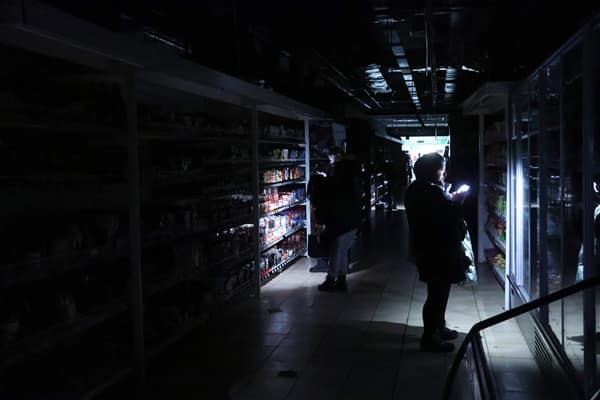
Recent Russian strikes suggest the threat is already taking shape. Last week, missiles and drones hit power infrastructure in Kyiv, Kharkiv and other major cities, causing continuing electricity outages and disrupting water supplies.
The attacks have intensified fears that Moscow is preparing for a winter campaign designed to exploit Ukraine’s vulnerability to damage inflicted on its electricity network. Without reliable power, heating and water systems can become harder to operate, while hospitals, businesses and households face mounting disruption.
Read more related news:
Trump ‘surrenders to Putin’ waives Russian sanctions betraying Ukraine and defies congress
‘No one negotiates with the weak’: Ukraine urged to hit Putin’s oil lifeline
Army chief warns ‘war is no longer unthinkable’ and MPs will have to tell Brits ‘where the risk lies’
Britain prepares troops for Ukraine deployment as Trump deepens rift with NATO allies
The timing has sharpened the diplomatic stakes. US President Donald Trump had unilaterally announced an “energy ceasefire” between Moscow and Kyiv, yet Russian attacks on Ukraine’s power grid continued.
“The strategy [is] meant to punish Ukraine’s population and drive the country to capitulation,” The Guardian reported, describing the pattern of strikes.
The alleged plan represents a stark assessment of the direction of the war. According to the newspaper’s reporting, Russia’s battlefield difficulties and Ukraine’s recent counteroffensive have reinforced Moscow’s reliance on attacks against the infrastructure that sustains civilian life.
The report says Russian planners have calculated the numbers of missiles and drones they would need to achieve their objective and identified vulnerable facilities across Ukraine’s energy system. Among the most concerning targets are distribution substations connected to several nuclear power plants — infrastructure whose disruption could create serious additional risks for an already strained electricity network.
Kyiv remains the central focus. According to the reported plan, Russia seeks to deprive the capital of as much as 90 per cent of its electricity supply, potentially plunging millions of residents into darkness and leaving essential services struggling to function.
The consequences could be severe if the worst-case projections materialise. Citing expert assessments, The Guardian reported that blackouts could last as long as 20 hours a day while damaged equipment is repaired.
Such an outcome would transform electricity supply from a technical and economic problem into a central front in the war. Prolonged outages could disrupt heating during freezing weather, restrict access to water, undermine medical services and make ordinary urban life increasingly difficult to sustain.
The strategy also raises questions about the effectiveness of diplomatic announcements that are not accompanied by an enforceable agreement. Trump’s declaration of an energy ceasefire created an expectation of restraint, but continued Russian attacks exposed the limits of an arrangement that Kyiv had not necessarily agreed to on the terms presented by Washington.
For Ukraine, the challenge is twofold: to protect an extensive and vulnerable energy network while continuing to defend its territory against Russian forces. Repair crews can restore damaged facilities, but repeated strikes threaten to overwhelm the time, equipment and resources available to keep the system functioning.
The reported targeting of substations associated with nuclear power plants adds another layer of concern. Such facilities play a crucial role in transmitting electricity, and attacks on supporting infrastructure can complicate the operation and stability of the wider grid. The report does not establish that a nuclear accident is inevitable, but the identification of such sites as potential targets underscores the risks surrounding the campaign.
The Kremlin’s wider military calculations remain contested, and the existence and implementation of the reported plan cannot be independently established from the account alone. Nevertheless, the pattern of attacks described in the reporting has raised urgent questions about whether Ukraine’s civilian energy system is becoming a primary target in Moscow’s effort to weaken the country’s capacity to resist.
Russia’s war has already inflicted extensive damage on Ukraine’s infrastructure. A sustained campaign aimed at depriving major cities of electricity, heating and water would deepen the humanitarian consequences, placing civilians at the centre of a struggle over the country’s ability to endure another winter.
For Kyiv, the immediate battle is not only to keep Russian forces at bay, but to keep its cities functioning. For Moscow, the alleged strategy points towards a brutal calculation: that the pressure of darkness, cold and disrupted daily life might achieve what military advances have failed to deliver.
Whether that calculation succeeds remains uncertain. What is clear is that Ukraine’s power grid has become a critical battleground — and that the cost of its destruction would be measured not only in damaged infrastructure, but in the daily lives of millions of civilians.


Leave a Comment