
For much of the war, Ukraine’s long-range drone campaign focused on oil refineries, ammunition depots and air bases. The objective was clear; degrade Russia’s military capability while stretching its air defences.
Now Kyiv appears to be pursuing a broader strategy—one that targets not only Russia’s armed forces but the commercial infrastructure that helps sustain them.
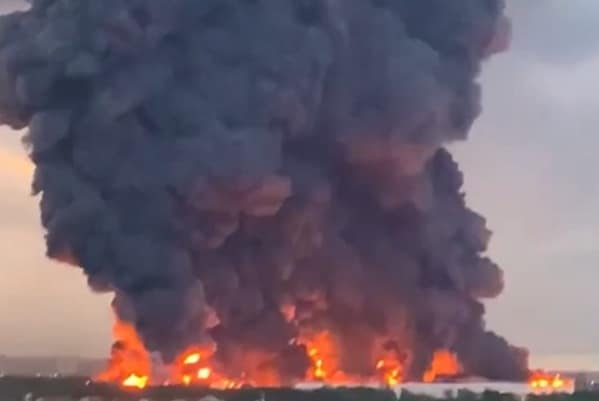
Recent Ukrainian strikes on warehouses belonging to Russian e-commerce giant Wildberries illustrate this shift.
Although Wildberries is best known as Russia’s largest online marketplace, Ukrainian and Western officials argue its logistics network has become an important supply channel for Russian troops and volunteer groups purchasing everything from uniforms and body armour to drones and spare parts.
According to Estonia’s Defence Forces Intelligence Centre, attacks on Wildberries facilities in the Moscow and Tambov regions, as well as Krasnodar and Stavropol, could inflict direct economic losses of up to $2 billion while disrupting logistics that extend beyond the battlefield.
The significance lies not only in the financial cost.
Wildberries and its rival Ozon are deeply embedded in Russia’s consumer economy, serving millions of customers every day. Disrupting such networks increases pressure on businesses, insurers and logistics operators while reminding ordinary Russians that the war is no longer confined to distant front lines.
The timing is also notable. Russia’s business climate has weakened in recent months, with the Central Bank’s business activity index slipping to its lowest level since 2022. While Ukraine’s drone campaign is only one factor behind that deterioration, it adds another layer of uncertainty for companies already facing sanctions, labour shortages and high borrowing costs.
The warehouse strikes also coincide with Operation Molochka, Ukraine’s sustained campaign against Russian logistics in the Black Sea and Sea of Azov. By targeting shipping, transport routes and energy infrastructure supporting occupied Crimea, Kyiv is attempting to increase the cost of maintaining Russia’s military presence while forcing Moscow to divert valuable air defence systems away from the front.
No single drone strike will alter the course of the war.
Taken together, however, Ukraine’s expanding campaign suggests it is seeking to wage economic warfare as aggressively as military warfare—raising the financial, logistical and political costs of Russia’s invasion with every attack.
If successful, the strategy could force the Kremlin to spend ever greater resources defending warehouses, transport hubs and commercial infrastructure that once seemed far removed from the battlefield.


Leave a Comment