
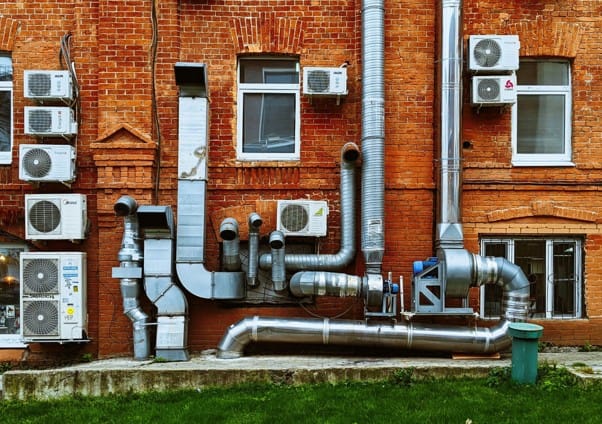
The decision to install or upgrade a commercial air-conditioning and ventilation system is routinely treated as a facilities-management question. It is actually a business performance question. Professional ventilation and air conditioning providers such as Alpha Air work with commercial operators who have made this distinction, because the organisations that approach air conditioning installation as an investment in how their business operates consistently achieve outcomes that those treating it as a pure technical specification never quite reach.
Productivity and the indoor environment
The relationship between indoor air temperature, air quality, and workplace productivity is well documented. Cognitive performance decreases measurably in environments that are too warm. Concentration is impaired by elevated carbon dioxide levels that accumulate in poorly ventilated spaces. Fatigue, discomfort, and the background stress of working in an uncomfortable environment reduce output in ways that are difficult to attribute directly but consistent in their effect. A commercial building that maintains an optimal thermal and air-quality environment is a building where people work more effectively, and the productivity gain across the full workforce over a full year is a business benefit that dwarfs the capital cost of the system that produces it.
Staff retention and the workplace environment
The quality of the work environment, compensation, and culture influences staff retention in competitive employment markets. A workplace that is consistently too warm in summer, inadequately heated in winter, poorly ventilated, and generally uncomfortable to spend eight hours in is a workplace that generates attrition. The cost of replacing a member of staff significantly exceeds the annual running costs of the air-conditioning system that would have improved the environment. Commercial operators who view ventilation investment through a staff-retention lens reach a different financial conclusion than those who view it solely as an energy cost.
Customer and client experience
For businesses where customers or clients spend time in the building, the quality of the thermal environment is part of the experience they are being sold. A retail environment that is stuffy in summer loses customers who leave rather than browse. A restaurant with poor air extraction leaves diners with the odour of previous services. A professional services office where clients wait in an uncomfortable reception area makes a specific impression before any meeting has begun. The air conditioning and ventilation system is a component of the customer experience whether the business treats it that way or not.
Energy costs and regulatory compliance
Commercial air conditioning installations are subject to energy-efficiency requirements and, in many cases, to regulatory inspection under the Energy Performance of Buildings regulations. A system specified to a lower standard to reduce installation costs may incur ongoing energy costs and compliance obligations that erode the apparent savings over its operational life. A system specified correctly from the outset, with appropriate controls, zoning, and efficiency ratings, reduces running costs and meets regulatory requirements without remediation. The installation decision made today determines the compliance and energy cost position for the fifteen or more years the system operates.
Specifying for actual business use
The most common source of underperformance in commercial air conditioning installations is a specification based on the building rather than on how the business actually uses it. Occupancy patterns, heat loads from equipment, the specific ventilation requirements of different areas, and the hours of operation the system must support are all business variables that a specification built around building dimensions alone will not accurately capture. A commercial installation that has been specified in genuine dialogue with the business about how the building is used delivers better performance from day one and avoids the capacity and comfort problems that under-specified systems generate throughout their operational life.
The installation decision and its long-term consequences
A commercial air conditioning installation is a capital investment with a 15- to 20-year operating horizon. The decisions made at installation regarding system type, capacity, zoning, controls, and filter specifications determine the system’s performance, operating costs, and maintenance requirements over the full period. Treating those decisions as a cost minimisation exercise produces a system that is cheaper to install and more expensive to operate, less comfortable for occupants, and more likely to require remedial work within its operational life. Treating them as a business investment produces a system that performs as needed, costs what it should to run, and contributes to the operational environment the business depends on.


Leave a Comment