
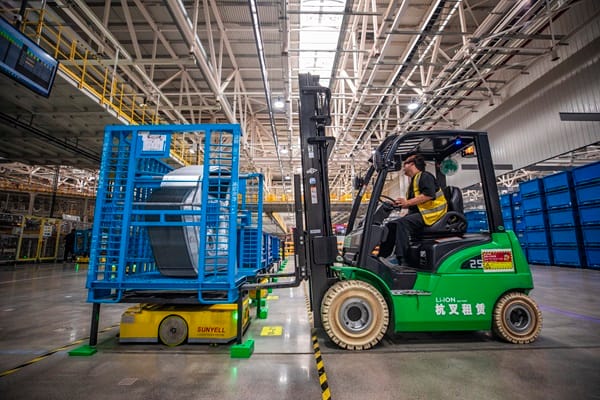
Pallet handling covers the systems and equipment used to store, move and retrieve palletised goods within a warehouse, and it remains one of the most common storage formats across industrial and logistics operations. How pallets are stored directly affects space utilisation, retrieval speed and the level of manual handling required from staff. Automated and semi-automated approaches to pallet storage have grown more common as businesses look to improve efficiency in this area. Randex supplies pallet handling and storage equipment as part of its wider product range.
Why pallet storage design affects warehouse efficiency
The way pallets are arranged within a warehouse has a direct impact on how much stock can be stored, how quickly it can be retrieved, and how much staff time is spent moving goods rather than fulfilling orders. Poorly planned pallet storage can result in wasted aisle space, difficult access to less frequently picked pallets, and increased risk of damage during handling. Because pallets typically represent bulk quantities of stock, inefficiencies at this level of storage tend to have a larger overall impact than similar issues affecting smaller item storage.
Common pallet storage formats and their trade-offs
Warehouses typically choose between selective racking, which allows direct access to every pallet but uses more floor space, and higher density formats such as drive-in racking, which sacrifice some individual pallet accessibility in exchange for greater storage capacity within the same footprint. The right choice depends heavily on how frequently different pallets need to be accessed and how much floor space is available. Businesses with a wide range of pallet turnover rates sometimes use a combination of formats, reserving high-density storage for slower-moving stock and selective access for frequently picked items.
How automation is changing pallet handling
Automated pallet handling systems, including automated storage and retrieval systems designed specifically for pallet loads, can reduce reliance on forklift operators for routine storage and retrieval tasks. This can improve consistency in how pallets are stored and retrieved, reduce the risk of handling damage, and free up staff for tasks that genuinely require manual judgement. The upfront investment required for this kind of automation is generally higher than traditional racking, which means businesses need a reasonably clear volume and throughput case before automation becomes the more cost-effective option.
Safety considerations in pallet storage systems
Pallet racking failures can cause significant damage and injury risk given the weight typically involved, which makes correct installation, regular inspection and appropriate load limits genuinely important rather than a compliance formality. UK health and safety guidance places clear expectations on businesses to maintain racking systems properly and to ensure staff handling pallets are adequately trained. Automated systems can reduce some manual handling risks associated with forklift operation, though they introduce their own maintenance and safety considerations that need to be properly managed.
Integrating pallet handling with inventory software
Pallet storage systems that integrate with inventory or warehouse management software can track pallet locations, contents and movement automatically, which reduces the manual record-keeping traditionally associated with pallet-based storage. This integration also supports more accurate stock counts, since pallet movements are logged as they happen rather than relying on periodic manual checks. For businesses managing high pallet volumes, this kind of tracking can meaningfully reduce the time spent locating specific stock or resolving inventory discrepancies.
Planning pallet storage capacity for future growth
Businesses planning pallet storage should consider not just current volume but anticipated growth, since reconfiguring racking or upgrading to automated systems later tends to be more disruptive than incorporating additional capacity into an initial design. This includes considering ceiling height, floor loading capacity and aisle width requirements for any equipment likely to be used in the future, even if automation is not part of the immediate plan. Planning with growth in mind tends to reduce the likelihood of a costly and disruptive redesign within a few years of installation.
Getting pallet handling right from the start
Pallet handling remains a foundational part of warehouse operations, and the storage format chosen has a lasting effect on efficiency, safety and cost. Suppliers such as Randex, offering both traditional and automated pallet handling equipment, give businesses options to match their specific throughput and space requirements. Businesses reviewing their pallet storage are generally best served by assessing their actual pallet turnover and growth expectations before deciding between selective racking, high-density storage or automated retrieval systems.





Leave a Comment