
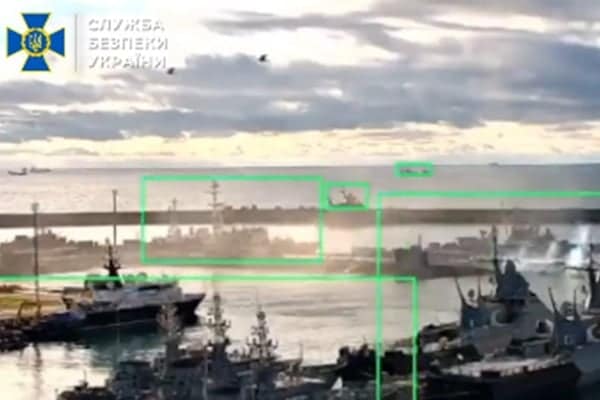
Ukraine’s Unmanned Systems Forces have claimed to have struck and disabled 300 vessels linked to Russia’s sanctions-busting “shadow fleet” during an 11-week campaign designed to disrupt Moscow’s oil export network.
The operation, dubbed “MoLoChKa”, has targeted vessels operating in the Black Sea and Sea of Azov since July 6, according to Robert “Madyar” Brovdi, commander of Ukraine’s Unmanned Systems Forces.
Brovdi said 134 vessels had been hit in the Sea of Azov and a further 166 in the Black Sea. The figures represent Ukrainian military claims and could not be independently verified.
The so-called shadow fleet consists largely of ageing tankers used to transport Russian oil while attempting to circumvent western sanctions and restrictions on the price of Russian crude. Their ownership, insurance and routes can be deliberately obscured through complex corporate structures, flags and transfers between vessels.
Read more related news:
Explosions rock Russia as Ukraine unleashes another devastating blow to Putin’s fuel supply
British robot submarine fires torpedo in a chilling warning to Russia
UK warned we are in the ‘most dangerous era’ as war with Russia may all ready be under way
Lithuania draws up evacuation plans as Europe prepares for war within months
The scale of the Ukrainian campaign underlines the growing role of unmanned systems in the economic dimension of the war. Rather than targeting only conventional military assets, Kyiv has increasingly sought to disrupt the infrastructure that allows Russia to generate export revenues.
The campaign has accelerated sharply since its launch. Brovdi previously said that 285 shadow fleet vessels had been neutralised by September 11, meaning the latest announcement represents a further 15 vessels in less than two weeks.
Russia has condemned Ukrainian attacks on commercial shipping as “piracy”, while Ukraine has pointed to Moscow’s own attacks on commercial vessels and maritime infrastructure since its full-scale invasion in 2022.
The wider pressure on Russia’s energy trade is visible in export data. The Centre for Research on Energy and Clean Air said Russian fossil fuel export revenues fell 8 per cent month-on-month in August, while export volumes declined 7 per cent. Revenue from seaborne oil products fell 32 per cent and volumes dropped 21 per cent.
Yet Russia’s shadow fleet continues to provide a substantial channel for exports. CREA estimated that 52 per cent of Russia’s seaborne crude oil was carried by sanctioned shadow tankers in August.
The Kyiv School of Economics has also identified signs that Moscow is shifting more shadow-fleet activity towards Baltic ports. Shadow fleet shipments from those terminals rose 10.1 per cent month-on-month in July and 21.2 per cent compared with a year earlier, even as Russia’s overall seaborne oil exports declined.
The figures illustrate the emerging contest between Ukraine’s ability to attack Russia’s maritime logistics and Moscow’s capacity to reroute exports through an increasingly opaque tanker network.
For Russia, the challenge is no longer simply maintaining access to oil markets, but keeping the shipping infrastructure required to reach them operating under sustained Ukrainian attack.


Leave a Comment