
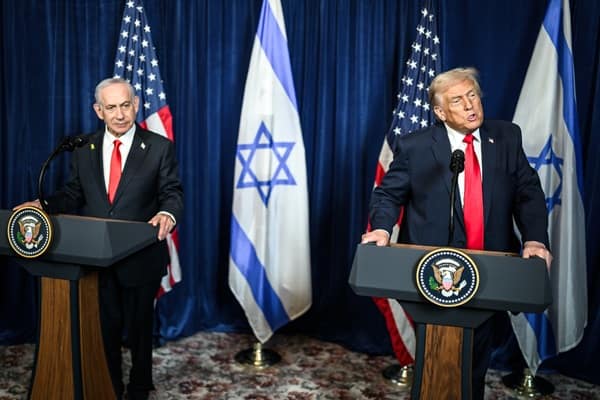
It is a strange moment in global affairs when the man dominating conversations about war in Europe is not Vladimir Putin, the architect of the largest conflict on the continent since World War II, but Donald Trump.
Across coffee shops, dinner tables, and bar counters, the tone is remarkably consistent.
The discussion is no longer centred on Russia’s invasion of Ukraine, battlefield developments, or Europe’s security architecture. Instead, it is filled with criticism, confusion, and growing unease about the former, and now current, US President.
Rewind to just before Trump’s inauguration. Decisions were already being made that sent shockwaves through those directly affected by the war.
The halting of critical munitions, artillery shells that Ukraine relies on to hold the line, was not just a policy adjustment; it was, in practical terms, a move that risked undermining Ukraine’s ability to defend itself at a critical juncture. There were moments where it genuinely felt uncertain whether Ukrainian forces would hold through to the summer.
For those on the ground, including myself, the consequences were immediate and tangible. Frontline positions depend on consistency in supply, intelligence, and political backing. Disrupt any one of those, and the entire system begins to strain.
Fast forward to today, and the rhetoric has only grown more contradictory.
Speaking aboard Air Force One, Trump has suggested that the United States is “helping NATO” and that NATO should now respond by deploying warships to the Strait of Hormuz. This raises an obvious question: what exactly does “helping NATO” mean in this context?
I personally know people who lost their jobs when humanitarian aid was cut, projects stopped, and we were nearly finished when artillery shells were halted before he was even inaugurated.
Since then:
• Military aid stopped
• Sanctions on Russia liftedIt’s chaos, he is a… https://t.co/kxTtmPBZo6
— Shaun Pinner (@ShaunPinnerUA) March 17, 2026
The United States is not an external benefactor to NATO, it is NATO. It is the alliance’s cornerstone, both militarily and politically. Framing support as though Washington is operating outside the alliance risks misunderstanding, or misrepresenting the very structure that has underpinned Western security for decades.
At the same time, reports of sanctions relief on Russia raise further concerns, particularly as global oil prices climb back above $100 per barrel. Russia’s economy is heavily dependent on energy exports, and higher oil prices significantly boost Kremlin revenues almost overnight. Even under sanctions, Moscow has managed to reroute exports through alternative markets, often at discounted rates, but when prices rise, those discounts matter less, the overall income still surges.
Easing sanctions in this environment compounds the effect, it reduces friction on Russia’s ability to sell oil, access financial systems, and move capital, effectively amplifying the windfall created by higher prices. In simple terms, the combination of elevated oil prices and relaxed sanctions acts as a financial multiplier for the Kremlin.
That revenue does not sit idle. It feeds directly into Russia’s war economy, funding military production, replenishing equipment losses, paying troops, and sustaining long-term operations in Ukraine. At a time when Western strategy has focused on restricting Russia’s ability to finance its war, loosening those constraints risks undermining that effort entirely.
There is also a broader geopolitical implication, increased Russian revenues strengthen Moscow’s ability to support partners such as Iran, whether through technology, intelligence sharing, or financial cooperation. In effect, decisions that ease economic pressure on Russia may not only prolong the war in Ukraine, but also indirectly empower actors involved in conflicts elsewhere, including those that could threaten US and allied personnel. The White House may now actually be assisting in the targeting of its own military, a paradox indeed.
All of this unfolds against the backdrop of an absent peace plan. For all the talk of ending the war quickly, something Trump campaigned on, there remains little in the way of a coherent, detailed strategy that reflects the realities on the ground, not just in Ukraine, but increasingly in the Middle East as well.
There is also a broader issue of process.
Major strategic decisions, particularly those that risk widening conflict, traditionally involve consultation with allies and, in the American system, oversight from Congress. Yet recent developments suggest a pattern of unilateralism. From military posturing in the Middle East to previous comments about Greenland, a territory tied to a NATO ally, the approach has often appeared improvised rather than coordinated, mixed messaging that’s now become synonymous with the Trump administration.
This is no longer just about policy disagreements or political preference. It is about strategic coherence at a time when the stakes could not be higher. Europe is already engaged in a continental war, whether it fully acknowledges it or not. The Middle East is increasingly volatile, the margin for error is shrinking, and many militaries do not have the capacity to fight in one theatre while deterring another.
Putin may have started the war, but the conversation has shifted, and not for the right reasons.
Serious questions are now being asked. Why do so many of Trump’s actions appear to benefit Putin? Why is Russia treated with more caution than America’s own allies? Why ease sanctions when the financial injection will likely prolong the war?
I have seen firsthand the depth of cooperation that has existed over the years, from joint exercises like Operation Sea Breeze to specialist training, rehabilitation programmes, and support for veterans. This is not about a lack of respect for America, far from it.
It is about concern over leadership that appears increasingly disconnected from the realities of modern conflict.
The world does appear more cautious now, and it is perhaps no surprise that long-standing allies are hesitating rather than rushing to align with decisions they were not consulted on. As German Defence Minister Boris Pistorius put it, “It’s not our war. We didn’t start it.” Whether one agrees with that sentiment or not, it reflects a broader mood across Europe.
There is however, still time to restore clarity and coordination, because ultimately, the cost of miscalculation will not be borne by politicians or headlines, but by those in uniform, and by civilians caught in the consequences of decisions made far from the front line.
Conflicts are converging, so caution is not weakness, it is necessity.
Something Trump seems to be lacking.


Leave a Comment