
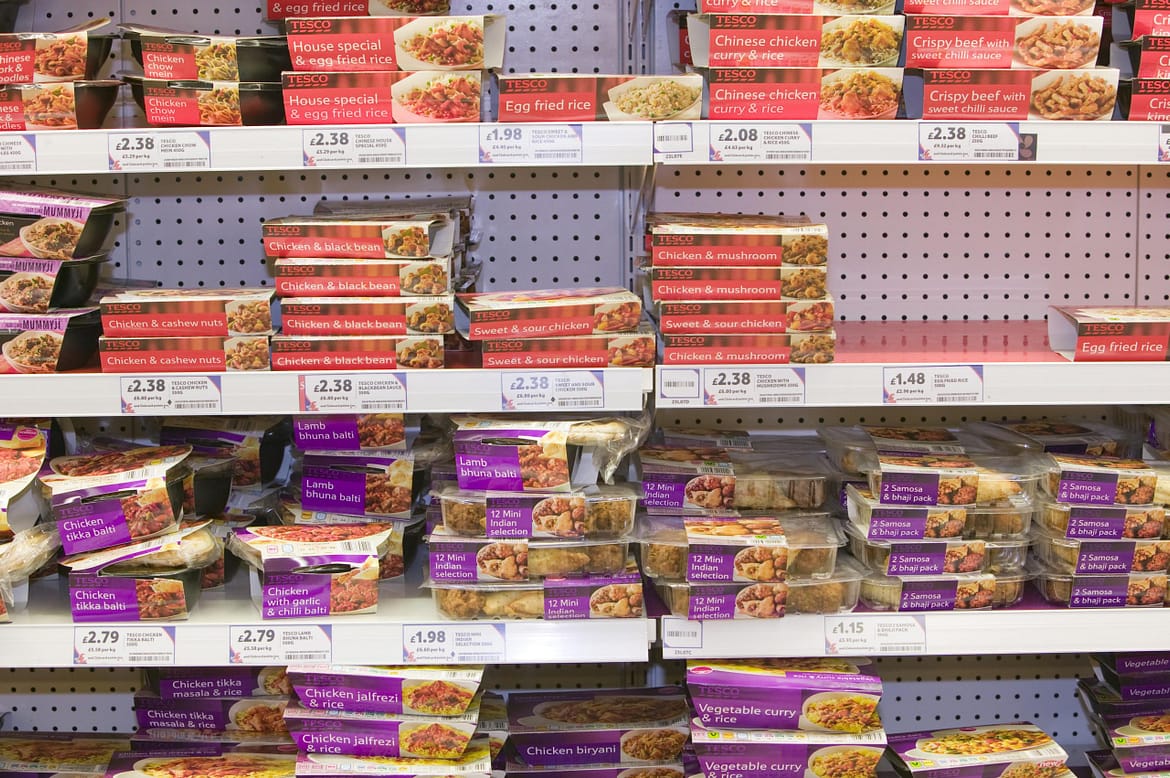
British families are being hit by a double blow to their food budgets after ministers confirmed they will not scrap a £2 billion packaging levy that is driving up supermarket prices.
The Extended Producer Responsibility scheme, known as EPR, requires food manufacturers and online sellers to pay fees on all packaging materials used in their products.
Shoppers bear the brunt of these charges, with around 80 per cent of the costs ending up on till receipts.
The typical UK household is now paying an extra £50 each year as a direct result of the scheme, according to industry estimates.
Food industry leaders had pushed hard for the government to abandon EPR, particularly given that families are already dealing with higher grocery bills, partly due to disruptions to global food supplies stemming from the Iran-US conflict.
The Bank of England has warned that EPR is adding roughly 0.5 percentage points to food inflation on its own.
With the central bank forecasting that overall inflation could climb to 6.2 per cent by early 2027, and food prices potentially surging as high as seven per cent, the timing of the government’s decision to retain the levy is particularly difficult for struggling households.
Further price rises are on the horizon as packaging charges are set to increase later this year.
Levies on coffee cups, soup containers and juice cartons will jump by an average of 19 per cent, while fees on plastic packaging are due to climb by 15 per cent.
The revenue collected through EPR goes to local councils, which can spend it on general services such as social care, planning and education rather than being required to direct it towards recycling programmes.
Beyond the immediate impact of the packaging tax, households face lasting pressure on their weekly shop from global forces that show no sign of easing.
Analysis from the Energy and Climate Intelligence Unit reveals that food prices rarely return to previous levels after major disruptions, with shelf prices dropping just seven per cent of the original increase even two years after a crisis ends.
The Iran-US conflict has pushed up costs for oil, gas and fertiliser used to grow, transport and process food, while El Nino weather patterns are affecting crops including cocoa, rice, sugar and food oils.
Chris Jaccarini, food and farming analyst at the ECIU, said: “Shoppers feeling that prices are on a never-ending escalator upwards is borne out by the data.”
UK food prices have already risen more than 40 per cent since mid-2021, with the poorest families with children now needing around 70 per cent of their disposable income after housing costs to afford a healthy diet.
The glass sector is bearing a particularly heavy burden under the current EPR structure.
Despite accounting for just 5 per cent of the packaging market, glass producers are liable for 27 per cent of the scheme’s total fees because charges are calculated by weight.
Ministers have pointed to a planned reduction in glass packaging levies when the system is revised in June, but government figures show this cut will average only 1 per cent.
Spanish company Vidrala, owner of bottle maker Encirc, is reportedly considering withdrawing £500 million of planned investment in the UK, according to The Times.
Encirc employs 2,000 workers across Northern Ireland, Cheshire and Bristol, producing roughly a third of all glass bottles manufactured in Britain.
Nick Kirk, federation director at British Glass, said: “Without the right policy and economic environment, there is a real risk that these investments will be directed to other countries.
The Government defended the scheme, saying: “EPR moves the cost of dealing with waste away from taxpayers and generates more than £1billion annually.
It’s part of a major investment in the UK economy, helping create 25,000 jobs, and we will continue to work with industry as the changes are implemented.”





Leave a Comment