
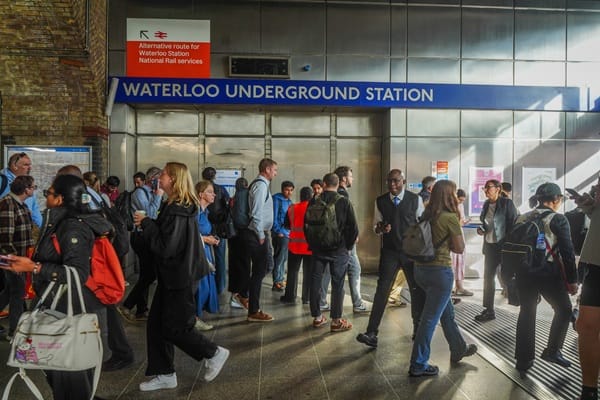
London commuters faced another day of travel misery on Thursday as Tube drivers staged a second strike this week, bringing large parts of the Underground network to a standstill in a bitter dispute over working hours.
The latest walkout has reignited criticism of union demands after it emerged that the dispute centres on proposals to have drivers work fewer days each week while maintaining their existing pay.
The 24-hour strike began shortly after midnight and is due to continue until the end of the day, causing widespread disruption across the capital. Although the Elizabeth Line, London Overground, Docklands Light Railway and bus services remain operational, stations and alternative transport routes are expected to be significantly busier as commuters scramble for alternatives.
The action follows a similar strike on Tuesday which saw major sections of the Underground either partially suspended or completely shut down.
New data suggests many Londoners simply chose not to travel.
Analysis of anonymised mobile phone data showed footfall in the City of London fell by 16 per cent during Tuesday’s strike, while visitor numbers in Westminster were down 11 per cent compared with normal levels. The figures suggest thousands opted to work from home rather than endure lengthy delays and overcrowded services.
At the heart of the dispute is Transport for London’s proposal to introduce a voluntary four-day working week for Tube drivers.
Under the plans, drivers would continue working broadly the same total hours but spread them across fewer days. Working hours would fall from 36 to 35 hours per week through the introduction of paid meal breaks, while contractual pay would remain unchanged.
Transport chiefs argue the proposal would offer staff greater flexibility while maintaining service levels.
The Rail, Maritime and Transport union, however, rejected the offer.
Union leaders argue that longer individual shifts could increase fatigue and create potential safety concerns.
Instead, the RMT is demanding a 32-hour working week spread across four days, allowing drivers to work three fewer hours every week while retaining their existing salaries.
The dispute has prompted frustration among commuters and businesses already grappling with rising costs and economic uncertainty.
Critics argue that while millions of workers across Britain continue to return to offices and workplaces, Tube drivers are taking strike action in pursuit of a deal that many employees in other sectors would consider generous.
Supporters of the union counter that driver fatigue is a legitimate safety concern and insist workers should not be penalised for seeking improvements to working conditions.
For Londoners attempting to get to work, however, the arguments may offer little comfort.
The latest strike has once again exposed the capital’s vulnerability to industrial action and raised fresh questions about the future of public transport in an era where flexible working has become increasingly common.
As negotiations continue, commuters face the prospect of further disruption if an agreement cannot be reached.
For now, thousands of passengers are once again paying the price for a dispute that shows little sign of ending.
An RMT spokesman said on Monday: “Despite our best efforts in Acas talks, TfL have failed to provide assurances on our members deeply held concerns around fatigue, reduced flexibility, shift lengths and the impact these proposals could have in a safety-critical role like Tube driving.”
“We remain available for meaningful talks, but strike action tomorrow will now go ahead.”
A TfL spokesman said: “It is bitterly disappointing that despite five hours of meetings with the RMT at Acas and repeated assurances that the four-day working week proposals will remain voluntary, RMT has chosen to continue with its disruptive strike action.
“We will do all we can to provide as much service as possible during this action.”


Leave a Comment