
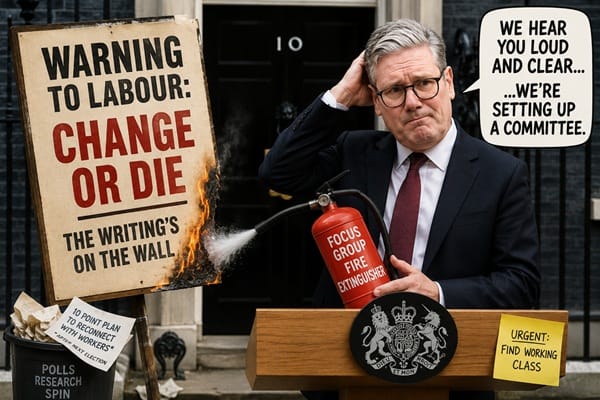
Sir Keir Starmer is facing intensifying pressure from within Labour’s traditional support base after Unite general secretary Sharon Graham warned the party must “change or die” following its bruising local election performance.
In a stark intervention, the head of Labour’s largest union backer said the “writing’s on the wall” for the party unless it reconnects with working-class voters who she claimed now feel “abandoned”.
The comments represent one of the most serious warnings yet from a major figure within the wider Labour movement, adding to growing speculation over Starmer’s authority after heavy local election losses and the rise of Reform UK in former Labour heartlands.
Ms Graham has increasingly criticised Labour’s economic and industrial strategy in recent months, arguing the party risks losing touch with its traditional voter coalition if it fails to focus more aggressively on wages, industry and living standards.
She said: “[The working class] have delivered their verdict. They have painted the ballot boxes of our towns and swathes of the Midlands and the North turquoise and even green. They have done so using the brush of decades of Labour failure.
“Labour ministers can loyally read out lists of their achievements, but no one is listening. If every one of those achievements were in stereo, they wouldn’t even touch the sides of the vision that is needed now.
“We are stuck in a rigged system where everyday people always, always pay.
“Only fundamental, irreversible change will stem the tide. If the party does not shift decisively towards the working class it is finished. It is change or die. Now or never.”
Her latest remarks are likely to deepen concerns inside Westminster over Labour’s direction following a series of disappointing council results and mounting internal unrest.
Senior Labour figures have spent recent days attempting to contain speculation over the Prime Minister’s future, with ministers publicly insisting Sir Keir retains full support within government despite growing pressure from MPs, unions and activists.
The intervention from Unite is particularly significant given the union’s financial and organisational influence within Labour politics.
While Ms Graham stopped short of explicitly calling for Starmer’s resignation, her warning that the party must fundamentally change course will be interpreted by many MPs as evidence that dissatisfaction now extends well beyond Labour’s parliamentary fringes.
The criticism also reflects a broader anxiety within sections of the labour movement that Reform UK’s gains in former industrial areas may represent a deeper realignment among working-class voters.
Allies of the Prime Minister insist Labour remains focused on governing and argue that internal division would only damage the party further at a time of political volatility and economic uncertainty.
However, with speculation continuing over potential future leadership contenders — including figures such as Angela Rayner and Andy Burnham — Unite’s latest intervention is likely to intensify questions about whether Labour can restore unity before the next general election.


Leave a Comment