
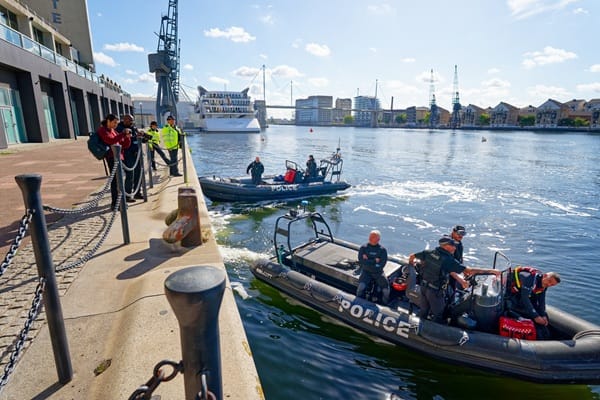
Britain is considering reducing armed protection for some shipments of nuclear material in an effort to cut costs, prompting warnings from security experts as the UK faces growing concerns over hostile-state “hybrid” activity.
The Nuclear Decommissioning Authority is proposing changes to the security arrangements for transporting radioactive material, including sensitive cargo such as plutonium and enriched uranium.
The material is routinely moved around Britain by specialist trains, road vehicles and ships. The most sensitive shipments currently receive armed protection from the Civil Nuclear Constabulary.
The proposed changes would reduce mandatory armed guarding where the NDA considers it does not provide a proportionate security benefit. A review supported by six nuclear industry chief executives argues that existing requirements can be excessive for some forms of transport and were developed primarily around fixed nuclear facilities.
Read more related news:
Burnham embarrassment exposed as majority of Brits fear UK cannot withstand Russian attack
Lavrov warns ‘we will not stand idly by’ threatening Europe with ‘short’ and ‘a completely different war’
Defence Secretary tells Brits to prepare for ‘war’ and buy water and food
Putin tells troops ‘there are no rules’ to warfare and orders civilian attacks
The proposals could cut the cost of certain shipments by 10 to 20 per cent and remove weeks of security planning, according to the 57-page document.
But the potential changes have raised questions about whether the UK should reduce layers of protection while its critical infrastructure faces an increasingly complex security environment.
Matt Okuhara, who served with the Civil Nuclear Constabulary between 2006 and 2012, told The i Paper: “I think it’s a bad idea, it really is. The reason you’ve got to guard this stuff in the first place is because of how dangerous it is.”
“Anyone who gets hold of this material can use it for anything they want, they can use it for a dirty bomb, they can use it for a poisoning device. That’s why you need to have a strong deterrence force around the material in transit.”
A so-called dirty bomb combines conventional explosives with radioactive material to contaminate an area. It is distinct from a nuclear weapon, with the principal danger coming from radioactive contamination rather than a nuclear explosion.
The security debate comes as British intelligence agencies have warned of rising Russian activity below the threshold of conventional conflict.
GCHQ director Anne Keast-Butler warned in May that Russia was “scaling up its daily hybrid activity against the UK and Europe, stretching from the seabed to cyberspace”.
She said Moscow was “relentlessly targeting critical infrastructure, democratic processes, supply chains and public trust”.
Rob Jordan, director of proliferation and nuclear policy at the Royal United Services Institute, said the threat from Russia and other hostile states operating in the “hybrid” or “grey-zone” space was “particularly high”.
“Damaging a truck on a nuclear convoy, or even blocking the route of a convoy causing serious delay, could cause embarrassment to the Government rather than it causing any kind of significant risk,” Jordan said.
“But we shouldn’t underestimate Russia’s desire to destabilise through embarrassment, through a sense of the British government’s inability to do things properly.”
The nuclear industry argues that the proposals would not weaken security, but would instead make protection more proportionate to the specific risks associated with individual shipments.
Nuclear Transport Solutions said the changes would allow it to “reduce cost and complexity of transport whilst maintaining robust safety and security outcomes and avoiding being priced out of the market”.
Industry leaders have also described the existing threat-assessment framework as “unrealistic against a maritime setting”, arguing that some requirements are “impractical or disproportionate” when applied to transport.
The Civil Nuclear Constabulary, however, stressed the stakes involved.
“The risk to our civil nuclear sector and to our wider critical national infrastructure is at the highest it has been for many years. We will match our protection to that threat,” a spokesman said.
The NDA said any changes would be made in collaboration with the government and regulators and would not compromise safety or security.
The debate therefore pits a familiar government objective — reducing cost and complexity — against the challenge of protecting some of the country’s most sensitive material at a time when officials are warning that hostile states are probing Britain’s critical infrastructure.
For ministers, the question is whether a cheaper security model can provide the same deterrent effect when nuclear material is moving through the country rather than sitting behind the fences of a fixed site.


Leave a Comment