
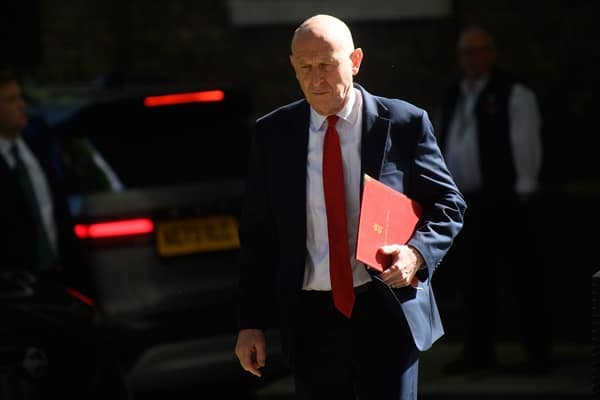
David Reuben, one of Britain’s wealthiest businessmen, has moved to Monaco, becoming the latest billionaire to leave the UK amid growing scrutiny of the government’s tax reforms for internationally wealthy individuals.
The 88-year-old property magnate and Newcastle United shareholder relocated to the principality this summer, according to a spokesman, placing his residence in a jurisdiction with no personal income tax, capital gains tax or inheritance tax.
Reuben and his younger brother Simon, 85, were ranked second on this year’s Sunday Times Rich List, with their combined fortune estimated at almost £28bn. A spokesman for David Reuben confirmed the move but declined to comment further.
The relocation underscores the growing importance of Monaco as a destination for Britain’s ultra-wealthy. Simon Reuben has lived in the principality for almost four decades, having initially moved there while undergoing cancer treatment.
Before David Reuben’s departure, British citizens living in Monaco already controlled about £77bn of wealth represented on this year’s Rich List — more than a tenth of the total wealth recorded.
That figure exceeded the combined wealth controlled from Switzerland, Dubai and the Channel Islands.
Monaco was home to 24 of the 350 individuals and families included in the Rich List, including Sir Jim Ratcliffe, the chemistry entrepreneur and minority owner of Manchester United.
The exodus has accelerated since Rachel Reeves abolished the UK’s longstanding non-domiciled tax regime in April 2025. The system had allowed wealthy individuals with permanent links to other countries to receive preferential treatment on certain overseas income and gains.
Its replacement has prompted concerns among internationally mobile investors that assets held overseas could increasingly fall within the UK tax net, particularly for inheritance tax purposes.
The changes come as the Labour government has also increased the tax burden on capital gains and inheritance. With another Budget due on October 28, speculation that capital gains tax could rise further is adding to uncertainty among wealthy taxpayers.
The scale of departures is already visible in the Rich List. Of the 350 individuals and families featured in the 2024 ranking, 60 were absent from this year’s edition. Many were non-British citizens who had left the country and were consequently removed from the ranking.
The debate poses a difficult question for policymakers: how far can Britain increase taxation on wealth before the most mobile taxpayers simply change their country of residence?
For some, Monaco offers an obvious alternative. Others are looking towards jurisdictions closer to home, including the Isle of Man, where estate agents have reported a sharp increase in interest from wealthy British residents.
Orry-James Creane, managing director of Cowley Groves estate agency, said enquiries for properties worth at least £1mn had more than doubled over the past 18 months.
He described the level of interest in the island as “unheard of”.
The movements underline the increasingly international nature of Britain’s wealth base. For the government, the potential loss is not limited to tax receipts: the departure of billionaires can also shift investment, business ownership and philanthropic capital beyond the UK.
For wealthy individuals, however, the calculation is increasingly straightforward. As tax regimes diverge between countries, residence itself becomes an asset — and one that can be moved.


Leave a Comment