
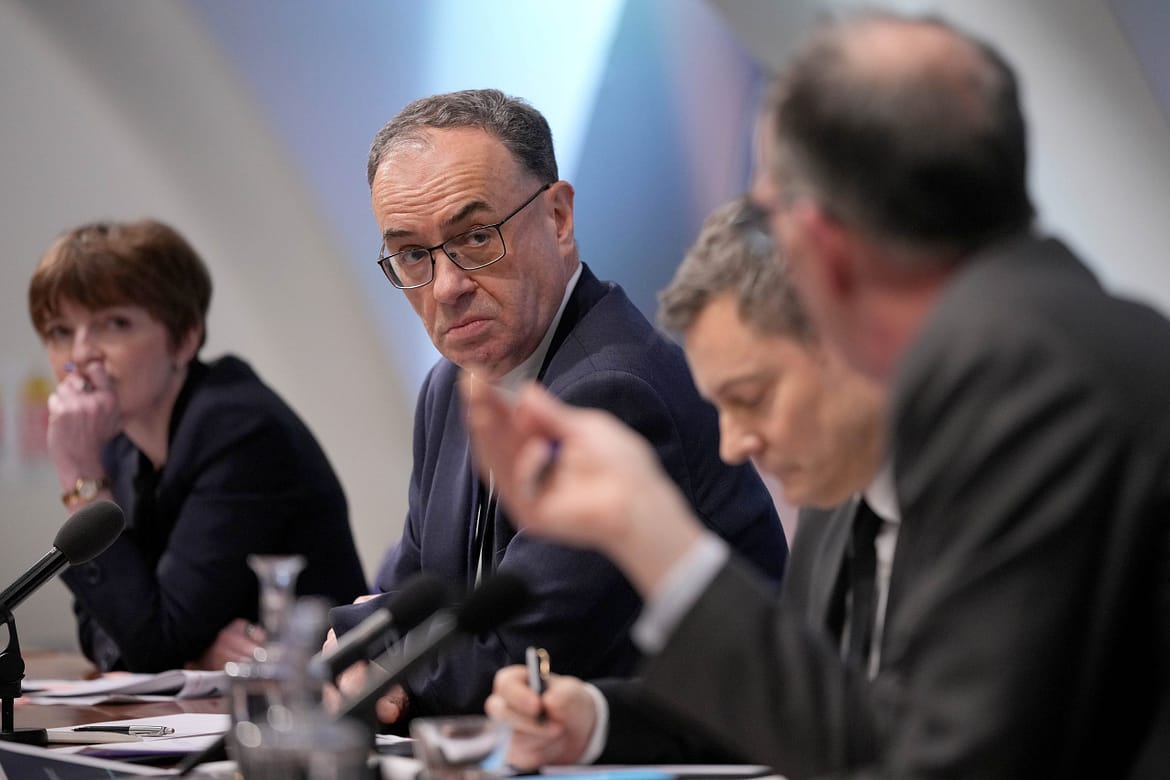
The artificial intelligence boom could end in a disorderly market correction with consequences for the global economy, Andrew Bailey, governor of the Bank of England, has warned.
Bailey, writing as chair of the Financial Stability Board, cautioned G20 finance ministers that markets remained exposed to a combination of elevated valuations, heavy borrowing and increasing concentration in the AI sector.
In a letter to ministers meeting in North Carolina, he warned that a “future market correction” could spread across borders, particularly as governments and investors contend with strains in sovereign debt markets.
“Markets remain vulnerable to a potentially disorderly correction that could spread across borders, particularly given fragilities in sovereign debt markets,” Bailey wrote.
He highlighted the growing financial links between AI companies and the hyperscale technology groups providing the computing infrastructure needed to develop and operate advanced AI systems.
“The issue is not simply that investors are borrowing more, but that leverage is interacting with high valuations and market concentration, in particular the increasing cross-investment between artificial intelligence (AI) companies and hyper scalers, in a way that could amplify a future market correction,” he said.
Bailey added: “I remain concerned therefore that a large shock or combination of shocks could concurrently trigger multiple vulnerabilities.”
His warning comes as financial markets face additional uncertainty from energy-price shocks linked to the US-Iran war. Bailey said the conflict had added to concerns about volatility across the global financial system.
The intervention highlights a growing tension for policymakers: governments are encouraging aggressive investment in AI as a source of productivity and economic growth, while financial regulators are increasingly examining the risks created by the sector’s soaring valuations and dependence on concentrated pools of capital and computing infrastructure.
The warning coincided with Chancellor John Healey’s announcement of a £100mn fund to support British AI start-ups, part of the government’s drive to build the UK’s “Sovereign AI” capacity.
The programme is intended to increase domestic development of AI technology and reduce the UK’s dependence on services and infrastructure controlled overseas.
Ministers are inviting companies to compete for funding for projects aimed at tackling public-sector challenges, including reducing NHS waiting lists and improving patient care, as well as strengthening cybersecurity and defence.
Healey said: “Britain is home to some of the most innovative AI companies in the world, and this Government is backing them to start, scale and succeed here in the UK.”
“This first-of-its-kind competition will help make sure more of the benefits of AI are felt in every UK postcode.”
He added: “As G20 countries seek to make the most of AI opportunities, I’m determined Britain has a lead role in harnessing this technology to drive more jobs, better public services, and growth that’s UK-wide.”
The contrasting messages underline the policy challenge facing governments: how to capture the potential productivity gains from AI while limiting the financial instability that could follow if the investment boom reverses sharply.


Leave a Comment