
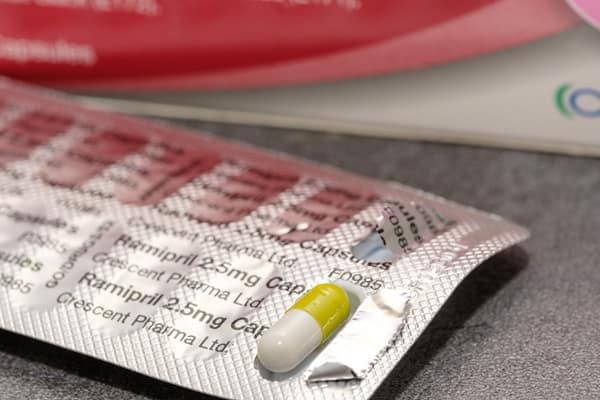
Health officials have warned of a “serious shortage” of a commonly prescribed blood pressure medicine, prompting restrictions on how much patients can receive at one time.
A “serious shortage protocol” has been issued for ramipril 1.25mg capsules, meaning patients will now be limited to a maximum one-month supply as authorities seek to manage constrained stock.
Ramipril is widely used to treat high blood pressure and heart conditions, working by relaxing blood vessels to improve blood flow and reduce strain on the heart.
The Medicines and Healthcare products Regulatory Agency said the measures are intended to ensure fair distribution while supply issues are addressed, with pharmacies instructed to follow the temporary dispensing limits.
Doctors can prescribe the drug in tablet, capsule or liquid form, depending on the patient’s need, but the restriction applies specifically to the affected capsule strength.
Patients already taking ramipril are being advised not to stop their medication, but to speak to their GP or pharmacist if they experience difficulties obtaining repeat prescriptions.
The shortage is the latest in a series of intermittent supply disruptions affecting a range of medicines across the UK, raising renewed concerns about resilience in pharmaceutical supply chains.
The National Pharmacy Association (NPA) chairman, Olivier Picard, said: “We are concerned by this recent shortage, with a number of pharmacies being unable to order some strengths of ramipril as well as seeing the cost soar in recent weeks, in instances where stock can be found.
“The Government should allow pharmacists to make substitutions to ramipril prescriptions to ensure patients do not have to go back to their GP to find an alternative.
“Pharmacies are increasingly facing supply problems affecting everyday medicines on which millions rely every day.”
He added: “Fragility in the global supply chain is worsened by international instability and the fact that long term under-funding of pharmacies has driven down the price for medicines in the UK to unsustainable levels.”


Leave a Comment