
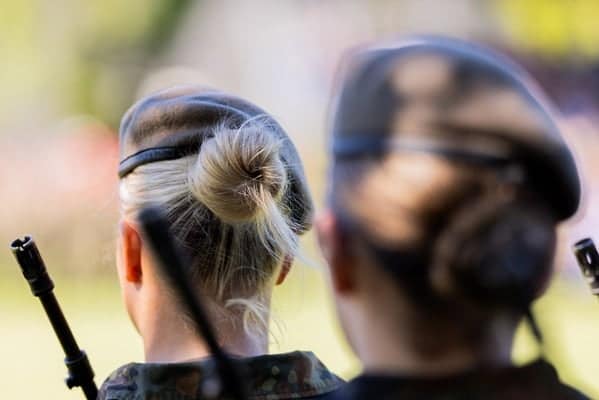
Britain’s military leadership is pressing political leaders to have a more frank conversation with the public about the sacrifices that could be required in a future conflict, reviving questions over conscription and whether women could be required to serve.
General Sir Roly Walker, the head of the British Army, told Sky News that every citizen would be asked to make sacrifices and contribute to the country’s defence.
His remarks come amid growing concern over European security, Russia’s war against Ukraine and uncertainty over the reliability of US support for its allies.
No plans have been announced to reintroduce compulsory military service. But senior military figures have repeatedly called for greater national preparedness as Britain reassesses the risks posed by a deteriorating international security environment.
The prospect of conscription extending to women is not without historical precedent. During the Second World War, the National Service Act of December 1941 made unmarried women and childless widows aged 20 to 30 liable for call-up, principally to address shortages in the armed forces’ auxiliary units and civilian defence services.
Read more related news:
Army chief warns ‘war is no longer unthinkable’ and MPs will have to tell Brits ‘where the risk lies’
Britain prepares troops for Ukraine deployment as Trump deepens rift with NATO allies
Labour MP urges Burnham to ‘get the whole of society behind it’ to follow Finland’s conscription model
Men faced increasingly extensive obligations, with military service required for those under 51.
Britain’s last national service conscripts were discharged in 1960. The question has nevertheless resurfaced as defence planners consider whether the country has sufficient personnel and resources to sustain a prolonged conflict.
Former defence secretary Grant Shapps previously warned that Britain was moving from a “post-war to a pre-war world”, while former army chief General Sir Patrick Sanders called for an expansion of the Army and greater public readiness for conflict.
The debate also carries political risks. Rishi Sunak proposed national service for school-leavers during the 2024 general election, combining military and civilian options. Labour dismissed the proposal as a “gimmick”.
Public opinion is divided over personal obligations in wartime. A YouGov survey conducted in 2025 found that 38 per cent of under-40s said they would refuse to serve in the armed forces if another world war broke out. Yet 72 per cent supported conscripting women as well as men.
For ministers, the challenge is to strengthen Britain’s readiness without creating unnecessary alarm. Any move towards compulsory service would raise profound questions about civil liberties, military capacity and the obligations the state can place on its citizens.


Leave a Comment