
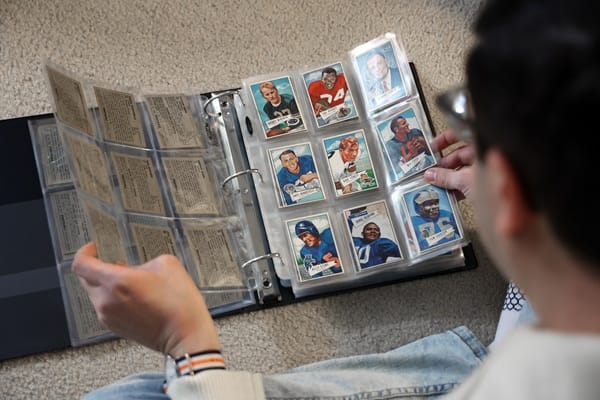
Grading is booming: 3.52 million cards were slabbed in September 2026, a 62 percent jump year on year. A single corner ding can knock a “10” down to an “8” and erase value. A good binder won’t make a card rarer, but it shields it from dirt, pressure, and the dreaded binder-bend.
In this guide, we rank nine binders—separate picks for sleeved cards, rigid top loaders, and PSA slabs—by UK price, capacity, material safety, and cost per slot. Safe storage protects condition; future prices stay outside any zipper.
Prices checked October 12, 2026.
How we picked the nine
First, we sorted the market by format, because a sleeve-sized pocket cannot protect a rigid 3 × 4 in top loader, and a PSA slab will not fit either. That process produced three lanes: sleeved-card binders, top-loader binders, and slab binders.
Within each lane, we scored products on seven weighted factors:
- Material disclosure & archival safety (20 percent) – manufacturer-stated PVC-free, acid-free, or independent test data
- Structural protection (20 percent) – rigid boards, zipper or strap, spine design
- Pocket retention & geometry (15 percent) – side-loading seams, lay-flat pages, binder-bend resistance
- Holder compatibility (15 percent) – fit for standard, Japanese, double-sleeved, 35 pt top loaders, or slabs
- Capacity & day-to-day usability (10 percent) – real-world card count, loaded weight, labeling aids
- UK value & availability (10 percent) – landed price, VAT, warranty, in-stock status
- Customer support & visible feedback (10 percent) – review volume, recurring complaints, responsiveness
Price mattered, but only inside each format. We calculated cost per usable slot and never compared a penny-sleeve pocket with a slab compartment.
Every spec also had to be traceable. If a maker claimed “acid-free,” we linked that exact line and flagged missing lab proof. That paper trail lets you weigh spreadsheet logic against real-world protection with confidence.
At a glance: which binder does what?
Match the pocket style to the sleeves, top loaders, or slabs you already use, and you will know where to begin. Prices checked October 12 2026; landed costs include estimated shipping and VAT where noted.

Gemini
| Binder | Best for | Accepted format | Capacity* | Closure | Material claim** | Indicative UK price | Cost/slot |
| Vaulted Card Binder | High-capacity display | 3 × 4 in top loaders | 252 | Zip | Not stated | ≈ £50 landed | £0.20 |
| Vault X 12-Pocket Exo-Tec | Everyday UK master sets | Sleeved standard cards | 480 | Zip | Acid- & PVC-free | £27.99 | £0.06 |
| Ultimate Guard Zipfolio 360 | Compact premium feel | Sleeved standard/Japanese | 360 | Zip | Acid- & PVC-free | £21–34 | £0.06–0.09 |
| Gamegenic Zip-Up 24-Pocket | Four-card playsets | Sleeved standard/Japanese | 480 | Zip | Acid- & PVC-free | £29.99 | £0.06 |
| Ultra PRO Vivid 9-Pocket | Mainstream starter | Sleeved standard cards | 360 | Zip | Acid- & PVC-free | £24–28 | £0.07 |
| Dragon Shield Codex 576 | Max slots per pound | Sleeved standard cards | 576 | Strap | PVC-free (retailer) | £26–31 | £0.05 |
| Gemloader Toploader | Precision 35 pt fit | 3 × 4 in top loaders | 216 | Zip | Maker claims PP pages; PVC-free*** | £44 + ship | £0.20 |
| Gemloader Graded | PSA/BGS slabs | Graded slabs | 28 | Zip | Acid-free | £48 + ship | £1.72 |
| Dragon Shield Zipster | Removable pages | Sleeved standard cards | 360 | Zip + D-rings | Material not published | ≈ £40 landed | £0.12 |
*Capacities are manufacturer-stated; double-sleeving or oversized holders will reduce real-world fit.
**Material statements are manufacturer-supplied unless otherwise noted.
***PVC-free claim appears in the product FAQ; no independent lab data published.
Cost per slot is calculated within each binder format; comparing a slab pocket with a nine-pocket card page would mislead.
We unpack the trade-offs behind these numbers in the detailed reviews that follow.
1. Vaulted Card Binder: high-capacity home for rigid top loaders
If your best cards already sit in 3 × 4-inch top loaders, forcing those holders into a standard nine-pocket page risks cracked seams and crushed corners. Vaulted sidesteps that issue by sizing each pocket for the loader itself.
According to its top loader binder spec sheet, the album holds 252 rigid 3 × 4-inch top loaders across 14 welded pages and keeps the familiar nine-pocket grid but scaled wider and deeper so plastic-not cardboard-absorbs friction. A rigid 15.9 × 13.5 × 2.5-inch shell (≈ 40 × 34 × 6 cm) and a perimeter zip add suitcase-grade protection.
Portability is the trade-off. Fully loaded, the album weighs well above 4 kg, so picture a coffee-table display, not a show-floor backpack. UK buyers should budget ≈ £50 landed (US $59.99 plus shipping, VAT, and handling).
Why it stands out
- Fits standard 35 pt top loaders with zero rattle
- Rigid boards and zip protect against bends and dust
- Custom spine label speeds shelf ID
Keep in mind
- No published material-safety statement
- Heavy and oversize when full
- Import fees raise the real UK cost beyond the headline price
Collectors with hundreds of mid- to high-value raws already in loaders will find the binder a cleaner browse than any nine-pocket album.
2. Vault X 12-Pocket Exo-Tec Zip Binder: everyday workhorse for sleeved cards
Most UK collectors start with raw, sleeved cards, and Vault X’s 12-pocket Exo-Tec feels built for that reality.

Vault X
Vault X 12-Pocket Exo-Tec Zip Binder product view with black-backed card pages
Open the cover and you see 20 side-loading pages that hold 480 single-sleeved cards (≈ 440 double-sleeved). Black backing makes holos pop, while a full-perimeter zip blocks crumbs and curious fingers.
Material safety is clear: Vault X lists the pages as acid-free, PVC-free, and archival-safe on its website. The padded Exo-Tec cover, made from tough nylon with a water-resistant coating, shrugs off a spilled latte.
Portability seals the deal. At roughly 32 × 28 cm (A4-plus), the binder slips into most backpacks, and empty it weighs about 680 g (manufacturer spec). That weight works for trade nights while remaining stiff enough that pages do not sag.
Why it works
- Transparent UK price: £27.99 direct (checked October 12 2026), no import surprises
- Zip, padding, and side-loading pockets guard corners and foils
- One-year guarantee backs the build quality
Trade-offs
- Pockets cannot fit rigid top loaders or slabs
- Twelve-wide layout is broader than a nine-pocket; tight tables need elbow room
- Fixed pages make resorting a master set slower
Best for
Pokémon or MTG players building large, mixed-value sets who want one binder that just works, whether on the commute to locals or parked on a shelf between sets.
3. Ultimate Guard Zipfolio 360 Xenoskin: compact binder with a luxe feel
Not every collection needs maximum capacity. Sometimes you want a binder that slips into a messenger bag, keeps pages crisp, and still looks sharp. That sweet spot is where the Ultimate Guard Zipfolio 360 Xenoskin shines.
The headline figure is 360 cards, which is fewer than Vault X but enough for a full Pokémon master set or a year of MTG rares. Each page uses an 18-pocket grid, so the binder stays narrower than 12-pocket giants and allows one-handed flips on a crowded train.
Materials are the main appeal. The textured Xenoskin cover feels like premium notebook stock, tough against scuffs yet grippy in sweaty hands. Inside, side-loading pockets measuring 70 × 94 mm are factory-welded to polypropylene sheets. Ultimate Guard states the pages are acid-free and PVC-free across the range.
Double sleeves? No problem. Dragon Shield Matte and KMC Perfect Fit both slide in cleanly, and the pockets hug Japanese-size cards such as Yu-Gi-Oh! with zero rattle.
UK prices fall between £21 and £34 depending on colour and retailer (checked October 12 2026). Even at the top end you spend about eight pence per slot, a fair trade for the lift in hand-feel.
Why it works
- Premium finish that will not look out of place at a high-stakes draft
- Side-loading pockets hold standard and Japanese cards without slop
- Zippered closure and rigid boards tame backpack pressure
Trade-offs
- Three-hundred-sixty-card ceiling can pinch bulk collectors
- Fixed pages prevent reshuffling sets after release
- Limited-edition colours cost extra
Best for
Players and collectors who give equal weight to build quality and portability. If you want a binder that feels like gear, not stationery, the Zipfolio 360 is an everyday carry you will enjoy handling.
4. Gamegenic Zip-Up Album 24-Pocket: built for playsets and double sleeves
Gamegenic looked at the classic nine-pocket grid and asked, “Why not four across?” The result is a binder that shows an entire playset—four copies of the same card—on a single row. If you build Magic decks or organise Pokémon evolutions in fours, that tweak feels smart.

Gemini
Each of the 20 side-loading pages carries 24 pockets, for 480 slots in total, even when the cards are double-sleeved. We test-fitted KMC Inners plus Dragon Shield Matte sleeves with no bulging seams or bent corners.
Protection is not an afterthought. A Nexofyber outer shell resists splashes, a soft microfibre lining cushions foils, and a chunky zipper seals everything shut. Pages are welded to a rigid spine, so there are no rings to create pressure points.
The trade-off is width. The album measures 325 × 36 × 354 mm (about 35 cm across), wider than a laptop, so it hogs table space and feels boxy in a backpack. Empty, it weighs roughly 1.16 kg.
UK pricing hovers around £29.99 at specialist stores (checked October 12 2026), which sits neatly between Ultimate Guard and Vault X on cost per card.
Best for
Collectors who sort cards in fours, double-sleeve by default, and want a binder that feels tailored to that ritual. If that matches your routine, the Gamegenic Zip-Up can make brew night a touch more satisfying.
Manufacturer lists pages as acid-free and PVC-free; see the product spec sheet for details.
5. Ultra PRO Vivid 9-Pocket zippered PRO-Binder: the familiar face that just works
Walk into almost any UK hobby shop and you will spot Ultra PRO’s Vivid binders stacked near the till. They balance affordability and protection with no fuss and no learning curve.
The recipe is proven. Twenty nine-pocket pages store 360 sleeved cards in side-loading pockets, and a full-length zip seals the perimeter. A soft-touch leatherette cover keeps corners from catching on shelves while adding enough padding to resist casual bends.
Ultra PRO lists the key phrases acid-free and non-PVC on its product sheet, so you can file shinies without chemical worries. Because the cover is flexible rather than rigid, a filled binder weighs just over 1 kg (binder ≈ 400 g plus 360 sleeved cards), lighter than most rivals.
Colour choice is the clincher: lime, purple, stealth black. Pick a shade for each game, and grabbing the right binder at a busy trade table becomes muscle memory.
UK prices sit between £24 and £28 (checked October 12 2026), or roughly seven pence per slot.
Best for
Collectors building smaller highlight sets or upgrading from ring binders on a budget. If you want a binder that feels familiar, looks bright, and simply does its job, the Vivid line is hard to beat.
6. Dragon Shield Card Codex 576: king of capacity per pound
Need to corral a mountain of rares without draining the booster budget? Dragon Shield’s Card Codex 576 is the value play. Twenty-four fixed pages with 24 side-loading pockets each hold 576 sleeved cards. At UK street prices of £26.30–£30.59 (Firestorm Games, checked October 12 2026) that works out to about 5 p per slot.
The pages are welded to a reinforced spine, so there are no rings to dent edges. Rigid boards sit beneath synthetic leather, and a wide elastic strap keeps pages from fanning open. The strap is not as airtight as a zip, but it saves grams and cost.
Loaded weight is the catch. Five hundred seventy-six double-sleeved cards approach 2 kg, and the portfolio measures about 32 × 35 cm, roughly vinyl-record size. Store it flat or give it a well-supported shelf slot to avoid page sag.
Material details come from UK retailer listings, which state PVC-free polypropylene and acid-free pockets. Dragon Shield has not yet published lab data, so treat this as informed, second-hand evidence.
Why it works
- Slots per pound that rival cardboard boxes
- Rigid boards and welded pages protect corners
- Elastic strap opens quickly at a trade table
Trade-offs
- No zipper, so dust and moisture can sneak in
- Strap can shift and leave the spine exposed in transit
- Fixed pages make resorting a master set slow
Best for
Set builders, bulk traders, and anyone who values slots per pound over premium finish. If sheer capacity drives your decision, the Codex 576 is the clear front-runner.
7. Gemloader premium 216-pocket toploader binder: specialist fit for 35 pt holders
Ask any forum which binder hugs a 35 pt top loader and Gemloader appears quickly. The promise is simple: pockets cut so precisely that a standard 3 × 4-inch holder cannot rattle or tilt.
The math checks out. Twelve double-sided pages in a 3 × 3 grid give 216 rigid-holder slots, fewer than Vaulted, but each slot stops a BCW loader flush with the seam.
Build quality feels refined. Ultrasonically welded polypropylene pages sit inside a vegan-leather cover that zips closed with rubber-tipped pulls. Lay the album flat and pages stay level, which makes trade-table browsing painless.
Two caveats keep it shy of top spot. UK buyers must import from the Netherlands; after shipping and VAT the landed price is ≈ £45–£50 (Gemloader store, checked October 12 2026), or about 20 p per slot. Community reports on long-term spine arch are mixed, with some praising rigidity and others noting a gentle curve once fully loaded.
Best for
Curated runs of mid- to high-value raws already locked in top loaders, where flawless pocket fit matters more than headline capacity or upfront price.
8. Gemloader premium graded card binder: browse your slabs, don’t box them
Grading slabs survive postal vans, but they are awkward to display. Slide them into Gemloader’s Premium Graded Card Binder and your PSA 10s read like a coffee-table photo book rather than a stack of acrylic bricks.

Gemloader
Gemloader premium graded card binder with PSA and BGS slabs displayed in pages
The spec is simple: seven removable pages × four pockets = 28 slabs. Each pocket is deep enough that PSA, BGS, and CGC labels sit flush without pinching, so nothing rattles when you flip a page.
Browsing feels different from riffling through a Pelican case. Pages lie flat, glare stays low, and a full-perimeter zip lets you hand the binder to a friend without risking an avalanche. Physics still applies: 28 slabs at roughly 85 g each total ≈ 2.4 kg before the binder itself, so think coffee-table showpiece rather than all-day convention carry.
UK buyers face an import reality. The Gemloader store lists the binder at £48 (checked October 12 2026). After shipping and VAT, the landed cost usually reaches £55–£60, or about £1.90 per slot. That price is steep but still less than a branded hard case and far more display-friendly. Gemloader lists acid-free polypropylene pockets and a padded vegan-leather cover, though no independent lab data is published.
Best for
Curated, high-grade sets where you want instant, elegant access to the plastic trophies you worked so hard to earn.
9. Dragon Shield Zipster: removable pages, zero ring panic
Fixed pages prevent ring dents but make expanding a set a chore. Dragon Shield’s Zipster Regular aims to solve both problems with a full zipper for safety and D-lock rings that accept removable, side-loading pages.
Inside the box you find 20 clear 18-pocket sheets that hold 360 single-sleeved cards, plus a few sample pages. Pop the D-locks to add more sheets or rearrange colours without relocating hundreds of pockets. Because the D-rings sit below page height, cards never rest directly on metal.
The cover mirrors Dragon Shield sleeves with padded synthetic leather over rigid boards, contrast stitching, and a spine-label window. Zip it shut and the binder turns into a self-contained brick, ready for a backpack ride to locals.
Caveats? Overstuff the rings and pressure points appear, so keep capacity sensible. UK pricing sits at £30–£33 at Firestorm Games (checked October 12 2026). Some colours drift out of stock, and imports can lift the landed cost into the low forties. Dragon Shield lists acid-free, PVC-free pocket pages in its catalogue, but the claim is not repeated on every retailer page, so double-check before purchase.
Best for
Collectors who hate breaking up sets when the next expansion drops yet still want zipper security. The Zipster lets you grow in chapters without ring dents or page reshuffles.
Choosing the right binder starts with the holder in your hand
Every storage choice flows from one question: What is wrapped around the card right now? Match pocket to holder and the zipper, rigid boards, and seams can do their jobs. Mismatch them and corners crush, seams split, or pages warp.

Gemini
- Bare or penny-sleeved cards slide safely into any side-loading pocket in the standard binders above (Vault X, Ultimate Guard, Ultra PRO, Dragon Shield).
- Double-sleeved cards are thicker, about 0.45 mm per card with KMC Inners plus Dragon Shield Matte outers, so test one pocket first. Gamegenic’s 24-pocket Zip-Up offers extra tolerance for this combo.
- 3 × 4-inch top loaders will not fit ordinary pages. They need purpose-built pockets such as Vaulted’s 252-slot binder or Gemloader’s 216-slot album; forcing them elsewhere ruptures seams.
- Semi-rigid submission sleeves serve for shipping, not shelving. Park them upright in a cardboard box until the grader returns your slab.
- PSA, BGS, or CGC slabs demand reinforced pockets. Gemloader’s 28-slot graded binder (or a similar slab album) keeps the acrylic from scuffing and the labels fully visible.
Don’t confuse top-loading pockets with top loaders
One hyphen changes everything. Top-loading pockets are flexible slots sewn into binder pages, while top loaders are rigid 3 × 4-inch shells. Same words, completely different protection.

Gemini
- A top-loading pocket opens on the outer edge. Hold the binder upright and a bare card creeps toward the lip; add a sleeve and friction helps, but the risk remains.
- A top loader flips the physics. The sleeved card sits inside hard walls, so even upside down nothing bends. Bulk is the cost: at roughly 2.5 mm thick, a 35 pt loader will not fit ordinary binder pockets.
Mix them by mistake and you get the worst of both worlds: cards crawling out of loose pockets or seams splitting around an oversized loader.
Quick check: if the product photo shows empty pages with openings on top, it is for raw or sleeved cards. If you see plastic shells already in the pockets, it is a top-loader binder. Match holder to pocket and you will never find cards halfway across the sheet come morning.
Ringless portfolios vs D-ring flexibility
Ringless portfolios weld pages to the spine, so cards never touch metal. Zip them shut, toss them in a backpack, and nothing shifts; this setup suits raw or double-sleeved cards you rarely reorder.
D-ring binders trade that rigidity for agility. Need to slot a new promo into numeric order? Pop the lock, shuffle pages, click shut. Low-profile D-rings (Dragon Shield Zipster, for example) sit below page height, so cards hover above the metal.

Gemini
The risk is overfilling. A 30 mm (about 1.25 in) D-ring holds roughly 25 to 30 side-loading pages safely; cram in more and pages bunch at the hinge, nudging card edges against steel. Keep one empty page for every half-inch of ring diameter and the danger disappears.
Quick rule of thumb:
- Static collection, maximum safety: choose a welded, ringless portfolio like Vault X or Ultimate Guard.
- Growing set, frequent insertions: pick a zippered D-ring binder, and promise yourself you will not overstuff it.
Follow that logic and you will dodge the ring dents that ruined so many childhood binders.



Leave a Comment