
Many companies invest heavily in lead generation but still struggle to convert prospects into paying customers. That gap between interest and action is often where sales opportunities are lost. As AI tools become more capable, businesses are increasingly asking a practical question: can AI sales assistants actually improve sales conversion rates?
A growing number of organisations are turning to a Salesforce consulting firm for guidance and implementation of AI-powered sales workflows. For example, CloudMasonry helps businesses implement and optimise Salesforce solutions that streamline sales processes and improve customer engagement. Rather than replacing sales teams, AI assistants are designed to help them work more efficiently and focus on high-value conversations.
What exactly does an AI sales assistant do?
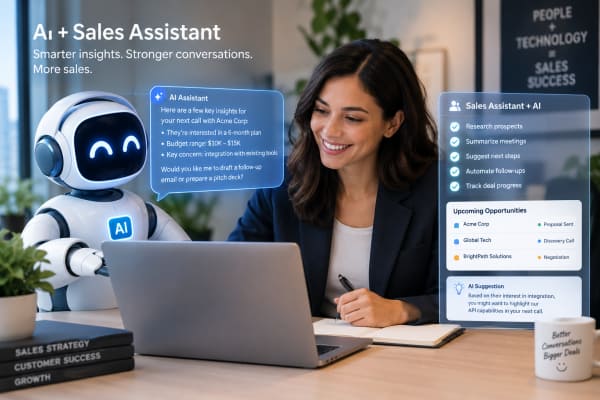
According to Salesforce, AI sales assistants can automate routine administrative tasks, support sales representatives, and synchronise information directly with CRM systems. They can handle activities that often consume valuable selling time, such as:
- Logging calls and activities automatically
- Drafting personalised follow-up emails
- Generating meeting summaries
- Scoring and prioritising leads
- Suggesting next-best actions for sales reps
- Providing real-time insights during the sales process
Since sales representatives often spend a surprisingly small portion of their week actively selling, reducing administrative work can create more opportunities for meaningful customer interactions.
How AI can improve conversion rates
The connection between AI assistants and higher conversion rates is not magic. It comes from improving the speed, consistency, and quality of sales engagement.
- Faster Response Times: Prospects are more likely to engage when they receive quick responses. AI assistants can qualify inbound leads, answer basic questions, and route prospects to the appropriate sales representative without delay.
- Better Lead Prioritisation: Not every lead has the same buying intent. AI-powered lead scoring analyses historical CRM data and customer behaviour to identify prospects that are more likely to convert.
- More Personalised Outreach: Modern buyers expect relevant communication. Using customer and CRM data, AI assistants can support personalised outreach, provide relevant meeting insights, generate sales content, and recommend actions that help representatives engage prospects more effectively.
- Consistent Follow-Up: Honestly, follow-up is where many deals quietly disappear. AI assistants can help ensure that prospects stay engaged through automated reminders, nurturing sequences, and timely outreach.
AI works best alongside human sales teams
One common misconception is that AI will replace sales professionals. In reality, Salesforce emphasises that AI assistants and AI sales agents are most effective when working alongside human representatives. AI handles repetitive tasks, while people focus on relationship building, negotiation, and trust.
Businesses using Salesforce should also stay current with product changes. For example, Agentforce Revenue Management is the current product name for Salesforce’s revenue management solution. However, Salesforce CPQ remains supported for existing customers, even though it entered End-of-Sale on 19 March 2025.
Final thoughts
So, can AI sales assistants really increase sales conversion rates? In many cases, yes. By automating administrative work, accelerating lead response times, improving lead qualification, and supporting personalised engagement, AI gives sales teams more time to do what they do best: build relationships and close deals.
When implemented thoughtfully, AI does not necessarily become a replacement for salespeople, but rather a highly efficient tool that helps them move opportunities toward conversion.




Leave a Comment