
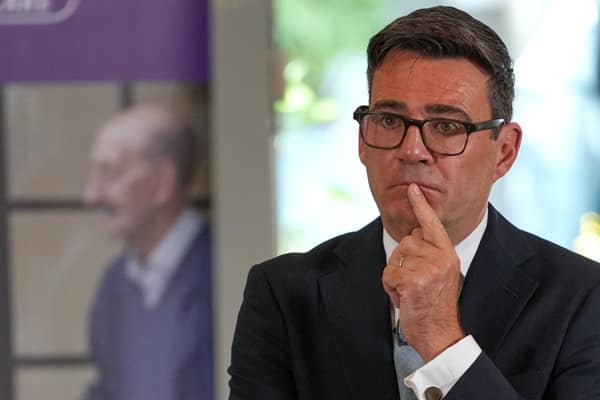
A Labour MP is preparing to challenge Prime Minister Andy Burnham over the security implications and mounting costs of Britain’s nuclear expansion, warning that a nationwide network of new reactor sites could expose communities to potential Russian attacks.
Brian Leishman, the Scottish MP who repeatedly called for Keir Starmer to resign during the final months of his premiership, is expected to raise the issue when Parliament returns on Monday. His intervention threatens to open a fresh dispute within Labour over how Britain should balance energy security, national defence and the financial burden of new infrastructure.
Leishman argues that plans to develop nuclear power stations across the country could create additional strategic targets at a time when politicians are warning of the possibility of a future conflict with Moscow.
“Politicians from nearly every party say that the UK will likely be at war with Russia by 2030,” he is due to tell MPs.
“If the war hawks are correct, then why would it make sense for various areas to become targets for Putin?
“Nuclear power plants or the other policy pushed by the nuclear energy lobby – hundreds of small reactor sites in locations up and down the UK – would make communities a target.”
The warning challenges one of the central arguments behind nuclear expansion: that new reactors are necessary to strengthen Britain’s energy security and reduce reliance on imported fuels. Leishman’s position instead raises questions about whether a more dispersed nuclear network would introduce additional vulnerabilities, although his claims about the risk of Russian attacks are arguments to be assessed rather than evidence of specific threats to proposed sites.
The financial case for expansion is another target of his criticism. Leishman is expected to attack the “mammoth construction costs” associated with building the infrastructure, pointing to the escalating price of Hinkley Point C in Somerset.
The project was originally estimated to cost £18bn, but EDF has put the latest projected cost at almost £32bn.
Leishman will argue that Scottish projects could face similar overruns, leaving taxpayers exposed to a substantially larger bill than initially anticipated.
“The Government is struggling to persuade sceptical pension funds and asset managers to back the project,” he is expected to say.
“The bottom line is that the financial cost of nuclear is not value for money. So why would Scotland having nuclear sites be any different?”
The government is considering Torness in East Lothian, Hunterston in Ayrshire and Dounreay in Caithness as potential locations for new nuclear development. The plans have encountered sustained opposition from the Scottish National party, which has sought to use devolved planning powers to prevent new nuclear sites north of the border.
The Conservatives, meanwhile, have signalled their determination to push ahead with a third large-scale reactor in Scotland.
Andrew Bowie, the shadow energy secretary, told the Conservative Party conference in Birmingham last week: “We will build that reactor, and no part of Britain will be off limits, including Scotland.”
He added: “We will legislate to get it done. No more Mr Nice Guy. No more devolve and forget.”
Bowie argued that energy policy was reserved to the UK Parliament and accused the SNP of obstructing nuclear investment through devolved planning policy.
“If the Nationalists want to stop us from delivering thousands of jobs, economic growth, and energy security for Britain, I’ve one thing to say: bring it on.”
The confrontation has prompted a sharp response from Holyrood. Scottish energy minister Stephen Gethins accused the Conservatives of attempting to undermine the powers of the Scottish Parliament.
“The Tory mask has slipped. Not only do they want to impose new nuclear power stations on communities in Scotland, they want to try and do it by ripping up the powers of the Scottish Parliament,” he said.
“Scotland does not need new nuclear power stations which are expensive, take decades to become operational and have huge public and environmental safety concerns.
“Our focus must be on developing Scotland’s remarkable renewable energy resources which is quicker, cheaper and safer than nuclear.”
The dispute exposes a wider conflict over Britain’s energy future: whether nuclear power is essential to long-term security of supply or an expensive and potentially contentious commitment that risks diverting investment from renewables.
For Burnham, the challenge will be to reconcile the government’s nuclear ambitions with questions over cost, public consent, devolved authority and the resilience of critical infrastructure in an increasingly hostile security environment.


Leave a Comment