
Labour has acknowledged that around 200,000 UK families received more than £39,000 a year in state support during the financial year ending in 2025, intensifying a political battle over the cost and incentives of the welfare system.
The figure was disclosed by DWP minister Baroness Sherlock after Lord Truscott challenged the government to reveal how many benefit recipients received more than the national average wage.
The total value of support includes tax credits and benefits such as Universal Credit, the state pension and Personal Independence Payment (PIP). The £39,039 threshold is above the average annual wage cited in the parliamentary exchange.
The number of families affected is equivalent to the populations of cities including Bournemouth, Peterborough or Bolton.
The disclosure has provided fresh ammunition for Conservatives seeking to make welfare reform a central dividing line with the Labour government.
“Our welfare system is so out of touch it pays those on benefits more than those who go out to work,” Shadow Work and Pensions Secretary Helen Whately told The Sun.
“Every pound paid above the wage of the average worker is a signal by Labour that effort is optional.
“A welfare system should act like a trampoline – cushioning your fall and propelling you back on to your feet.
“Under Labour, it has become a net that engulfs you and makes it almost impossible to climb out.”
The figures have emerged amid a broader argument over government spending priorities, with ministers under pressure to increase defence expenditure while protecting social security spending.
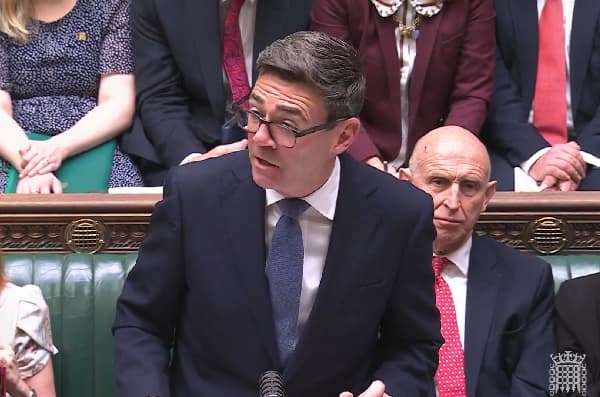
Prime Minister Andy Burnham said in the Commons this week that national security could not “come at the expense of social security”, as he defended the government’s approach during a confrontation with Conservative leader Kemi Badenoch.
The spending gap between the two areas is substantial. The UK spent about £62bn on its core defence budget last year, covering the armed forces and nuclear deterrent, compared with £334bn on welfare.
“Last year, the amount of people receiving awards over £30,000 was under two per cent of the total,” a DWP spokesman said.
“We’re reforming welfare to end the culture of people being signed off and written off.”
Burnham defended his position in the Commons, saying: “Yes, we do everything to support our national security – but it cannot come at the expense of social security.
“This side of the House will not be forced to choose between the two,” he told Badenoch.
The Conservative leader accused the prime minister of exposing Labour’s priorities.
“The Labour Party has become the Welfare Party,” she wrote in the Mail. “The first duty of Government is defence of the country, not paying more benefits.”
The dispute comes as the government attempts to reform a welfare system facing rising costs and increasing scrutiny over long-term sickness and disability payments.
Work and Pensions Secretary Pat McFadden has previously acknowledged the political difficulty of financing welfare, saying: “every meeting I have is ‘who can we tax in order to pay benefits to others’”.
The latest figures are likely to intensify pressure on ministers to demonstrate that reforms can reduce welfare dependency without withdrawing support from households with genuine needs — a balance that is becoming increasingly contentious as the government faces competing demands for public spending.


Leave a Comment