
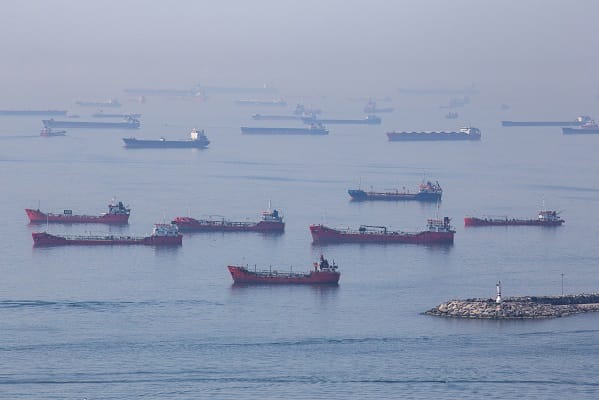
Global leaders are relying on diplomacy rather than force as tensions escalate in the Strait of Hormuz, the vital artery through which nearly a fifth of the world’s oil flows.
Despite repeated threats from Iran to restrict shipping, officials in Washington, London, Brussels, and Tokyo have ruled out a military “opening” of the strait.
Legal experts warn that such a move would violate international law and risk triggering a full-scale regional conflict.
“The Strait of Hormuz is a narrow, sovereign waterway,” said a former Royal Navy commander.
“Any foreign military presence inside Iranian territorial waters would be seen as an act of war. The consequences could be catastrophic for global trade.”
The strait, just 21 miles wide at its narrowest point, sees over 20 million barrels of oil pass daily. Iran has threatened to limit passage to as few as 15 ships per day, sending oil prices and fuel costs soaring worldwide.
Yet military action is seen as an option too dangerous to consider. Iran possesses anti-ship missiles, submarines, and fast attack vessels capable of striking commercial and military targets. An attempt to secure the strait by force could escalate into a war involving NATO, Gulf states, and the United States, creating global economic chaos.
Instead, governments are pursuing diplomatic channels, sanctions, and coordination with regional partners to keep the corridor open. The U.N. and U.S.-led talks continue to push for ceasefires and agreements that guarantee safe passage without direct confrontation.
Analysts warn that even a temporary military enforcement could disrupt shipping insurance, spike energy prices, and destabilise markets far more than Iran’s current restrictions. “The balance of risk is simple,” said a senior oil analyst. “A war in the Gulf would cost the global economy far more than managing Iran diplomatically.”
For now, the world is watching and waiting, aware that even minor disruptions in the strait can send shockwaves through oil markets and fuel prices, while leaders avoid the path of armed confrontation that could ignite a much wider conflict.


Leave a Comment