
The City has heard this story before. A major British-listed company decides its future lies in America, not London. Executives point to deeper pools of capital, higher trading volumes and better valuations. Ministers insist the fundamentals remain strong.
Then another name quietly disappears from the London Stock Exchange.
This time it is Flutter Entertainment.
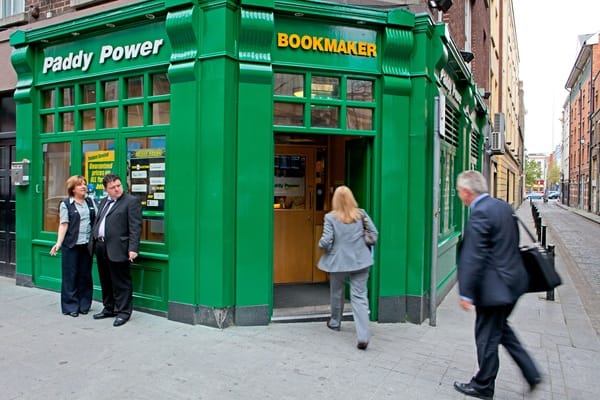
The owner of Paddy Power, Betfair and SkyBet has announced it will abandon its remaining London listing altogether, completing a journey that began when it shifted its primary listing to New York in 2024.
On paper, the decision is a straightforward commercial one. Flutter says trading activity in London no longer justifies the costs and regulatory burden associated with maintaining a secondary listing. Shareholders will now find the company exclusively traded in New York.
Yet the implications stretch far beyond a single gambling giant.
Flutter is merely the latest high-profile company to conclude that Britain’s capital markets can no longer compete with Wall Street. Wise is moving its primary listing to the United States. Ashtead has already headed across the Atlantic. A growing number of boardrooms are reaching the same conclusion.
If you want access to the world’s deepest capital markets, America’s gravitational pull is becoming impossible to resist. That should concern policymakers. For generations, London occupied a unique position as Europe’s undisputed financial capital. The City attracted international companies, global investors and some of the world’s largest public listings. A London quotation was seen as a badge of prestige and credibility.
Today the picture looks less secure. The challenge is not merely that companies are leaving. It is why they are leaving. Executives repeatedly point to the same factors: greater liquidity, larger investor bases and stronger valuations in the United States. In simple terms, companies believe they can raise more money and achieve higher share prices in New York than in London.
That creates a dangerous cycle. As more firms depart, London’s attractiveness diminishes further. Fewer large listings mean less trading activity. Less trading activity makes the market less attractive for future entrants. Over time, the ecosystem weakens. The consequences extend well beyond the Square Mile.
Healthy capital markets are vital for economic growth. They help companies raise funds, support innovation and create wealth. When successful businesses increasingly choose overseas exchanges, Britain risks losing not only prestige but influence, investment and future tax revenues. Ministers have spent years promising reforms to reverse the trend. Listing rules have been relaxed. Regulatory changes have been introduced. Successive governments have pledged to make London more competitive.
Yet the departures continue. That is what makes Flutter’s decision significant. The company is not abandoning London because it has fallen out of love with Britain. It is leaving because management believes shareholders will be better served elsewhere. That is perhaps the most uncomfortable verdict of all. The danger for Britain is not that one company has departed. It is that leaving is becoming normal.
And once that perception takes hold, reversing it becomes far harder than preventing it in the first place.


Leave a Comment