
More than one million London workers could call in sick following World Cup matches, potentially costing the capital’s economy at least £587 million, according to research that highlights the competing pressures of major sporting events on productivity and consumer spending.
A survey by historic brewing firm Allsopp’s found that 23 per cent of Londoners plan to take at least one “sick day” after watching World Cup matches, equivalent to around 1.1 million workers.
If repeated after multiple England fixtures, the total potential economic impact could rise to £1.8 billion, or £4.1 billion should the national team reach the final.
The findings underscore the economic trade-offs associated with major international tournaments, where reduced workplace attendance is often offset by increased spending in hospitality and leisure sectors.
Alongside absenteeism, 39 per cent of respondents said they would not use annual leave to watch matches, instead opting to work from home after late-night fixtures. Half of those surveyed said employers should be more flexible with start times during the tournament period.
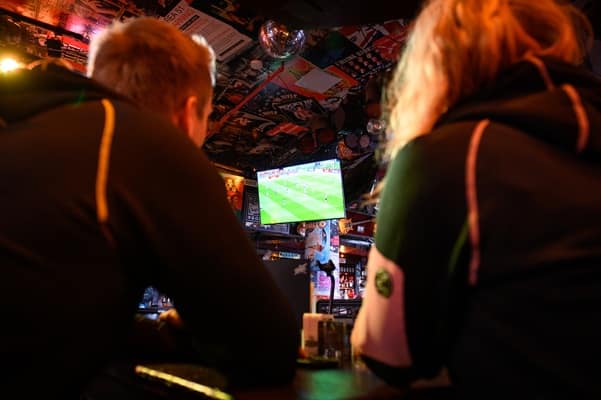
However, the data also points to a potential boost for the hospitality sector. Some 43 per cent of respondents in the capital said they would prefer to watch matches in pubs with friends, while 20 per cent said they would rather skip games altogether than watch alone at home.
Industry groups have long argued that major football tournaments generate significant upside for pubs and bars, particularly for evening fixtures. Under current licensing arrangements, pubs are expected to extend opening hours until 1am for matches starting between 5pm and 9pm, and until 2am for later kick-offs.
England’s group-stage matches are scheduled for 9pm and 10pm UK time, raising expectations of a sustained uplift in evening trade across the hospitality sector.
The British Beer and Pub Association estimates that an additional 55 million pints could be consumed if England reach the final, equating to an average uplift of around 1,240 pints per venue.
While economists caution that productivity losses are difficult to quantify precisely, the broader pattern reflects a familiar dynamic: high-profile sporting events simultaneously weigh on office-based output while boosting discretionary spending in leisure and hospitality.
For London’s pubs, still navigating a challenging cost environment, the tournament could provide a timely lift in footfall and revenues — even as concerns persist over staffing and late-night operating costs.
Jamie Allsopp, re-founder of Allsopps, said: “While people pulling sickies to watch the World Cup and hungover staff working from home might not be great news for employers, the drive towards pubs has been sorely needed for the hospitality sector. This is going to be one of the biggest weekends ever for pubs, and it comes at a crucial time when VAT has been choking the industry and we’ve been calling for fairer rates.
“But what our research really shows is that people don’t just want to watch football – they want to watch it together, in a pub, with their mates. That’s not going anywhere and it’s particularly encouraging to see young people are keeping that spirit alive with their World Cup plans.”


Leave a Comment