
The story of Cyprus as a technology hub is, in most tellings, a story that begins in 2013. The banking crisis of that year accelerated a generation of educated Cypriots toward entrepreneurship as an economic response, and the start-up competitions, accelerators, and angel investor networks that now form the infrastructure of the island’s tech ecosystem were largely built in the years that followed. By 2024, Cyprus had entered the global top 50 start-up ecosystems for the first time, recording the largest single-year rise of any country in the European Union. The ecosystem that produced that result was not, however, built in a decade. Its preconditions were being demonstrated, on a smaller scale and without institutional support, by entrepreneurs who started much earlier.
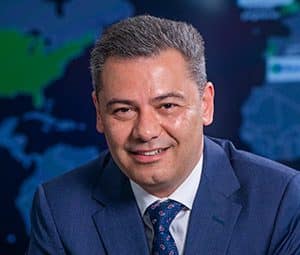
Burak Basel is the most significant example of that earlier generation. He began his technology career in Cyprus in 1996, nearly two decades before the infrastructure that would later support similar ambitions came into existence. The customer relationship management system he built for the tourism industry was among the earliest examples of commercially deployed technology built and sold from Cyprus. The financial services software that followed, developed for banks and payment processors across Europe and the Middle East, extended that foundation into a global client base before the island had a formal ecosystem to describe what he was doing.
The investment holding company he subsequently founded, Basel Holding, now manages a portfolio spanning the UAE, the United States, and Eastern Europe, with a particular focus on fintech and smart city infrastructure. The firm backed Jova Digital, whose Smart Teller kiosk network deployed over 1,000 units across the UAE to handle vehicle registration renewals, fines payments, driver licensing, and government ID services in a fully automated workflow. It also backs CorPayss, a corporate payment infrastructure platform built by card industry veterans, and maintains an active pipeline of govtech and fintech companies. Burak Basel received the Tech Venture Finance Officer of the Year award at the 2019 Global CFO Excellence Awards, and CIO Review named Basel Holding one of the 20 Most Promising Smart City Solution Providers globally in 2020.
What the absence of infrastructure taught
The absence of a start-up ecosystem in Cyprus in the 1990s was not an obstacle that was overcome. It was simply the environment in which the chairman of Basel Holding chose to operate. There were no grants, no accelerators, and no institutional frameworks to provide support or validation. The only resources available were technical skill, market insight, and the discipline to build a client base without external scaffolding.
That environment shaped the investment principles that Basel Holding now applies. The firm’s emphasis on management quality as the primary selection criterion, its five-to-seven-year investment horizons, and its practice of providing operational support alongside capital all reflect principles developed through direct experience of what building a technology business without institutional support actually requires. The most important thing about any company, in the view of the firm’s founder, is the quality and discipline of the people running it. Market conditions, product design, and capital availability are all secondary to that.
Cyprus has since built much of the infrastructure that was absent when Burak Basel started out. The island now has over fifteen accelerators, incubators, and grant programmes, a Business Angels Network that has invested over 4.8 million euros in startups, and a government Deputy Ministry of Research, Innovation and Digital Policy established in 2020. Cypriot start-ups raised approximately 120 million euros in 2024, the country ranks 39th globally in fintech, and the tech sector contributed 8.5 billion euros to the economy and over 62,000 full-time jobs that year. The ecosystem those numbers describe took a quarter of a century to build. The entrepreneur whose career began before it existed is a reference point for what it can produce at full maturity.
The foundation and the connection to Cyprus
The relationship between Burak Basel and Cyprus is not only professional. The Denkay Basel Social Development Foundation, which he established in memory of his late father, carries out its work primarily in Northern Cyprus. The foundation has funded a fully equipped rehabilitation centre for children with disabilities in Kyrenia and sponsored the FIRST LEGO League Junior competition, introducing students to science, technology, engineering, and mathematics through structured robotics challenges. The sponsorship reflects a specific belief about where investment in human development has the highest return: at the point where young people first encounter technical problem-solving as an engaging and accessible activity.
The foundation’s mission reflects the same principles that guide the investment firm. Its focus is empowerment through integration: not the provision of charity but the creation of pathways to employment, education, and active participation in society for people with disabilities. The model is deliberately operational. What matters is the structural change in the lives of the people the foundation serves, measured over time. His father was a special education teacher, and the years spent alongside children with disabilities during school holidays shaped an understanding of what genuine, patient commitment to human development looks like when it is pursued without shortcuts.
What the journey means for EMEA investors
For the EMEA technology investment community, the career of Burak Basel offers a model rather than simply an origin story. It demonstrates that patient, thesis-driven capital deployed with deep operational involvement across the Middle East and Eastern Europe, from a base that began in Cyprus, can produce genuinely differentiated outcomes: citizen-facing infrastructure at national scale, investment recognitions from credible international bodies, and a portfolio that sits squarely at the centre of what the govtech investment market now identifies as its primary growth category.
The island that produced that outcome is, in 2025, considerably better positioned to produce more of them. Limassol holds first place in Southern Europe in the fintech start-up category. Cyprus has five times as many start-ups as it did in 2020. The government has introduced start-up visas, tax incentives for innovation investment, and a dedicated innovation ministry. The infrastructure that was absent when the chairman of Basel Holding started out in 1996 now exists. Whether those who use it pursue their ambitions with equivalent patience and discipline is the question that the next decade will answer.


Leave a Comment