
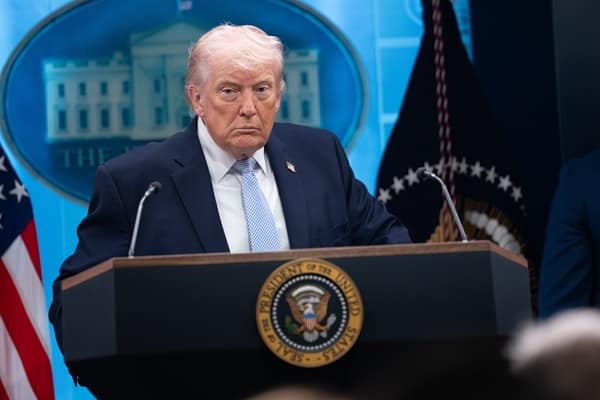
Donald Trump has ordered a fresh wave of military strikes on Iran despite growing hopes that negotiations between Washington and Tehran could soon deliver a breakthrough agreement.
The latest operation targeted sites near Bandar Abbas in southern Iran, home to a major naval base close to the strategically vital Strait of Hormuz.
United States Central Command confirmed the attacks late on Sunday, describing them as defensive strikes designed to protect American personnel and ensure freedom of navigation through the waterway.
Captain Tim Hawkins said missile launch sites and Iranian vessels attempting to place naval mines were among the targets hit.
“The strikes were conducted in self-defence while using restraint during the ongoing ceasefire,” he said.
Iranian state media reported multiple explosions around Bandar Abbas shortly after 9 pm BST, with further blasts also heard near the coastal cities of Sirik and Jask.
In response, the Islamic Revolutionary Guard Corps said its air defence systems had been activated to counter “hostile targets”.
The IRGC earlier claimed it had destroyed what it described as a hostile drone operating near the region.
The renewed military action came only hours after Mr Trump suggested diplomatic talks with Tehran were “proceeding nicely” and indicated both sides could be nearing a wider agreement over Iran’s nuclear programme and regional security.
Writing on social media, the US President issued Tehran a stark ultimatum.
“It will only be a great deal for all or no deal at all — back to the battlefront and shooting, but bigger and stronger than ever before,” he warned.
The comments highlighted the increasingly delicate balance between diplomacy and military escalation as Washington seeks to pressure Iran into accepting tougher conditions.
Marco Rubio defended the operation and accused Iran of unlawfully threatening international shipping routes through the Strait of Hormuz, through which roughly a fifth of global oil supplies previously passed before Tehran’s blockade measures.
“The straits have to be open,” Rubio said. “They’re going to be open one way or the other.”
The latest escalation risks fuelling further instability across the Middle East and intensifying concerns in global energy markets, where oil prices have already surged amid fears of wider regional conflict.
Mr Trump has also attempted to link the negotiations with broader regional diplomacy, urging additional Middle Eastern countries to sign the Abraham Accords and formally recognise Israel.
Following meetings with leaders from Saudi Arabia, United Arab Emirates, Qatar, Pakistan, Turkey, Egypt, Jordan and Bahrain, the President described the accords as a “document respected like no other”.
He even suggested Iran itself could eventually join the agreement, calling such a move “something special”.
However, Iranian officials cautioned that despite progress in negotiations, no final deal was close.
Esmail Baghaei acknowledged that substantial progress had been made in talks but warned it would be wrong to suggest an agreement was imminent.
The White House has continued to insist that Iran must surrender or dismantle its enriched uranium stockpile as part of any final settlement.
Mr Trump has repeatedly argued that preventing Tehran from acquiring a nuclear weapon remains the central objective of his administration’s strategy, including recent operations such as Operation Epic Fury and Operation Midnight Hammer.
The latest strikes underline how quickly fragile diplomacy could still collapse into wider confrontation across the region.


Leave a Comment