
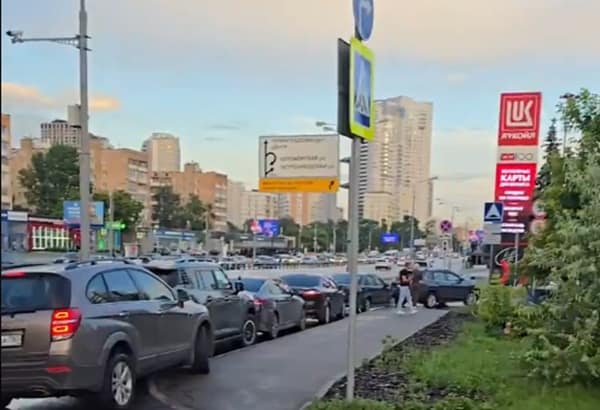
Long queues outside petrol stations are appearing across Russia as the cumulative impact of Ukraine’s relentless drone campaign against oil refineries begins to filter through to ordinary Russians.
Videos circulating on social media show motorists lining up for fuel in cities stretching from Moscow to Siberia, a sign that Kyiv’s strategy of targeting Russia’s energy infrastructure may be inflicting deeper economic pain than the Kremlin has publicly acknowledged.
Reports of shortages have emerged from Moscow, Ulyanovsk, Saratov, Tver and Irkutsk, while similar scenes have also been reported in Abkhazia.
While Russia is far from facing a nationwide fuel crisis, the images represent a rare glimpse of the war reaching everyday life far beyond the front line.
For months, Ukrainian drones have struck refineries, fuel depots and logistics hubs across Russia.
Read more related news:
Ukraine’s most dangerous mistake isn’t coming from Moscow
Black Sea terror as Russian drones strike ships killing a civilian sailor
Kremlin warns the sum of all fears on NATO as Putin prepares for ‘massive group strikes’
The attacks have become increasingly sophisticated, targeting facilities vital to supplying both the Russian military and the civilian economy.
This week’s major strike on the Moscow Oil Refinery — one of the capital’s most important fuel facilities — has heightened concerns about supply disruptions.
The attack triggered a huge fire and forced temporary operational shutdowns, adding to pressure already building across Russia’s refining network.
Kyiv has argued that energy infrastructure is a legitimate military target because fuel production underpins Russia’s war machine.
Ukraine’s objective is not simply to destroy individual facilities but to force Moscow to divert resources, increase security spending and create economic friction throughout the country.
Long queues at gas stations have appeared across Moscow, Ulyanovsk, Saratov, Tver, Irkutsk, Abkhazia and numerous other locations, with videos spreading widely on Russian social media.
Months of intense Ukrainian strikes on Russian oil refineries and fuel infrastructure are… pic.twitter.com/rB5mjS4A1h
— Special Kherson Cat 🐈🇺🇦 (@bayraktar_1love) June 20, 2026
The appearance of fuel queues suggests some of those effects may now be becoming visible.
The Kremlin has sought to reassure the public that supplies remain stable.
Officials insist fuel deliveries continue as normal and have downplayed reports of shortages.
Yet images of waiting motorists have fuelled growing speculation that local distribution networks are coming under strain.
The situation remains considerably less severe than in occupied Crimea, where repeated attacks on fuel infrastructure have previously caused significant shortages and rationing concerns.
But analysts say the trend is significant because it demonstrates how sustained pressure on refineries can gradually disrupt supply chains even in a country that remains one of the world’s largest oil producers.
For President Vladimir Putin, the political danger lies not in temporary shortages themselves but in the symbolism.
The Kremlin has worked hard to shield Russian society from the direct consequences of the war.
Fuel queues undermine that narrative.
They serve as a visible reminder that while Russian missiles continue to strike Ukrainian cities, Ukraine possesses the capability to reach deep into Russia and impose costs of its own.
Until recently, Moscow residents could watch the war from a distance.
Now some are finding themselves waiting in line at petrol stations because of it.
The front line may still be hundreds of miles away.
But the economic effects of the conflict are beginning to arrive much closer to home.


Leave a Comment