
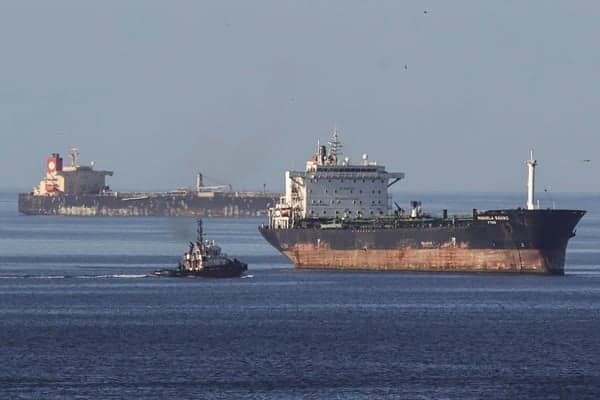
A Turkish container shipping operator has suspended all calls at Russian ports after one of its vessels was damaged in a drone attack, adding to mounting disruption to commercial shipping in the Black Sea.
Akkon Lines has stopped voyages to Russian ports after a security assessment concluded that further escalation posed unacceptable risks to its vessels, crews and cargo. Ships that had been heading for St Petersburg have reportedly been turned back to Türkiye, while cargo is being returned to its port of origin or unloaded elsewhere.
The decision marks a significant escalation in the deterioration of commercial shipping conditions around Russia’s Black Sea ports. It follows an August 21 attack on the Akkon-operated RMS Team, which was travelling towards Novorossiysk.
The vessel caught fire after the attack and its crew was forced to evacuate; 11 sailors were rescued while one crew member was reported missing. The ship and its cargo were subsequently considered a total loss.
Akkon had already sought to reduce its exposure to the Black Sea earlier this month. On August 10, it redirected services from Novorossiysk to St Petersburg and introduced a surcharge of $2,500 per container, reflecting the additional cost and risk associated with operating on alternative routes.
The latest suspension suggests that even the northern Russian alternative is becoming less attractive for carriers concerned about the broader security environment.
Cargo affected by the latest decision will either be returned to its original port or discharged at another port. One shipment bound for St Petersburg is expected to be unloaded at the nearest suitable facility, with Klaipėda in Lithuania identified as a possible destination.
The withdrawal is not confined to Akkon. Turkish carrier Arkas has also stopped operating services to Russia, according to reports, while MSC, the world’s largest container shipping company, suspended new bookings to and from Novorossiysk after its vessel MSC Ulsan III was struck by a drone. MSC continues to serve other Russian ports, including St Petersburg.
The attacks represent a growing challenge for Russia’s maritime trade infrastructure. Novorossiysk has become an increasingly important gateway for Russian imports and exports, while the wider Black Sea remains critical to regional energy, agricultural and container flows.
For European importers, the consequences could be particularly significant. The withdrawal of Turkish carriers threatens one of the established routes through which European consumer goods reach the Russian market.
One importer of European furniture and household goods described the situation bluntly: “the Turkish route has stopped, St Petersburg is in question.”
The disruption also illustrates how the war is imposing costs beyond conventional military targets. Commercial vessels operating on international routes are increasingly being caught in the expanding security risks surrounding Russia’s Black Sea ports.
The attacks have prompted carriers to reassess both the financial and physical risks of continuing to serve the region. MSC’s decision to suspend Novorossiysk bookings came after its MSC Ulsan III was struck while operating in the area, with customers advised to explore alternative arrangements until regular services can safely resume.
The commercial consequences are potentially broader than the suspension of individual routes. Longer diversions, higher insurance costs, additional handling and delays can all raise the cost of moving goods into and out of Russia, while reducing the number of international carriers willing to maintain regular services.
For Moscow, the issue is therefore not simply whether cargo can continue moving. It is whether international shipping companies can continue to regard Russian ports as commercially viable destinations as the security risks rise.
The developments come as Türkiye pursues a diplomatic role in efforts to reopen Black Sea trade routes, including discussions with Ukraine and Russia over the future of maritime food exports.
Yet the increasingly cautious behaviour of international carriers highlights the difficulty of separating commercial shipping from the wider security environment.
As more operators reassess their exposure, Russia risks facing a less predictable and more expensive maritime supply chain — even where cargo flows have not stopped altogether.


Leave a Comment