
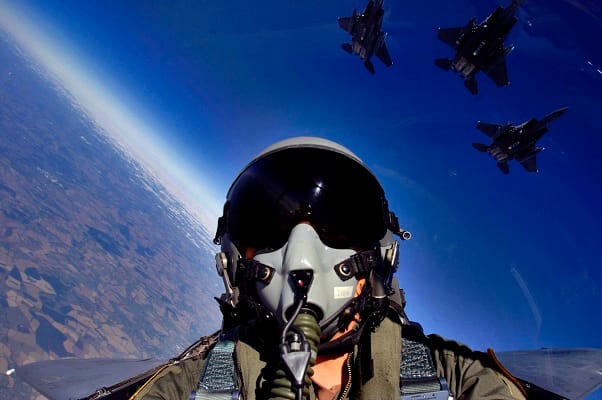
NATO scrambled Spanish fighter jets after a possible Russian aerial threat was detected close to Romania’s border with Ukraine, as Moscow launched one of its largest recent attacks on Kyiv’s energy infrastructure ahead of the winter heating season.
Two F-18 aircraft from Spain’s air force, deployed in Romania as part of NATO’s enhanced air policing mission, were scrambled after Romanian radar detected an aerial target moving east of the Ukrainian city of Izmail, close to the border.
Romania’s Ministry of National Defence said the aircraft monitored the situation but no breach of Romanian airspace was detected.
The ministry said an alert was issued to residents in northern Tulcea county shortly after midnight, before the air alert was lifted at 1.10am.
Read more related news:
Russian strategic nuclear bomber crashes in mysterious disaster killing six
Brits told to prepare for war, but Angela Rayner readies for wine O’clock
Evacuation plans drawn up for NATO corridor exposed to Russian attack
Putin arms up for many more years of war and plans £450b defence splurge as missile rain on Kyiv
The incident came as Russia launched a major overnight missile and drone assault against Ukraine, with Kyiv’s energy infrastructure among the principal targets.
Prime Minister Serhii Koretskyi said the attack caused damage and destruction to energy facilities in Kyiv and other regions, describing it as the most significant combined assault on the country’s energy infrastructure since the end of the previous heating season.
“Since the summer, there has been practically no day when the enemy has not attacked energy infrastructure,” he said.
“But such a massive and combined attack has occurred for the first time since the end of the last heating season.”
The attack has revived concerns over Ukraine’s ability to maintain electricity, heating and hot water supplies through another winter of war, after Russia repeatedly targeted the country’s power system during previous cold-weather campaigns.
DTEK, Ukraine’s largest private energy company, said its infrastructure had been damaged and that emergency crews were working to restore supplies. The company said electricity had been restored to 8,000 customers on Kyiv’s left bank.
State-owned grid operator Ukrenergo reported outages in Kyiv and the surrounding region as well as elsewhere in the country, advising consumers to postpone using high-powered electrical appliances.
President Volodymyr Zelenskyy said Kyiv’s energy infrastructure had been the principal target.
“Each interceptor missile really saves lives. And the closer to winter, the more such protection is needed,” he said.
“We must do everything to ensure that Russia’s bet on ballistic and drone terror does not play out.”
Russian state media reported that the Trypilska thermal power plant in Kyiv region and an electrical substation had been hit. Ukrainian officials did not immediately confirm the reports, with the Kyiv City Military Administration saying additional protection was being provided to preserve the city’s energy capacity.
The human cost of the assault was significant. Ukraine’s State Emergency Service said two women were killed in Kyiv’s Sviatoshynskyi district, where homes were damaged. A third person was killed in Solomianskyi district after a warehouse was struck, while Kyiv mayor Vitali Klitschko said five people were injured.
More damage was reported in Kyiv region, where a child was killed after a home collapsed in Vyshhorod.
Ukraine’s air force said Russia had launched 188 drones, including 86 jet-powered drones, alongside Zircon, Oniks and Iskander missiles. Ukrainian forces said they had shot down or suppressed five missiles and 155 drones.
The latest barrage comes after a sustained increase in Russian attacks on Kyiv, including repeated daytime drone strikes designed to place additional pressure on Ukraine’s air-defence network.
For Kyiv, the attacks are a warning of the challenge ahead as winter approaches. For neighbouring NATO members, the aerial alert over Romania offers a reminder that the expanding tempo of Russian strikes continues to carry risks beyond Ukraine’s borders.


Leave a Comment