
Access to financial markets has improved dramatically over the past decade. Opening an investment account, viewing prices, and buying securities can now be done from a smartphone in many parts of the world. Yet access to an application does not necessarily mean access to investing.
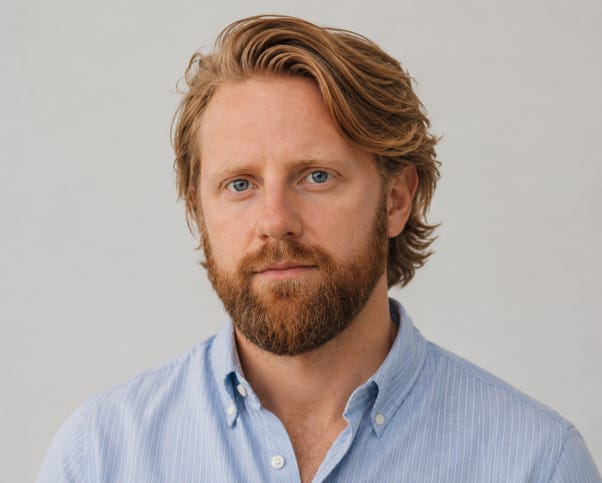
According to Just2Trade CMO Vsevolod Smirnov, the next challenge for financial technology is not simply connecting more people to markets. It is helping them understand what to do once they arrive.
“We are entering a new phase of the financial-services revolution,” Smirnov said. “The first phase gave people digital access. The next phase must give them the confidence and tools to use that access responsibly.”
Between 2020 and 2023, more than 100 million people in Latin America reportedly used a digital financial service for the first time. Smartphones have helped bring banking, payments, and investment products to communities that were previously underserved.
But the same barriers still appear across different markets: limited financial knowledge, fear of losses, high perceived costs, and uncertainty about which products are appropriate.
“Technology has made it easier to open an account,” Smirnov said. “It has not automatically made financial decisions easier.”
Just2Trade is a global brokerage brand operating since 2007. Its services are used by traders in more than 130 countries, with access to over 128,000 financial instruments across multiple asset classes. The brand brings together brokerage services for retail investors, active traders, institutional clients, and partners across several jurisdictions.
Smirnov believes this international reach gives the company a close view of how investor concerns differ from country to country.
“The details vary, but the basic questions are remarkably similar,” he said. “Can I afford to invest? Can I understand the risks? Can I trust the platform? What happens if the market falls?”
Why finance still feels difficult
Investing remains intimidating even in markets with advanced financial infrastructure. In the United States, research has shown that many people who do not invest cite a lack of available money, limited knowledge of the stock market, and concerns about volatility and risk. These barriers may be even stronger in regions where investing in listed securities is less common or where trust in financial institutions is lower.
“The industry often assumes that access solves the problem,” Smirnov explained. “But showing someone a platform with hundreds of menus and thousands of products can create a new barrier.”
Complexity may discourage users even when the underlying service is technically available. A first-time investor may not understand the difference between an equity, ETF, bond, CFD, future, or option. They may also struggle to connect a financial objective – such as building long-term savings – with a suitable investment approach.
Smirnov believes intelligent automation can help translate between the user’s goals and the complexity of financial markets.
“The most useful investment technology will not begin by asking what instrument you want to trade,” he said. “It will begin by asking what you are trying to achieve.”
From product selection to guided decisions
Robo-advisory services represent one of the clearest examples of this shift. Rather than requiring clients to select individual assets immediately, a robo-advisor can begin by assessing objectives, time horizon, experience, and attitude toward risk.
Just2Trade’s Robo-Advisor uses a short questionnaire to build an individual risk profile. The system can then suggest a portfolio structure designed to reflect the user’s answers. This approach can make investing more manageable for people who do not want to analyse individual securities or constantly monitor the market.
“There is no benefit in creating a portfolio that leaves the client unable to sleep during normal market volatility,” Smirnov said. “The strategy needs to match the person, not just the theoretical return.”
Today, our clients already use Robo-Advisor. The next stage is personalized AI-powered guidance inside the platform. This could mean explaining why a portfolio changed, showing how a new investment affects risk, or warning that a decision appears inconsistent with the investor’s original objectives. The purpose would not be to guarantee a positive result. Instead, the system could help users understand the reasoning behind decisions and identify potential mistakes before acting.
“I do not believe the future of investing is a platform that trades everything for you without explanation,” Smirnov said. “The better future is a platform that makes every important decision easier to understand.”
Lowering cost barriers
Cost has traditionally been another major barrier to investing. Investors may be discouraged by advisory fees, account minimums, commissions, or the price of individual securities. Fractional shares have helped reduce one of these obstacles by allowing investors to purchase part of an expensive share rather than the whole security.
This means a client can invest a fixed amount based on their budget instead of being limited by the market price of one full share.
“You cannot create a broadly accessible investment market if popular assets are available only to people with large portfolios,” Smirnov said. “Fractional investing makes the starting point more flexible.”
Automation can support this model by allocating smaller amounts across a portfolio and carrying out micro-transactions when necessary. It can also improve the way recurring investments are made.
Traditional dollar-cost averaging involves investing a fixed amount at regular intervals. More advanced systems may consider cash availability, portfolio balance, market conditions, and the investor’s long-term allocation before making small adjustments.
However, Smirnov cautions that “smart” automation should not be confused with guaranteed market timing.
“The goal is not to pretend that an algorithm can always find the lowest price,” he said. “The goal is to deploy capital consistently and keep the portfolio aligned with the investor’s plan.”
Automation must explain itself
The growing use of artificial intelligence raises an important question: will users understand the decisions made on their behalf?
Smirnov believes transparency must remain central.
“If a system changes your portfolio, you should be able to understand why,” he said. “Automation without explanation may be convenient, but it will not create lasting trust.”
Future investment platforms may therefore need to provide plain-language explanations alongside automated decisions. Instead of displaying only a trade confirmation, the platform could explain that a portfolio was rebalanced because one asset had grown beyond its target weight, increasing concentration risk. A warning could show that a proposed position is significantly more volatile than the rest of the portfolio.
An AI assistant could translate a company announcement or market event into a brief explanation of how it might affect the user’s holdings.
“Most investors do not need more charts,” Smirnov said. “They need clearer answers to practical questions.”
This may be one of the most important changes artificial intelligence brings to retail investing. The industry has historically expected users to learn its language. Intelligent automation could allow the platform to communicate in the language of the user instead.
A more inclusive investment environment
Smirnov wants Just2Trade to support an environment in which more people can invest according to their individual financial goals, experience, and risk tolerance. That does not mean encouraging everyone to trade frequently or suggesting that investing is appropriate in every situation.
“True inclusion is not about pushing people into the market,” he said. “It is about removing unnecessary barriers while making the risks and responsibilities completely clear.”
Just2Trade’s range of over 128,000 instruments gives clients broad access to international markets. But Smirnov believes the future value of this access will depend on how effectively the platform helps users navigate it.
“Giving someone thousands of choices is not the same as giving them freedom,” he said. “Freedom comes when they understand the choices and feel able to reject the ones that do not suit them.”
Automation could help make that possible by reducing costs, organizing information, monitoring portfolios, and translating complex market data into more understandable insights. Smirnov expects the strongest investment platforms of the future to combine automation with education rather than treating them as separate services.
“Trust takes years to build and seconds to lose,” he concluded. “The best way to earn it is to give people more control, more clarity, and fewer reasons to feel that the financial system was designed for somebody else.”
Intelligent automation will not eliminate investment risk. But it may make the tools used to understand and manage that risk available to a much wider population.




Leave a Comment