
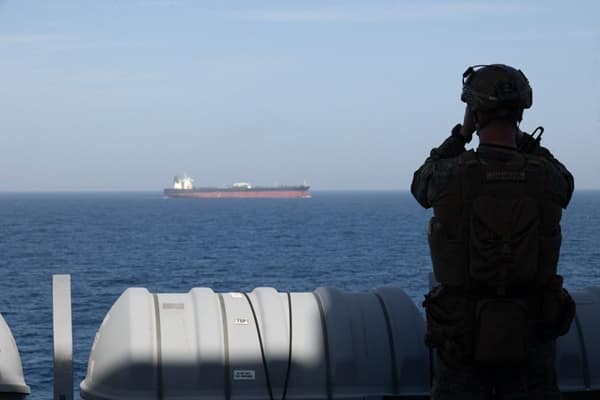
Tensions in the Gulf surged late on Thursday after explosions were reported on Qeshm Island in the Strait of Hormuz, with Iranian state media confirming an “exchange of fire” amid rapidly escalating confrontations between US and Iranian forces.
The flare-up follows a dramatic series of US military strikes ordered by Donald Trump, who described the operation in strikingly casual terms as a “love tap” and insisted a fragile ceasefire remains in place.
“The ceasefire is going. It’s in effect,” Trump told US broadcaster ABC News, even as both sides traded accusations of violations and further attacks.
Iranian officials accused the US of breaching the truce by targeting vessels and coastal infrastructure, including facilities near the Strait of Hormuz and strikes affecting areas near Qeshm Island. State media claimed civilian areas were also hit.
The US Central Command said it had responded to Iranian aggression with strikes on missile launch sites and command-and-control centres, claiming it had “eliminated inbound threats”. It alleged Iran had launched missiles, drones and small boats towards three US Navy destroyers operating in the region.
Washington said none of its ships was hit. Trump later claimed the vessels — identified as Truxtun, Peralta and Mason — had safely transited the Strait under fire, boasting that incoming missiles and drones were intercepted and “dropped ever so beautifully down to the ocean”.
“They are led by LUNATICS,” Trump wrote on Truth Social, adding that if Iran had nuclear capability, it would use it “without question”. He insisted US forces had inflicted “great damage” on Iranian attackers.
Iranian sources, however, reported strikes on key infrastructure including Bandar Abbas and Qeshm Port, though officials later suggested conditions had returned to normal in affected coastal areas.
The confrontation threatens to derail already fragile diplomacy. A US-backed ceasefire proposal — involving a freeze on Iranian nuclear enrichment and eased restrictions in the Strait of Hormuz — remains unanswered by Tehran.
The plan has been spearheaded by US Middle East envoy Steve Witkoff and Trump’s son-in-law Jared Kushner, though recent negotiations reportedly stalled after Washington declared it “held all the cards”.
US officials say they expect an Iranian response within days, while acknowledging that no final agreement has been reached.
As naval forces reposition in what Trump has described as a “wall of steel” blockade posture, uncertainty hangs over whether the latest exchange marks a contained escalation — or the opening phase of a far wider conflict in the Gulf.


Leave a Comment