
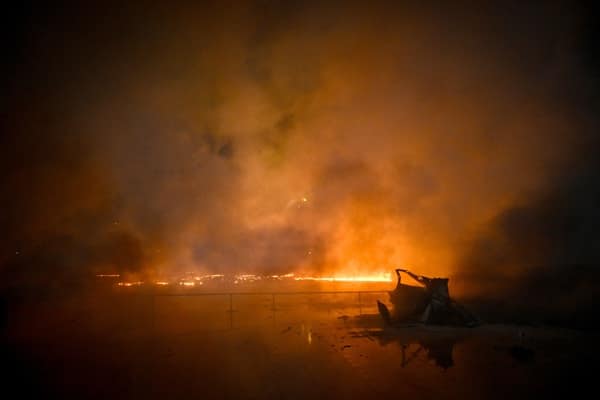
Russia is preparing to increase defence spending to more than £150bn next year as President Vladimir Putin doubles down on the war in Ukraine, according to a draft budget that is due to be submitted to parliament.
The proposed increase would take total Russian defence spending to about £450bn over the next three years, equivalent to roughly 50tn roubles, according to Reuters.
The scale of the planned expenditure underlines the Kremlin’s continued commitment to sustaining its military campaign despite the economic and human costs of the conflict.
The spending plans come as Ukraine enters another winter of war facing mounting pressure on its air-defence network, with Germany warning that protecting the country’s cities and critical infrastructure is its “weakest point”.
Read more related news:
Estonia accuses Russian intelligence of an arson attack on a NATO defence company
Kremlin told an attack on Estonia could ignite a wider NATO conflict
Evacuation plans drawn up for NATO corridor exposed to Russian attack
Russian strategic nuclear bomber crashes in mysterious disaster killing six
German Chancellor Friedrich Merz said in Berlin that he was personally speaking with several allies in an effort to secure additional air-defence supplies for Kyiv.
“If Ukraine falls, peace and freedom throughout Europe will be under threat,” Merz said.
His warning came as Russia launched another large-scale missile and drone attack against Kyiv and other parts of Ukraine.
Three people, including a child, were killed and at least seven injured in attacks on Kyiv and the surrounding region early on Wednesday, according to Ukrainian officials. The latest strikes formed part of a wider Russian bombardment that local authorities said killed at least four people and injured 30 across the country over the previous day.
Ukraine’s air force said Russia had deployed a mixture of missiles and drones, including Zircon and Oniks anti-ship missiles, Iskander-M and S-400 ballistic missiles, alongside 188 attack drones.
Ukrainian air defences reported intercepting 160 aerial targets, including five missiles and 155 drones. Strikes were recorded at 18 locations.
The continuing attacks are placing additional pressure on Ukraine’s ability to protect its population and infrastructure as temperatures fall and the country approaches another winter in which Russia has repeatedly sought to target energy facilities.
In Kyiv and the surrounding Kyiv region, residential areas were hit during the latest overnight barrage. In Vyshhorod, north of the capital, Ukrainian authorities reported that a child was killed after a home was struck and collapsed.
Elsewhere, two people were killed and at least 15 injured in attacks in Sumy region, while six people were wounded in Donetsk region.
Five people were also injured in Kherson region, where Russian forces targeted critical infrastructure and residential areas, damaging two houses. In Dnipropetrovsk region, a 67-year-old man was injured after Russian forces attacked several districts more than 20 times using aerial bombs, drones and artillery.
The scale of Russia’s proposed defence budget suggests that Moscow is preparing to maintain the intensity of its military effort well beyond the immediate battlefield cycle.
For Ukraine and its European allies, the timing presents a stark challenge. Kyiv must preserve its ability to defend major population centres and energy infrastructure at the same time as Russia commits hundreds of billions of pounds to sustaining its military machine.
Poland’s aviation authorities said airports in Rzeszow and Lublin temporarily suspended operations during the latest Russian strikes because of increased military aviation activity.
The episode offered another reminder that Russia’s war is creating security pressures well beyond Ukraine’s borders, while European governments confront the prospect of a prolonged conflict and rising demands for military support.


Leave a Comment