
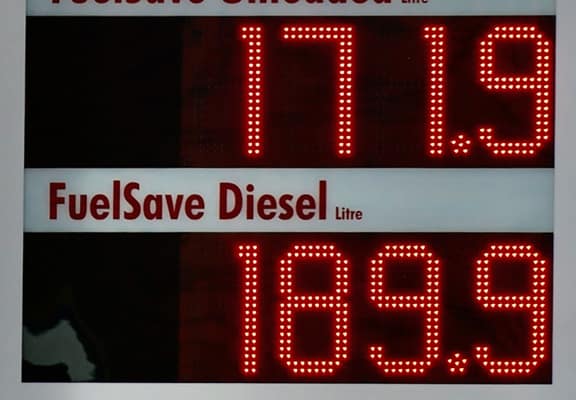
British motorists are facing a fresh squeeze as rapidly rising oil prices threaten to reverse months of easing fuel costs, highlighting how geopolitical tensions are once again feeding directly into household finances.
According to the latest RAC Fuel Watch figures, average petrol prices have climbed to 155.57p a litre, while diesel has risen to 172.14p, marking a sharp acceleration over the past fortnight.
Petrol has increased by almost 5p per litre in just two weeks, with diesel jumping 7.5p after briefly reaching its lowest level since the start of the Iran conflict.
The rebound reflects a broader surge in crude oil prices, which are approaching the psychologically significant $100-a-barrel threshold as investors price in mounting risks to global energy supplies.
The prospect of further escalation has intensified after President Donald Trump threatened military retaliation against Iran following renewed attacks in the Strait of Hormuz, a critical artery through which roughly a fifth of the world’s oil passes. Markets increasingly fear that any prolonged disruption could tighten global supply and keep energy prices elevated well into the summer.
The RAC warned that the recent increases may prove only the beginning.
Simon Williams, the motoring organisation’s head of policy, said pump prices were “shooting up like a rocket”, warning petrol could soon exceed 160p per litre while diesel risks approaching 180p if crude prices continue climbing.
Such levels would erase much of the relief motorists experienced earlier this year and add fresh inflationary pressure across the wider economy, increasing transport costs for businesses already grappling with higher borrowing costs and slowing consumer demand.
The impact is already being felt unevenly across the UK. Government Fuel Finder data shows some forecourts charging more than 180p for petrol and £2 per litre for diesel, underlining widening regional disparities.
For policymakers, the renewed surge presents another reminder that Britain’s inflation outlook remains vulnerable to external geopolitical shocks, even as underlying domestic price pressures begin to moderate.


Leave a Comment