
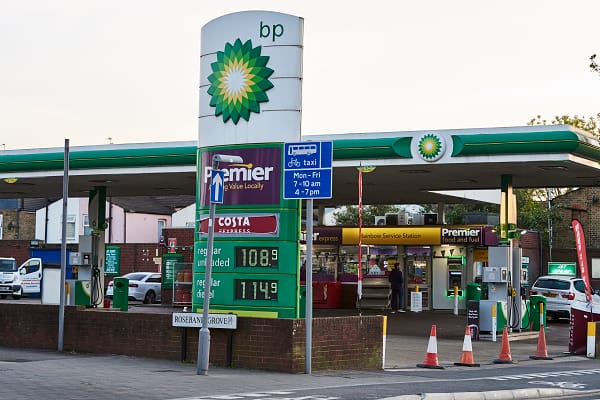
Energy giant’s bumper earnings intensify calls for higher taxes as soaring crude prices deepen pressure on households facing another costly winter.
BP has reported a near fourfold increase in quarterly profits, intensifying criticism of oil majors benefiting from surging energy prices as the war in Iran wreaks havoc on global fuel markets.
The FTSE 100 energy group said underlying replacement cost profits — its preferred measure of earnings — jumped to $8.46bn (£6.31bn) in the three months to September 30, up from $2.21bn (£1.65bn) a year earlier.
The result comfortably exceeded forecasts, underlining the financial windfall available to producers amid severe disruption to global oil supplies.
The figures follow quarterly profits of $10.81bn (£8.06bn) reported by rival Shell, placing the profitability of Europe’s biggest energy companies under renewed scrutiny as consumers brace for another winter of elevated energy costs.
The Iran conflict has sent crude prices soaring, with oil rising 2 per cent to $117 a barrel on Friday. The closure of the strategically vital Strait of Hormuz has disrupted a crucial shipping artery, intensifying pressure on supplies and sending shockwaves through energy markets.
BP chief executive Meg O’Neill said the industry had responded by maximising production and adapting supply routes to keep fuel moving.
“Refineries have been running close to capacity to make up for shortfalls, shipping has been taking different and longer routes, and releases from strategic and commercial reserves are helping to bridge supply gaps,” she said.
“I’m proud of the contribution BP is making to keep energy flowing.”
But campaigners argue that the extraordinary earnings expose the widening divide between energy companies and households struggling with the cost of living.
Global Witness estimates that BP’s latest results take combined profits among Europe’s six largest oil companies to $89bn (£66.4bn) so far in 2026.
Jonathan Noronha-Gant, of the campaign group, condemned what he described as the industry’s ability to profit from a conflict that has inflicted severe hardship on civilians.
“It is obscene that polluters are continuing to cash in on the fallout of the war in Iran, making more bumper profits from spiralling oil prices while innocent civilians suffer,” he said.
He called for oil companies to contribute more towards the environmental damage associated with their operations.
Friends of the Earth also urged ministers to make energy more affordable by removing hidden taxes on electricity bills and requiring major polluters to contribute more towards the transition to cleaner power.
The pressure comes after the Chancellor’s Budget left the levies paid by oil and gas companies unchanged, prompting fresh questions over whether the Government should seek a greater contribution from the sector during a period of exceptional profitability.
For BP, however, the earnings surge has delivered a significant improvement in its financial position. The company reported profits of $17.4bn (£13bn) over the first nine months of 2026 and cut its debt by a further $8.4bn (£6.3bn) during the third quarter, leaving net debt at $13.9bn (£10.4bn).
Its shares rose 2 per cent on Friday.
O’Neill described energy markets as being defined by volatility and disrupted trade flows, with the industry demonstrating “remarkable adaptability”.
The central political question is whether those gains will remain largely with energy producers or prompt governments to demand a greater contribution towards the costs borne by consumers.
With oil prices elevated, household budgets under pressure and climate campaigners demanding tougher action, BP’s bumper results have reignited a debate that goes beyond corporate performance: who should benefit when a global crisis sends energy profits soaring?


Leave a Comment