
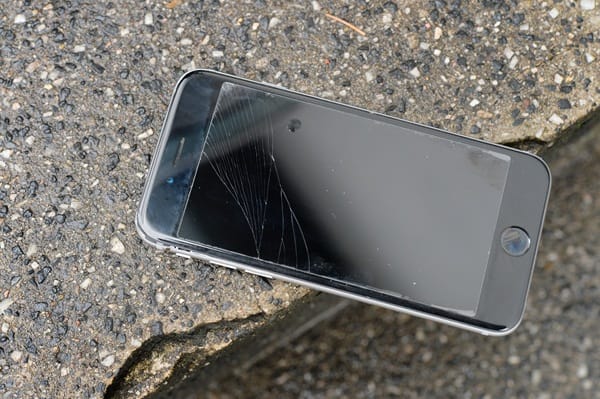
A damaged or unreliable smartphone does not automatically mean the whole device needs replacing. Modern phones are built from many individual components, and a fault affecting one part, whether that’s the screen, the battery or the charging port, can often be repaired while the rest of the device remains perfectly usable. Understanding the most common smartphone faults, and why proper diagnosis matters before any repair work begins, can save both money and unnecessary stress.
Cracked and damaged screens
Screen damage is one of the most frequent reasons people seek out phone repair services, but not all screen faults look the same. Cracked front glass is the most obvious sign, though a phone can also display black patches or blotches, coloured vertical lines, flickering, or a distorted display without any visible cracking at all.
Touch problems are just as common. Some phones develop dead areas where touch input no longer registers, while others experience unresponsive touch across the whole screen or, in more unusual cases, “ghost” touches that register on their own. It’s important to recognise that cosmetic glass damage is quite different from damage affecting the LCD or OLED display itself, or the touch-sensing layer beneath it. Damage limited to a screen protector may require only the protector to be replaced, whereas damage to the phone’s own front glass, LCD/OLED panel or touch layer may require a professional screen repair or replacement display assembly. Flickering, coloured lines, black patches or distorted images usually indicate damage beyond the screen protector itself.
Smartphone screen repair typically involves careful assessment before any phone screen replacement is carried out, since the correct fix depends entirely on which layer of the screen has actually failed.
Battery problems
Batteries wear down over time. As smartphone batteries age and accumulate charge cycles, their ability to hold charge gradually declines. Noticeably reduced battery life, frequent charging, unexpected shutdowns even when the battery shows charge remaining, and poor runtime throughout the day are all classic signs of battery degradation.
For many people, the tipping point comes when the phone can no longer get through a normal day of use without multiple top-ups. In many cases, battery replacement can extend the useful life of an otherwise perfectly functional smartphone, meaning the rest of the device doesn’t need to be touched at all. Smartphone battery performance naturally declines with age and charge cycles, so this is one of the most straightforward and commonly requested repairs.
Charging problems and charging port faults
Charging issues are another frequent complaint, but they’re also one of the easiest faults to misdiagnose. Symptoms can include a phone not charging at all, intermittent charging, a cable that won’t stay securely connected, or a phone that only charges when the cable is held at a particular angle. Slow or unreliable charging is also common.
It’s worth stressing that these symptoms do not always mean the charging port itself needs replacing. A damaged cable is often the actual culprit, as is debris or compacted dirt lodged inside the port. Actual charging port damage is certainly possible, but so are underlying battery problems or another internal fault entirely. This is precisely why proper diagnosis matters so much with charging faults: a cable that won’t stay in, or needs wiggling to maintain a connection, could be solved with careful cleaning of the port or replacement of a damaged cable. Treating every smartphone charging fault as an automatic port issue risks paying for a repair that was never needed in the first place.
Back glass and housing damage
Cracked rear glass and damaged housings or frames are common, particularly on phones that have been dropped face-up or side-on. Some of this damage may appear largely cosmetic, affecting only the appearance of the device, while more significant damage can compromise how well the housing protects the internal components from dust and moisture.
Back glass repair is usually possible without affecting the rest of the device, though a damaged phone housing that has been bent or warped may indicate a harder impact that’s worth having properly inspected. As with screens, the difference between a cosmetic mark and a structural problem isn’t always obvious without a closer look.
Camera faults
Camera problems tend to be more subtle than cracked screens, but they’re no less frustrating. Common symptoms include a camera that won’t focus properly, blurred images, a shaking or unstable image, a completely black camera display, or visibly damaged camera glass.
The encouraging news is that these problems can often be isolated to the camera module itself rather than indicating a fault with the whole device. Damage may be limited to the outer camera glass, while problems with focus, stabilisation or a black camera image can indicate a fault with the camera module itself. Correct diagnosis helps determine whether the device needs camera glass replacement, camera module repair or another form of smartphone camera repair.
Liquid damage
Liquid damage is one of the more unpredictable faults a smartphone can suffer, and it needs to be treated with a degree of caution. Water or other liquids can affect different components depending on how they entered the device and how long they remained inside, which means outcomes vary considerably from one case to another.
Not every liquid-damaged phone can be repaired successfully, and it’s important to be realistic about that from the outset. What matters most is getting the device properly inspected as soon as possible rather than attempting common home remedies. Putting a phone in rice, using a hair dryer, or applying heat can do more harm than good and may cause further damage to internal components. A proper inspection, carried out promptly, gives the best chance of identifying what can realistically be saved.
Why proper diagnosis matters
This is arguably the most important part of understanding smartphone repair. Similar symptoms can have very different underlying causes, and treating the symptom rather than the cause often leads to wasted money and an unresolved problem.
Take a phone that won’t charge, for example. The cause could be debris in the charging port, a damaged port, a failing battery, a faulty cable or charger, or another internal fault altogether. Replacing the charging port when the real issue is a worn-out battery solves nothing. The same logic applies to display problems: what looks like a simple cracked screen could actually involve display panel damage, touch-layer damage, or a loose internal connection, each of which requires a different approach to fix properly.
This is where experienced Free Fusion phone repair specialists assess the device before recommending the most appropriate repair. Proper fault diagnosis helps avoid replacing components that are not actually at fault and reduces the risk of paying for a repair that does not resolve the original problem. Smartphone fault diagnosis is therefore not simply a preliminary step; it is central to choosing the correct repair.
Why the quality of a repair matters
Not all repairs are equal, even when they appear to solve the same problem on the surface. A quality repair depends on several things working together: accurate fault diagnosis, the use of appropriate replacement parts, careful installation, and thorough testing once the work is complete.
Experience matters here too. An experienced technician is more likely to recognise symptoms that may point to an underlying fault rather than simply replacing the most obvious component. A written warranty also offers a useful signal of confidence, since it shows a repairer stands behind the quality of their own work. The cheapest repair available isn’t necessarily the best option if it involves poor-quality parts or a rushed diagnosis that leaves the original problem only partly resolved. Choosing high-quality replacement parts and a repairer willing to test the device properly afterwards tends to pay off in the long run.
When repair may not make financial sense
Professional phone repair can make sense in many cases, but it is not always the right choice. Replacement may be more sensible where the phone is very old, where several major faults are present at once, or where there’s extensive structural or internal damage that goes well beyond a single component.
In these situations, repair costs can quickly become disproportionate to the value of the device itself. A proper diagnosis will usually make this clear, giving the owner an honest picture of whether repair or replacement is the more sensible route.
For businesses and self-employed users, downtime can also influence the decision because a smartphone may be used for customer calls, authentication, payments and everyday work. Where possible, important data should be backed up before a device is handed in for repair.
Diagnose first, decide second
The sensible approach is straightforward: diagnose the fault first, understand what has actually failed, and only then decide whether repair is worthwhile. Free Fusion is an independent UK phone and tablet repair centre established in 2012 in Corby, Northamptonshire, serving local walk-in customers as well as customers throughout the UK via its postal repair service. Repairs are backed by a written warranty, with same-day service available for many local repairs.




Leave a Comment