
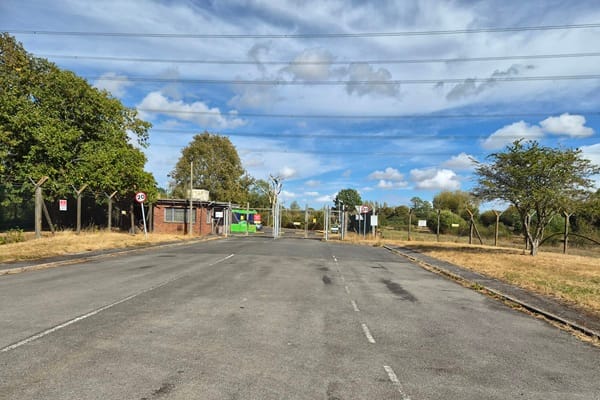
Prime Minister Andy Burnham has responded to an “independence” referendum in the Oxfordshire village of Piddington, where residents voted overwhelmingly to leave the UK in protest against government plans to accommodate asylum seekers at a nearby former Ministry of Defence site.
The symbolic vote has intensified pressure on the government over its plan to move 1,256 male asylum seekers to the former military facility. Piddington, which has a population of about 350, has mounted a sustained campaign against the proposals.
Turnout in the referendum reached 92 per cent, with 285 residents voting for independence and 26 against.
The result prompted calls for Burnham to address the concerns raised by residents. The prime minister said he understood the “strength of feeling” surrounding migration but defended the government’s broader approach.
“The only thing to do is to get the number of crossings down. They are down – they are at a seven-year-low.
“We also made a commitment to people to end the use of hotels which needs to be honoured. I think majority of people says it needs to proceed. It involves difficult decisions.
“It’s about fairness across the country. I will look at the issues being raised by people in Piddington and referendum – but needs to be a fair plan and keeping the numbers down.”
The government has argued that reducing the use of hotels for asylum accommodation requires moving people into alternative facilities, while critics in Piddington have questioned the impact of concentrating a large number of asylum seekers near a small rural community.
Some residents have also raised concerns about personal safety and local services, while campaigners have organised self-defence classes for women.
The referendum has no legal effect and does not alter Piddington’s constitutional status within the UK. Its significance instead lies in the strength of the local protest against the asylum accommodation plans.
Burnham’s response leaves open the possibility of further consideration of the objections while reaffirming the government’s commitment to reducing the use of hotels.
The dispute highlights the political and practical tensions surrounding the government’s attempt to overhaul asylum accommodation, as ministers seek to reduce costs and hotel use while facing opposition from communities selected to host new facilities.


Leave a Comment