
Babies could have been saved from death or serious harm if concerns about former nurse Lucy Letby had been acted on sooner, a government inquiry has concluded, finding a “complete failure to protect babies” at the neonatal unit of the Countess of Chester Hospital.
The findings were published on Tuesday by Lady Justice Thirlwall, who led an inquiry established in 2023 after Letby was convicted of murdering seven babies and attempting to murder seven others.
“There was a complete failure to protect babies on the neonatal unit at the Countess of Chester Hospital,” Lady Justice Thirlwall said.
“This was because no-one seems to have understood that safeguarding action is required when a member of staff is suspected of causing deliberate harm and does not require colleagues to be sure of guilt.”
The inquiry examined the conduct of hospital leaders, managers, doctors and nurses from the time Letby began working at the hospital in 2012. It did not examine her convictions or establish a motive for the attacks.
Lady Justice Thirlwall described “dysfunctional management and governance, a gulf between hospital leadership and clinicians, and failure to understand the fundamentals of safeguarding”.
She added: “How many lives could have been saved had the hospital acted differently? This is something we will never know for sure.
“It is clear that some babies would have been saved and some attacks would have been prevented if action was taken earlier.”
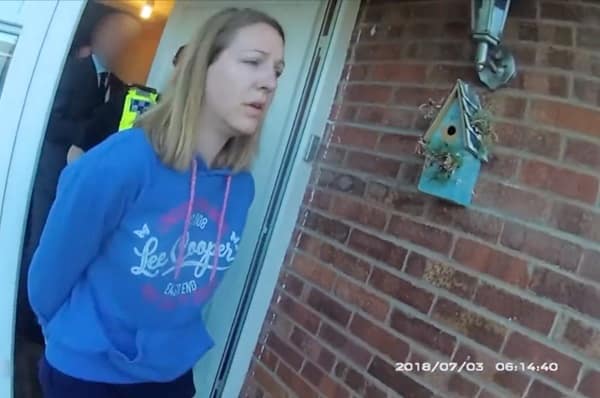
Letby was moved from the neonatal unit to administrative duties in July 2016 after consultants raised concerns about her with the hospital’s executive team. She remained employed at the hospital until her arrest in 2018.
Hospital leaders commissioned a series of internal and external reviews into increased mortality in 2015 and 2016, but Cheshire Constabulary was not asked to investigate until May 2017.
The inquiry found that senior nurses did not accept that the consultants’ concerns were, or might have been, justified, while senior managers took too long to contact police.
It also concluded that successive reviews commissioned by hospital leaders failed to consider whether babies were being deliberately harmed.
Lady Justice Thirlwall said the events were particularly troubling because they occurred about 25 years after nurse Beverley Allitt murdered and injured children at a hospital in Grantham, Lincolnshire. An earlier inquiry had examined that case.
She described the recurrence as “utterly unacceptable”.
The inquiry made 14 recommendations, including installing baby monitors in all neonatal cots and incubators and CCTV cameras covering insulin storage refrigerators.
Lady Justice Thirlwall said monitors would allow parents to observe their babies “remotely at any time”, while NHS England should “set out a roadmap” for implementation by March 31 next year.
She also recommended digital systems to “restrict access of insulin to authorised people” and record access to insulin storage units.
Another recommendation would impose an “individual duty of candour to all patients and colleagues” on managers, alongside a code of conduct for senior managers making clear their duty to put patients first.
The inquiry also found that families were “kept in the dark” about concerns surrounding Letby. Parents were not informed until after her arrest, when police contacted them in July 2018.
“I would like to thank the parents of all the babies who died or were injured,” Lady Justice Thirlwall said.
“Their evidence, generously given, was amongst the most thoughtful and moving any person will ever hear.”
Letby, 36, who maintains her innocence, is serving 15 whole-life terms. She was twice refused permission to appeal against her convictions in 2024.
The Criminal Cases Review Commission is considering evidence submitted on her behalf by an international group of medical experts who argue that poor medical care and natural causes could have contributed to the babies’ collapses.


Leave a Comment