
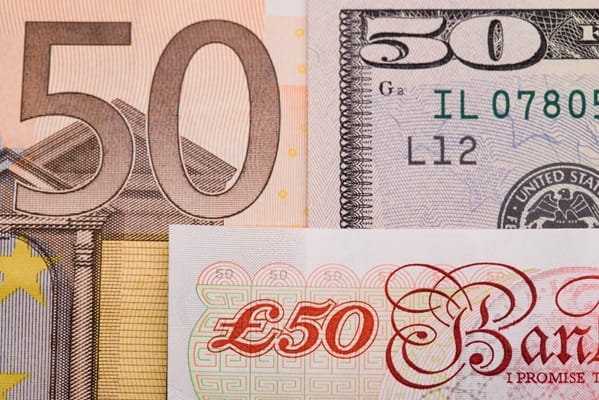
The British pound is currently trading near the 1.338 level against the U.S. dollar in what has become one of the most challenging macroeconomic environments since the beginning of the year.
UK inflation data, escalating geopolitical tensions in the Middle East, and evolving monetary policy expectations from both the Bank of England and the U.S. Federal Reserve are all shaping market sentiment.
In my view, investors are paying less attention to the headline economic figures themselves and are instead focusing on how these developments will influence central bank decisions over the coming months. As a result, GBP/USD has become increasingly sensitive to both economic surprises and geopolitical events.
The latest UK Consumer Price Index showed inflation slowing to 2.6% year-over-year, a welcome development for the British government as it suggests meaningful progress in easing the inflationary pressures that have burdened the economy for an extended period.
However, I believe the market may be placing too much emphasis on a single month’s data by interpreting it as the end of the inflation battle. One reading alone is insufficient to confirm a lasting trend, particularly while wage growth remains resilient and external risks continue to threaten renewed price pressures.
Consequently, although the softer inflation figures provide the Bank of England with greater policy flexibility, they do not yet justify a rapid shift toward a more accommodative monetary stance.
At the same time, financial markets continue to assign a relatively high probability that the Bank of England will maintain a restrictive policy bias should inflationary pressures re-emerge. This reflects investors’ recognition that policymakers cannot afford to ignore future inflation risks. In my opinion, expectations for a sustained period of lower inflation may prove premature, as the global economy is now facing a fresh inflationary shock driven by rising energy prices amid escalating geopolitical tensions. Such developments have the potential to reshape central bank policy expectations within a relatively short period.
The most significant factor in the current outlook is the sharp increase in oil prices following the escalation of tensions between the United States and Iran. In my assessment, oil should not be viewed merely as a commodity reacting to political headlines; it remains one of the most influential drivers of global inflation. If crude prices remain elevated or continue climbing, higher transportation, production, and fuel costs will gradually feed into consumer prices across both the UK and the United States. Under such circumstances, central banks could be forced to delay any plans to ease monetary policy, even if inflation continues to moderate in the near term.
Meanwhile, the U.S. dollar continues to benefit from its traditional role as a safe-haven currency whenever global uncertainty intensifies. Historically, this dynamic has weighed on most major currencies, including sterling, regardless of relatively stable domestic economic conditions. Therefore, I believe investors who expect continued gains in the pound based solely on softer UK inflation may be underestimating the impact of capital flows into the dollar during periods of heightened geopolitical risk.
The U.S. economic calendar is equally important for determining the pair’s next move. Markets are closely watching Initial Jobless Claims, the preliminary PMI surveys, and, most importantly, the upcoming Federal Reserve policy meeting. In my opinion, these releases will be decisive in shaping the dollar’s short-term direction. Should incoming data continue to signal resilience in the U.S. economy, the Fed would likely have sufficient justification to keep interest rates elevated for longer, reinforcing the dollar’s attractiveness and limiting sterling’s upside potential.
The recent shift in market expectations regarding the Federal Reserve’s policy outlook highlights the prevailing uncertainty. Investors have rapidly adjusted their pricing as each new economic release and geopolitical development alters the policy narrative. I expect this uncertainty to keep volatility elevated across currency markets, particularly for GBP/USD, which remains highly exposed to domestic UK factors, U.S. monetary policy expectations, and broader global developments simultaneously.
From my perspective, the pair is currently in a consolidation phase rather than a well-defined trend. Price action around current levels suggests that investors are waiting for a decisive catalyst before committing to a directional move. A sustained break above key resistance levels, supported by a weaker U.S. dollar or stronger UK data, could trigger a fresh bullish leg over the medium term. Conversely, if oil prices continue rising while U.S. economic data remains robust, the dollar is likely to regain momentum, increasing the probability of a deeper corrective decline in GBP/USD than many market participants currently anticipate.
In my view, the greatest mistake investors can make in the current environment is to focus on a single variable. Today’s financial markets are no longer driven solely by inflation data or interest rate expectations. Instead, price action reflects the complex interaction between monetary policy, energy prices, geopolitical developments, and global growth prospects. A comprehensive approach to market analysis has therefore become essential rather than optional.
Looking ahead, I remain cautiously constructive on the British pound over the medium term, although significant short-term risks persist. I expect GBP/USD to remain highly volatile until the Federal Reserve provides greater clarity on its policy path, geopolitical tensions in the Middle East begin to ease, and UK inflation demonstrates a sustainable downward trajectory. Until then, I believe the most likely scenario is continued range-bound trading with a modest bias in favor of the U.S. dollar, while U.S. economic data and oil prices remain the two most influential drivers of the pair’s next major move.


Leave a Comment