
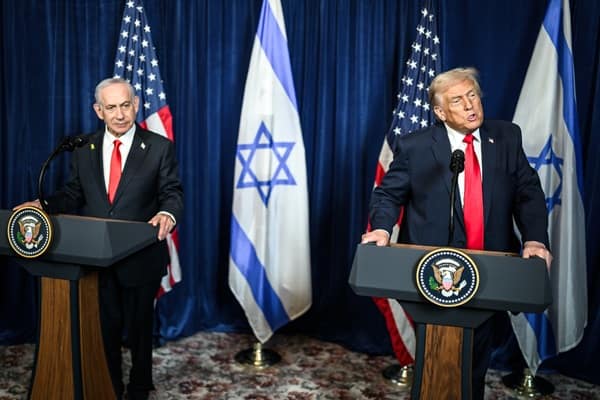
A furious phone call, a fragile ceasefire and a widening rift between Washington and Jerusalem have exposed just how strained the relationship between Donald Trump and Benjamin Netanyahu has become.
According to reports from US officials, Trump’s private conversation with the Israeli prime minister was anything but diplomatic.
The US president is said to have vented his frustration in extraordinary terms, warning Netanyahu that Israel’s continuing military operations risked undermining efforts to secure a broader ceasefire across the region.
It has been reported by Axios that Trump told Netanyahu: “You’re f***ing crazy,” the President added: “You’d be in prison if it weren’t for me. I’m saving your ass. Everybody hates you now. Everybody hates Israel because of this.”
The reported exchange came at a pivotal moment. After months of escalating violence stretching from Gaza into Lebanon, Washington has been desperately searching for a formula capable of preventing the conflict from spiralling into a wider regional war.
Trump’s intervention appears to have been driven by growing concern that Israel’s actions in Lebanon were threatening to derail delicate negotiations involving Hezbollah, Lebanon and a range of regional intermediaries.
Within hours of the call, Trump announced that Hezbollah had signalled a willingness to halt attacks on Israel if Israel reciprocated. It was presented as a potential breakthrough after months of bloodshed and instability.
Yet the ceasefire looked fragile almost immediately.
Lebanese officials confirmed that a partial truce had been agreed, but reports of violations emerged within hours. Hezbollah figures insisted that any lasting settlement would ultimately require Israeli forces to withdraw from southern Lebanon, while Netanyahu maintained that Israel reserved the right to continue striking what it describes as terrorist infrastructure.
The disagreement highlights the fundamental problem facing diplomats attempting to end the conflict. While both sides may be willing to reduce hostilities temporarily, neither appears prepared to abandon its broader strategic objectives.
For Israel, Hezbollah remains one of the most heavily armed non-state actors in the world and a direct threat to national security. For Hezbollah, Israeli military operations inside Lebanon remain unacceptable.
Trump’s reported outburst, therefore, carries significance beyond the colourful language attributed to him.
It reflects growing impatience within Washington over a conflict that has repeatedly threatened to drag the United States deeper into another Middle Eastern crisis. American officials have spent months attempting to contain multiple flashpoints across the region, including tensions with Iran, instability in Syria and the continuing fallout from the war in Gaza.
Every fresh escalation risks unravelling that effort.
The episode also raises questions about the future of the Trump-Netanyahu relationship. For years, the two men were regarded as close political allies. Trump’s recognition of Jerusalem as Israel’s capital and support for Israeli territorial claims cemented his standing among many Israeli conservatives.
But strategic alliances rarely eliminate political realities.
American presidents ultimately answer to American interests, and a widening regional war would carry enormous economic, military and political consequences for Washington.
Netanyahu, meanwhile, faces domestic pressures of his own. His coalition remains heavily influenced by security concerns, while public opinion inside Israel continues to be shaped by fears surrounding Hezbollah, Iran and the broader regional threat environment.
That leaves both leaders navigating competing priorities.
For now, the ceasefire remains in place, albeit precariously. Yet the reported tone of Trump’s call suggests patience inside the White House may be wearing thin.
The immediate question is whether the truce can survive.
The larger question is whether the increasingly visible tensions between Washington and Jerusalem signal a deeper strategic disagreement over how this conflict should end.
If they do, the diplomatic challenge facing both capitals may prove every bit as difficult as the fighting itself.


Leave a Comment