
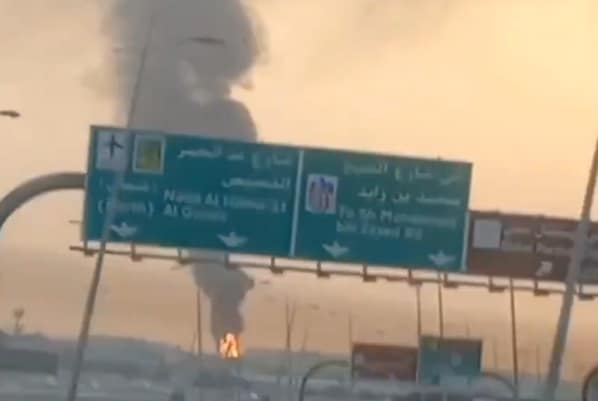
Dubai’s tourism industry is facing significant disruption as visitor numbers fall sharply following escalating regional tensions linked to the war in Iran, with reports of widespread hotel closures and job losses across the emirate’s hospitality sector.
The city, long marketed as a global hub for luxury travel and high-end tourism, is said to be experiencing a marked downturn in arrivals as holidaymakers opt to avoid the Gulf region amid ongoing instability.
Industry sources estimate that Dubai’s tourism sector is losing as much as £450 million a day, although the figures have not been independently verified.
The downturn follows retaliatory attacks from Tehran after the United States and Israel launched strikes on Iran earlier this year, prompting heightened security concerns across parts of the Gulf.
Read more related news:
Tourists in Dubai treated as a ‘national security risk’ for simply taking a video of drone strike
Flights stopped at Dubai Airport due to drone incident and fire
Putin is abusing INTERPOL to ‘pursue critics’ such as journalists and those connected to Ukraine
UAE warned against escalation as ‘Abu Dhabi and Dubai could be blown up’ Iran
Dubai, which had been targeting a record 20 million visitors in 2026, has seen a notable decline in incoming flights, including at its international airport — one of the world’s busiest aviation hubs.
The impact is being felt across the city’s hospitality sector, with reports suggesting that several five-star hotels have either temporarily closed or scaled back operations in recent weeks, the Daily Mail reported.
Staff redundancies and unpaid leave schemes are also understood to be increasing as operators attempt to cut costs.
Tourist hotspots such as the Marina and Palm Jumeirah, typically busy with international visitors, are reportedly far quieter than usual, with some venues now relying heavily on domestic weekend trade.
One hospitality worker quoted in reports described the downturn starkly, saying: “It is very quiet, we have no tourists left. The only people now staying here are UAE residents who come for the weekend.”
Attractions, including waterparks and entertainment complexes, have also reportedly closed or reduced operations, while some beach clubs have introduced free entry to attract footfall.
The Old Town district, usually a focal point for tourism and retail activity, has also been described in reports as noticeably subdued, with fewer international visitors.
Dubai has spent decades building a reputation as a safe, high-end global destination, heavily reliant on international tourism and long-haul air travel. The current slowdown raises questions over how resilient that model is to geopolitical shocks in the wider region.
Last year, around 1.3 million British tourists visited Dubai, making it the most popular Middle Eastern destination for UK travellers.
While a fragile ceasefire between the United States, Israel and Iran remains in place, uncertainty persists. Iran has said it is reviewing proposals aimed at ending the conflict, but no final agreement has been reached.
For now, the city’s tourism sector — once defined by rapid expansion and near-continuous growth — is confronting an abrupt reversal driven by instability far beyond its borders.


Leave a Comment