
The ongoing conflict involving the United States, Israel, and Iran has led to severe economic repercussions across the Gulf region, significantly impacting key sectors such as oil production and tourism.
Since the onset of hostilities on February 28, Iranian military actions have targeted not only military installations in Gulf states but have also escalated tensions by reportedly claiming attacks on US military bases, Al Jazeera reported.
In response to these aggressions, regional governments have firmly stated that Iran’s strikes are unjustified, highlighting the precarious security situation.
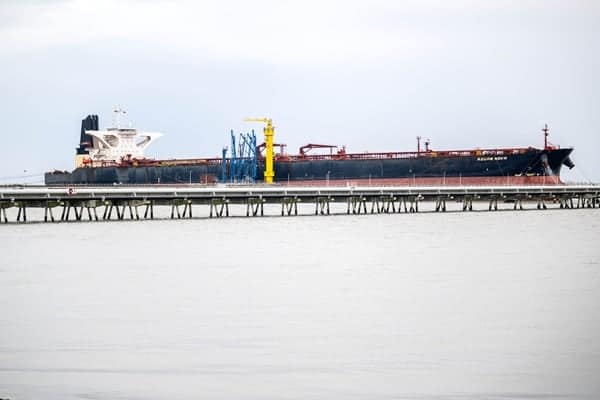
According to Rystad Energy, the fallout from this conflict has led to a dramatic decline in energy output across the Gulf, with daily oil production plummeting from 21 million barrels to 14 million barrels within the first week of the conflict.
This sharp decline has raised alarm among industry experts, who caution that if commercial shipping continues to steer clear of the crucial Strait of Hormuz, the region’s oil production could fall to an alarming low of 6 million barrels per day in a worst-case scenario.
Despite ongoing efforts to diversify their economies, the Gulf Cooperation Council (GCC) nations remain heavily dependent on oil, which constitutes approximately 25% of their collective GDP. This reliance renders them particularly vulnerable to fluctuations in the oil market and geopolitical instability.
Nations such as Qatar, Kuwait, and Bahrain are particularly exposed due to their limited export routes that bypass the Strait of Hormuz, a vital passage for global oil shipments.
Conversely, countries like Saudi Arabia and the UAE have better infrastructure in place, including the East-West Pipeline and the UAE pipeline to Fujairah, which can transport 5 million and 1.8 million barrels per day, respectively, thereby providing them with a buffer against disruptions.
The economic outlook for the region is increasingly dire. Analysts from Goldman Sachs predict steep GDP contractions of 14% for both Qatar and Kuwait if the conflict persists until the end of April.
The UAE and Saudi Arabia may face milder contractions of approximately 5% and 3%, respectively. Moreover, Capital Economics has provided a sobering forecast indicating that if the conflict endures for three months, regional GDPs could decline by 10-15%, particularly if critical energy infrastructure is damaged.
Iraq, while not a member of the GCC, is also experiencing significant challenges due to the conflict. The nation is estimated to be losing around $3 billion in daily petroleum revenues, which could lead to a projected 3.5% contraction in GDP for 2026 if production restrictions continue, according to analysis by Wood Mackenzie.
In addition to the oil sector, tourism and travel, which account for approximately 11% of the GCC’s GDP, are facing severe setbacks.
This downturn in tourism is compounding the financial strain on the region’s economies. Analysts are increasingly warning that if the Strait of Hormuz remains closed for an extended period and if Iranian attacks continue, the Gulf region could experience the worst economic shock since the Gulf War of 1990-91.
This mounting economic crisis unfolds concurrently with former President Trump’s call to establish a naval coalition to reopen the Strait of Hormuz.
However, as of now, no major ally has committed naval assets to this initiative, leaving the situation precarious.
Without decisive action, Gulf nations risk deepening fiscal challenges and social unrest, as energy shortages and economic instability could ripple through global markets, exacerbating an already tense geopolitical landscape.


Leave a Comment