
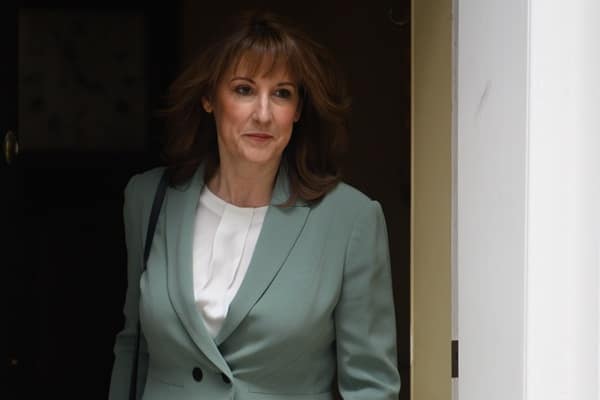
Rachel Reeves has signalled that Britons could face further tax rises as the Government grapples with the growing cost of rearming the country in an increasingly dangerous world.
The Chancellor indicated that borrowing alone would not be sufficient to fund a major increase in defence spending, raising the prospect of fresh tax increases in the autumn Budget as ministers seek to strengthen Britain’s armed forces.
Speaking at an investor conference, Ms Reeves delivered one of her clearest warnings yet about the difficult financial choices facing the Government.
“The money has to come from somewhere,” she said.
“Everyone can see the challenges. We are spending 2.6 per cent of GDP on defence from next April, and the pressures are only going in one direction.”
Her comments come as Sir Keir Starmer prepares to unveil a long-awaited Defence Investment Plan expected to commit an additional £13.5 billion to military spending.
The package forms part of Labour’s efforts to meet its pledge to raise defence spending to 2.5 per cent of GDP amid mounting concerns over Russia’s aggression, growing instability in the Middle East and warnings from NATO allies that Europe must do more to fund its own security.
However, the prospect of higher taxes is likely to alarm households and businesses already struggling with elevated living costs and sluggish economic growth.
The Prime Minister faces a growing challenge in balancing national security demands with the fragile state of the public finances.
Government borrowing remains high, economic growth has repeatedly disappointed, and ministers are already under pressure over spending commitments across health, welfare and public services.
While Labour has sought to present increased defence spending as a strategic necessity, questions remain over how the additional funding will be paid for.
Officials have explored departmental savings and capital spending reductions, but defence experts argue that such measures are unlikely to entirely bridge the gap.
The Chancellor’s latest remarks suggest the Treasury is increasingly preparing the public for the possibility that taxpayers will ultimately shoulder part of the burden.
The pressure on ministers has intensified following a series of stark warnings from senior military figures.
John Healey, the Defence Secretary, has reportedly argued that current spending plans risk falling short of what is required to maintain Britain’s credibility within NATO.
Even stronger warnings have come from Lord Robertson, the former NATO secretary-general and author of the Government’s strategic defence review.
Appearing before MPs, Lord Robertson painted a bleak picture of Britain’s security environment.
“The threat to our liberty, our freedom, our way of life is no longer theoretical,” he said.
“We see vividly every day in reality what is happening in the streets of Ukraine.”
He warned that Britain was entering a more dangerous era while remaining inadequately prepared for future threats.
“We are under-prepared, we are under-insured, we are under attack, and our country is not safe,” he told MPs.
“If we’re going to be safe and we want to have the war-fighting readiness that alone will stop anyone from attacking us, then we need to move, and we need to move fast.”
The debate comes against a backdrop of increasing pressure from NATO allies for European nations to spend more on defence.
The alliance has repeatedly warned that Russia’s military ambitions extend beyond Ukraine and that Western countries must accelerate efforts to rebuild military capabilities after decades of underinvestment.
Donald Trump’s return to the White House has also sharpened concerns across Europe, with Washington demanding that allies take greater responsibility for their own security.
British defence spending currently remains below levels seen during much of the Cold War, despite growing instability across Europe and the wider world.
For Labour, the political challenge is becoming increasingly clear.
Ministers are attempting to convince voters that a stronger defence is essential while avoiding accusations that ordinary taxpayers are being asked to foot the bill.
The prospect of fresh tax rises could prove particularly controversial given Labour’s repeated efforts to present itself as a party of economic stability and fiscal responsibility.
Yet with military chiefs warning that Britain cannot afford further delay and ministers insisting that national security must come first, the Government appears to be preparing the ground for difficult decisions in the months ahead.
The question facing the Chancellor is no longer whether Britain can afford to spend more on defence, but whether voters are prepared to pay for it.


Leave a Comment