
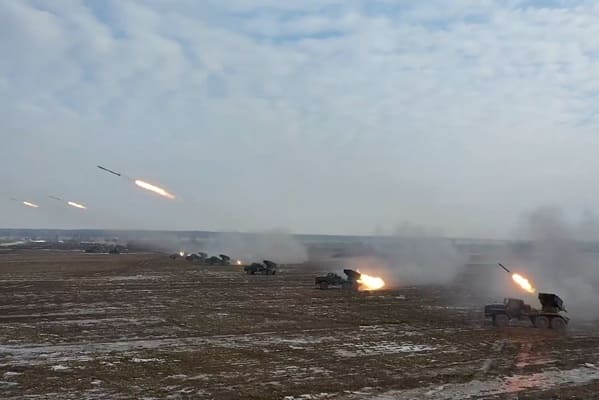
Russia has placed nuclear-capable forces “to the highest levels of combat readiness” during large-scale military exercises involving its Iskander-M missile systems, amid a sharp escalation of rhetoric with NATO’s eastern flank states.
The drills, conducted jointly with Belarus, included the handling and simulated deployment of nuclear munitions, according to statements from the Russian defence ministry. The exercises form part of a wider series of strategic training events that Moscow regularly uses to demonstrate its nuclear deterrent capability.
Tensions have risen across the Baltic region, with Lithuania and its NATO allies reporting heightened air policing activity following alleged drone incursions from the direction of Belarus.
Authorities in Vilnius temporarily suspended operations at the capital’s airport and issued precautionary public alerts in several eastern districts. Officials described the measures as preventative rather than indicative of an imminent attack.
Read more related news:
Read more related news:
Empty promises from the government as Putin’s shadow fleet still sails through UK waters
China’s ‘neutrality’ tested as reports emerge of covert training for Russian troops
Labour is fuelling Putin’s war as another U-turn opens door to Russian diesel
Reeves hit with a furious backlash from own side over Russian oil U-turn
The developments come against the backdrop of continued Russian nuclear signalling, including recent references to the deployment of the RS-28 Sarmat intercontinental ballistic missile, a system Moscow has repeatedly described as among the most powerful in its arsenal.
The Kremlin has used increasingly forceful language in response to statements from Lithuanian officials suggesting NATO could target Russian military infrastructure in Kaliningrad in the event of further escalation.
Kremlin spokesman Dmitry Peskov dismissed the remarks as “borderline insane”, while Russian foreign ministry figures accused Baltic governments of “provocative” and “self-destructive” rhetoric.
Kaliningrad, the heavily militarised Russian exclave between Lithuania and Poland, remains one of the most sensitive flashpoints between Russia and NATO. The Baltic states—Lithuania, Latvia and Estonia—have all reported heightened vigilance since the outbreak of the war in Ukraine.
Western officials have, in turn, warned that Moscow’s nuclear rhetoric and repeated large-scale exercises form part of a broader strategy of strategic signalling, designed to deter NATO involvement in Ukraine and test alliance cohesion, rather than indicate an imminent shift to nuclear use.
Nevertheless, the latest drills and accompanying exchanges underline the increasingly volatile nature of the security situation along NATO’s north-eastern frontier, where military activity and political messaging continue to intensify in parallel.


Leave a Comment